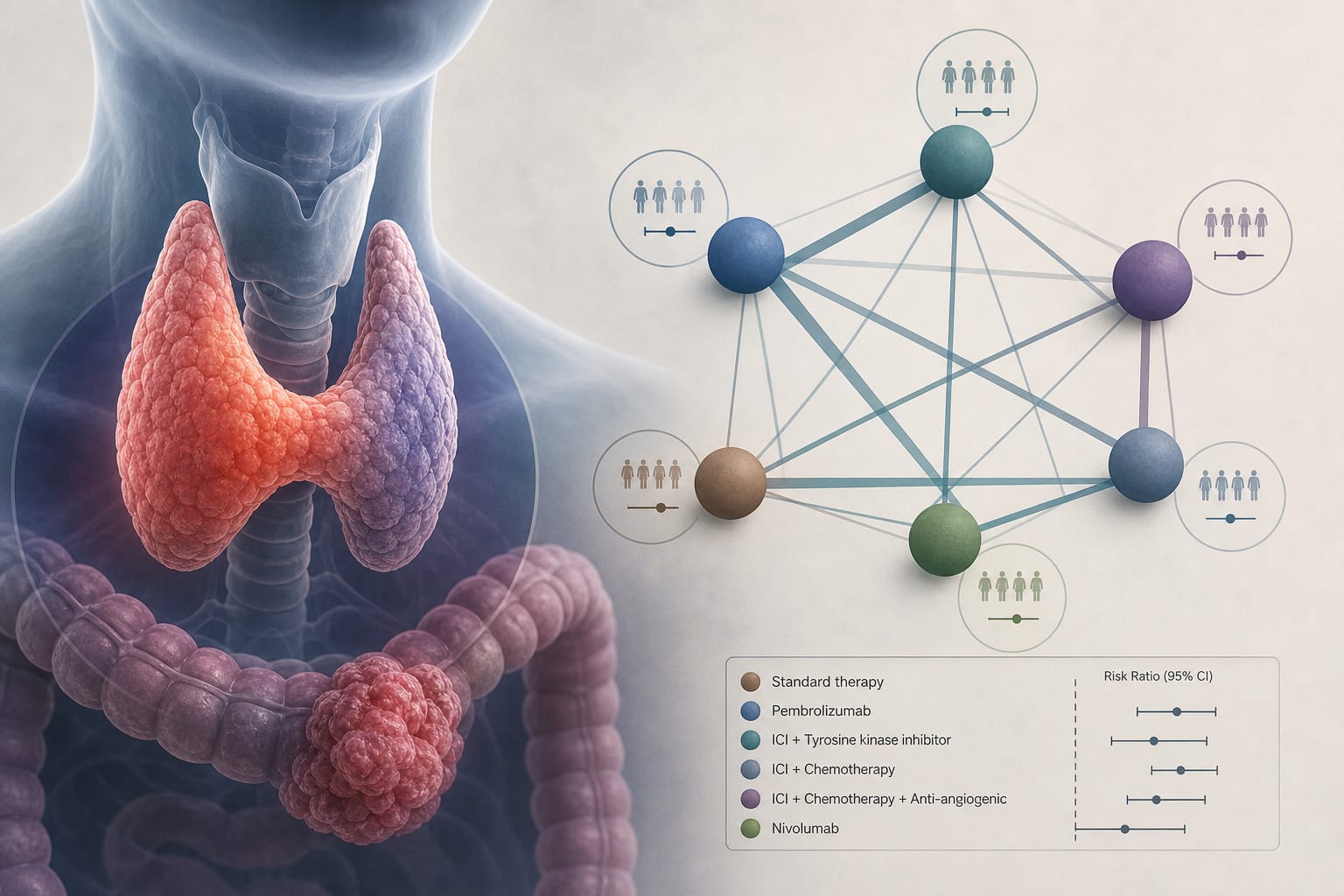
To evaluate the comparative risk of endocrine adverse events associated with immune checkpoint inhibitor (ICI) therapy in colorectal cancer (CRC) patients.
Approach:
Study Design: Conducted a network meta-analysis of randomized controlled trials (RCTs) in CRC published up to the date of the study.
Key Findings:
ICI-based regimens were associated with a higher thyroid-related toxicity burden compared to conventional therapy.
Pembrolizumab and ICI+tyrosine kinase inhibitor (TKI) significantly increased the risk of hypothyroidism.
Hyperthyroidism risk was significantly higher with ICI+TKI and ICI plus chemotherapy plus an anti-angiogenic antibody.
Grade 1–2 adverse events were consistently increased across ICI-based treatments.
Effect estimates for thyroiditis, diabetes mellitus, adrenal insufficiency, and grade 3–4 adverse events were imprecise, but ICI+TKI tended to rank higher for thyroiditis and diabetes.
Interpretation:
Limitations:
Effect estimates for rarer endpoints and severe toxicity were imprecise with wide 95% CIs.
Most available safety data are derived from other malignancies, limiting specific conclusions for CRC.
Conclusion:
The study emphasizes the importance of monitoring endocrine adverse events in patients receiving ICI therapy for CRC.
Ocular tumor coding can be challenging because ocular oncology often involves evolving lesions, diagnostic uncertainty, and terminology that does not always translate cleanly into ICD-10-CM codes. Understanding how to distinguish benign, malignant, in situ, and uncertain histologic behavior neoplasms is essential for accurate coding, medical necessity, and audit defensibility.