Paraesophageal hernia repair is associated with similar safety and efficacy results in octogenarians as compared to younger patients - Summary - MDSpire

Paraesophageal hernia repair is associated with similar safety and efficacy results in octogenarians as compared to younger patients

  • By

  • Kayvan Barekatain

  • Emily F. Simon

  • Joshua L. Lyons

  • Natalie N. Chakraborty

  • Christina S. Boutros

  • Trisha Lal

  • Jill Knepprath

  • Ayesha Siddiq

  • Hamza N. Chatha

  • Saher-Zahra S. Khan

  • Patrick M. Wieland

  • Sami O. Abul-Khoudoud

  • Nicolette M. Winder

  • Samuel J. Zolin

  • Jeffrey Marks

  • June 8, 2026

  • 0 min

Share

Objective:

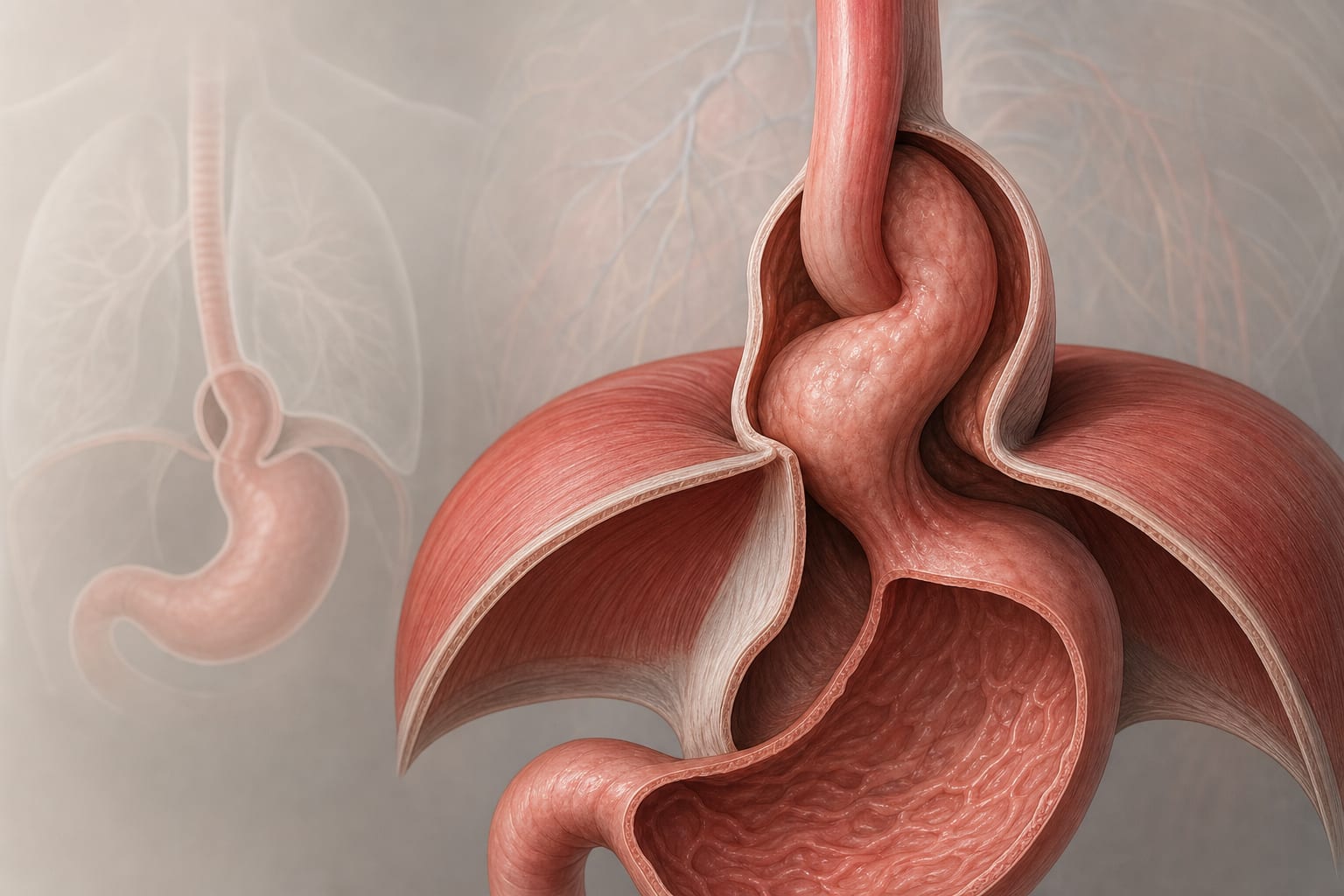
To compare perioperative and post-discharge outcomes of PEH repair, specifically focusing on complications and recovery metrics, between octogenarians and younger adults at a high-volume tertiary center.

Key Findings:
  • A total of 2,517 patients were analyzed, with 195 octogenarians (7.7%).
  • Patients aged 18–79 had a higher median BMI compared to octogenarians.
  • 30-day mortality after elective PEH repair in octogenarians is below previous conservative management thresholds.
Interpretation:

The study suggests that PEH repair in octogenarians is associated with comparable outcomes to younger patients, despite higher perioperative morbidity.

Limitations:
  • The study is retrospective and may have selection bias.
  • Limited data on long-term outcomes such as hernia recurrence and postoperative complications.
Conclusion:

PEH repair in octogenarians can be performed safely with outcomes comparable to younger patients.

Original Source(s)

Related Content