To examine temporal trends in oral cancer mortality from 1999 to 2024 and evaluate disparities across various demographic factors.
Approach:
Data Source: Population-level mortality data were derived from the CDC WONDER online database, with age-adjusted mortality rates calculated and analyzed using Joinpoint regression.
Key Findings:
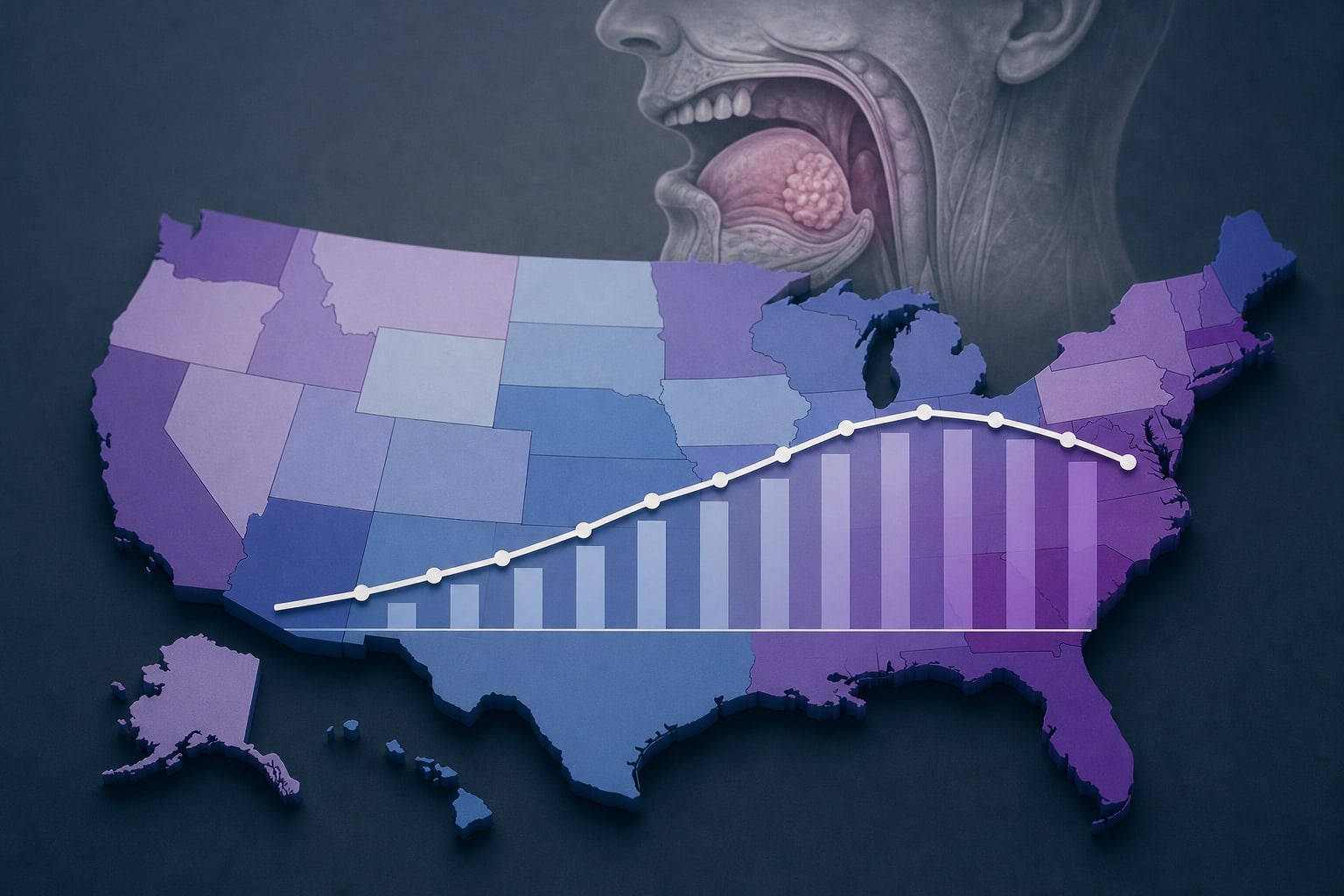
Total oral cancer deaths increased from 7,451 in 1999 to 12,368 in 2024, a 65.99% rise.
Overall age-adjusted mortality rates remained stable (P > 0.05).
Females showed a significant decrease in age-adjusted mortality rates (P < 0.05), while males did not.
The Midwest exhibited a significant increasing trend in mortality (P < 0.05), while the West showed a significant decrease (P < 0.05).
Non-Hispanic Black individuals had the sharpest reduction in mortality (P < 0.05), whereas non-Hispanic White individuals experienced a significant increase (P < 0.05).
Metropolitan areas had a significant decline in mortality rates (P < 0.05), while nonmetropolitan areas saw a significant increase (P < 0.05).
Mortality rates decreased significantly among adults aged 35–54 years but increased markedly among those aged 65 years and older.
Interpretation:
Despite the increase in total oral cancer deaths, the overall age-adjusted mortality rate did not change.
Limitations:
Causal links to healthcare access, behavioral risks, or clinical treatment cannot be definitively inferred from ecological mortality data.
Urban-rural mortality trend analyses were limited to the years 1999–2020.
Conclusion:
The study highlights pronounced sociodemographic disparities in oral cancer mortality.