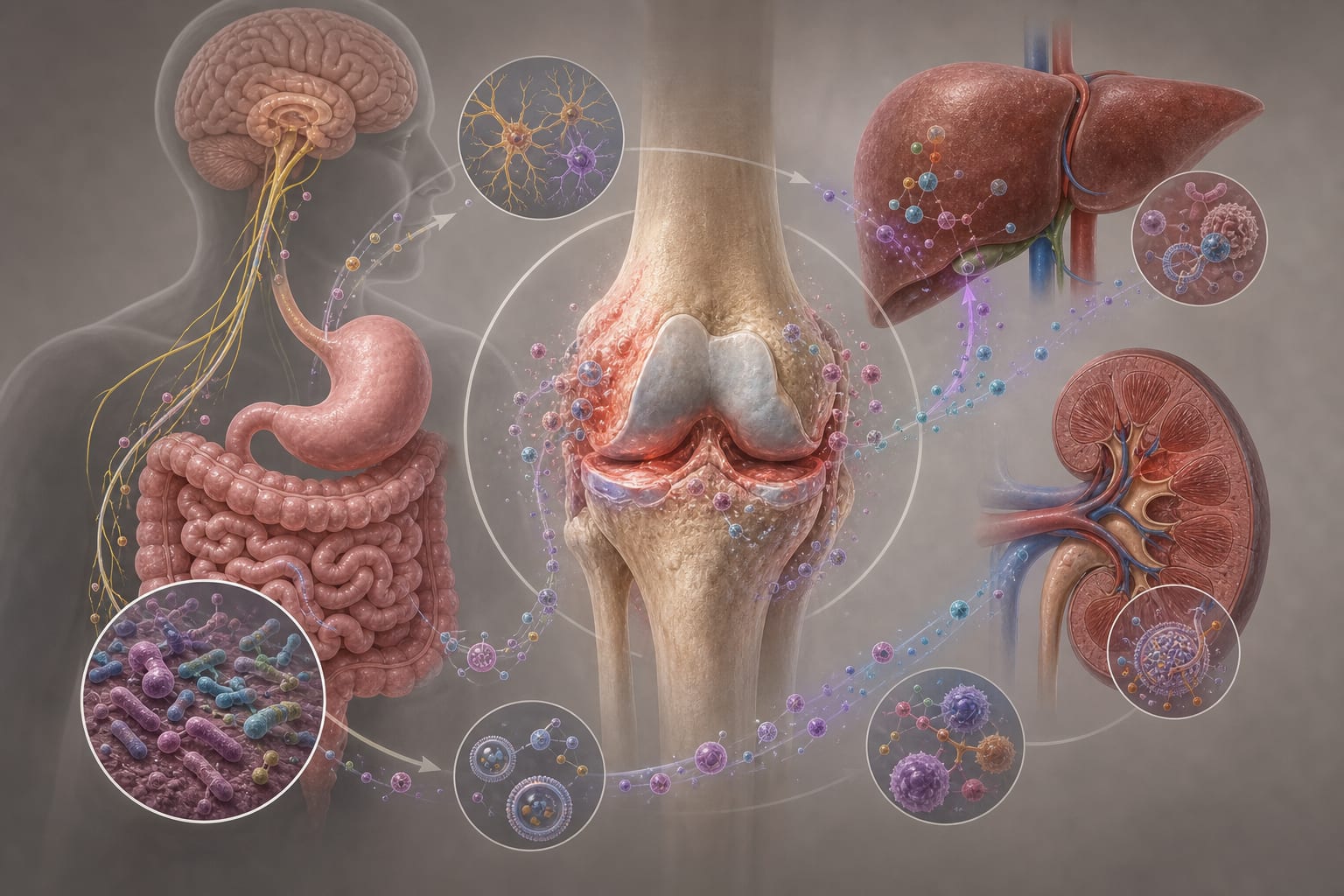
To synthesize emerging evidence for multi-organ involvement in osteoarthritis (OA) and propose a conceptual framework for further investigation into its systemic nature.
Approach:
Systemic Perspective: The review presents the 'Gut-Brain-Liver-Kidney axis' as a regulatory framework to explore systemic factors in OA pathogenesis, detailing specific molecular pathways such as gut microbial metabolites and bacterial extracellular vesicles.
Evidence Synthesis: Available evidence is synthesized to clarify how gut microbiota dysbiosis and its metabolites contribute to systemic inflammation and joint homeostasis disruption through specific pathways.
Key Findings:
Gut microbiota dysbiosis and its metabolites contribute to systemic inflammation affecting OA through specific pathways.
Central sensitization and neuroendocrine dysregulation in the brain modulate pain perception in OA, influencing disease progression.
Liver disorders related to iron and lipid metabolism promote chondrocyte ferroptosis, impacting OA.
Renal dysfunction impairs vitamin D metabolism and leads to accumulation of uremic toxins, exacerbating OA.
Interpretation:
The review presents a shift from localized symptom management to a systemic, disease-modifying approach in OA treatment.
Limitations:
Current knowledge gaps and controversies regarding the initiation versus modulation of OA by systemic factors, including the role of gut microbiota and metabolic disturbances.
Lack of systematic organization and integration of multi-organ regulatory networks in existing research.
Conclusion:
The review proposes a broader, systems-oriented approach to OA research and treatment, emphasizing the need for multi-target therapeutic opportunities.
In a UK cohort, patients with osteoarthritis who initiated centrally acting analgesics had a higher hazard of knee or hip replacement than those who initiated SSRIs, though residual confounding by pain severity remains a key limitation.
So get this: sodium may track with memory decline (in men), steroids might not be “immunosuppressive” in the ICU, and second pregnancies reshape the brain differently than first. Same theme: biology is less binary than we teach it.