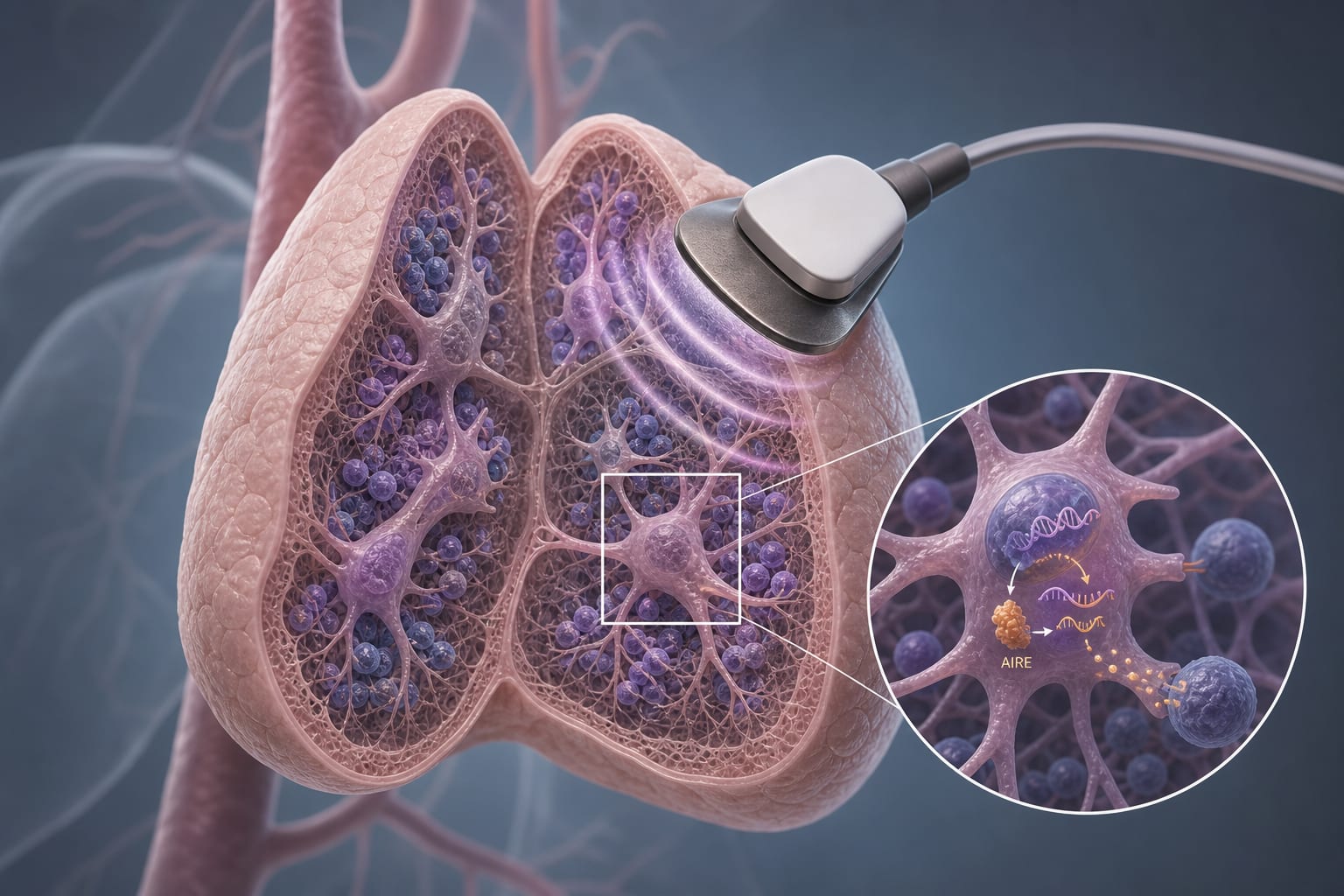
Bioelectronic modulation of the thymic “genetic mirror”: 448 kHz radiofrequency stimulation as a novel strategy for immune tolerance induction in type 1 diabetes - Summary - MDSpire
Advertisement
Bioelectronic modulation of the thymic “genetic mirror”: 448 kHz radiofrequency stimulation as a novel strategy for immune tolerance induction in type 1 diabetes
To explore the potential of 448 kHz radiofrequency stimulation to restore central immune tolerance in Type 1 Diabetes Mellitus (T1DM) by enhancing insulin expression in medullary thymic epithelial cells (mTECs), which is crucial for preventing autoimmune responses.
Approach:
Key Findings:
T1DM results from a breakdown of central immune tolerance in the thymus.
Bioelectronic modulation of the thymus may restore immune tolerance and prevent T1DM, potentially altering disease progression.
Interpretation:
The proposed bioelectronic intervention represents a shift towards targeting the underlying mechanisms of T1DM rather than managing symptoms, with the potential to significantly improve patient outcomes.
Limitations:
The direct evidence for MAPK-mediated AIRE upregulation in mTECs is not yet established.
The effectiveness of the proposed method in humans remains to be validated, and future studies should explore these avenues.
Conclusion:
The 448 kHz CRET strategy offers a non-invasive platform for potentially modifying the autoimmune response in T1DM, paving the way for innovative therapeutic approaches.