A Single-center experience of subperineural resection of intracranial schwannomas and the clinical course following subtotal resection - Summary - MDSpire
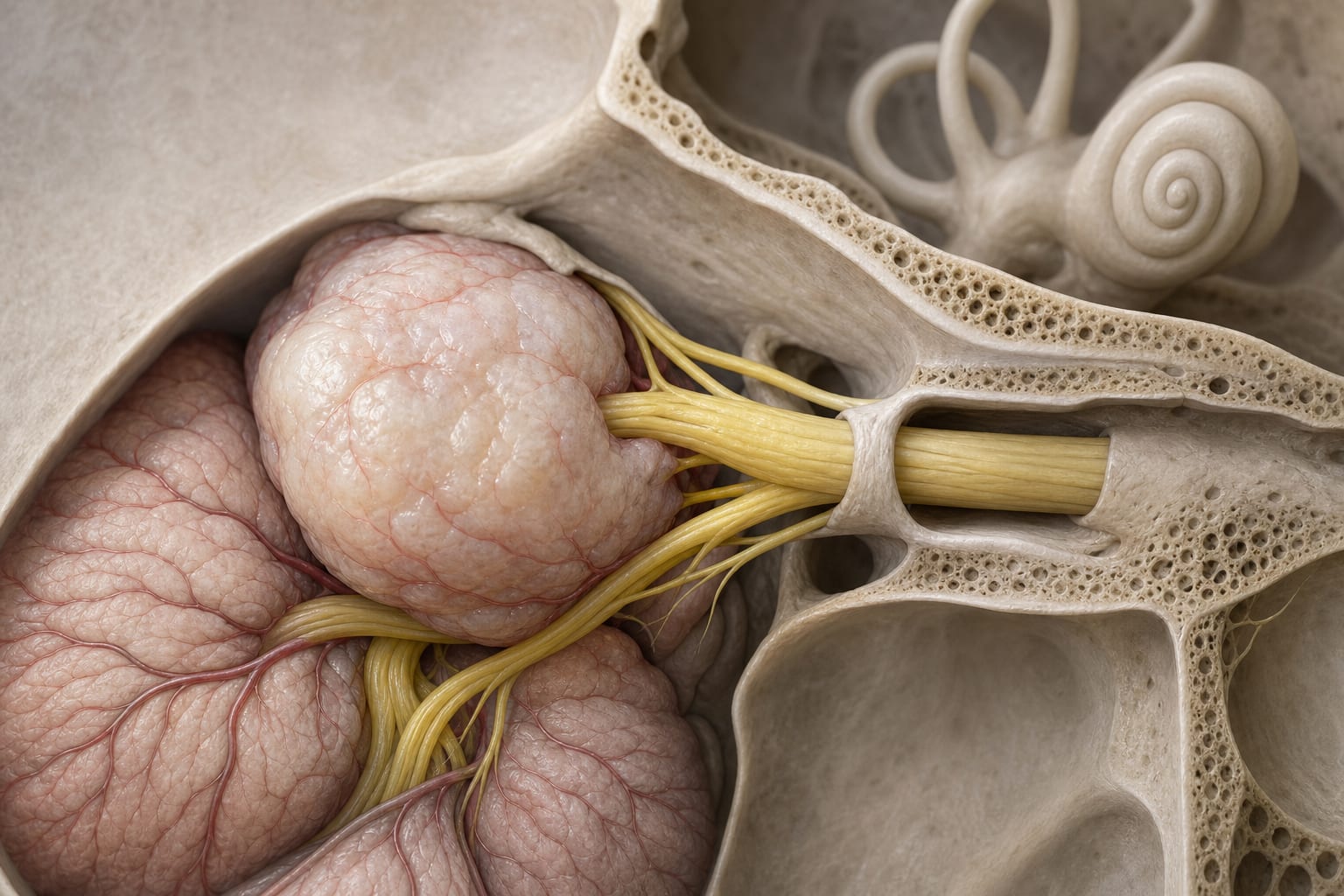
To evaluate the effectiveness of the subperineural resection technique in preserving neurological function and analyze postoperative outcomes in patients with intracranial schwannomas.
Approach:
Patient Population: Retrospective analysis of 186 patients who underwent intracranial schwannoma resection from April 2011 to March 2022.
Data Collection: Clinical and surgical data were collected, focusing on tumor characteristics, extent of resection, and postoperative symptoms.
Surgical Methods: Standardized surgical techniques were employed by multiple neurosurgeons, utilizing subperineural dissection.
Statistical Analysis: Statistical comparisons were made using appropriate tests, and regrowth-free survival was assessed using Kaplan–Meier curves.
Key Findings:
Total resection rates for CN V (n=15), VII (n=4), VIII (n=148), IX–XI (n=12), and XII (n=3) schwannomas were 53.3%, 75%, 70.3%, 50%, and 0%, respectively.
Regrowth occurred in 12/44 (27.3%) of CN VIII and 4/7 (57.1%) of CN V subtotal resection cases.
Postoperative growth rates for CN VIII schwannomas were 0.22 mm/year and 126.3 mm³/year; for CN V, 0.7 mm/year and 23 mm³/year.
Higher regrowth rates were observed in CN IX–XI (5/6, 83.3%) and CN XII (2/3, 66.7%) schwannomas.
Interpretation:
Subperineural resection is effective in preserving neurological function, but subtotal resection remains unavoidable in some cases, with varying regrowth rates based on cranial nerve origin.
Limitations:
Retrospective design may introduce bias.
Small sample sizes for certain cranial nerve schwannomas limit generalizability.
Conclusion:
Further large-scale analyses stratified by nerve origin are warranted.
The largest study of former National Football League players found excess persisted even after accounting for the lower overall mortality associated with elite athletic participation.