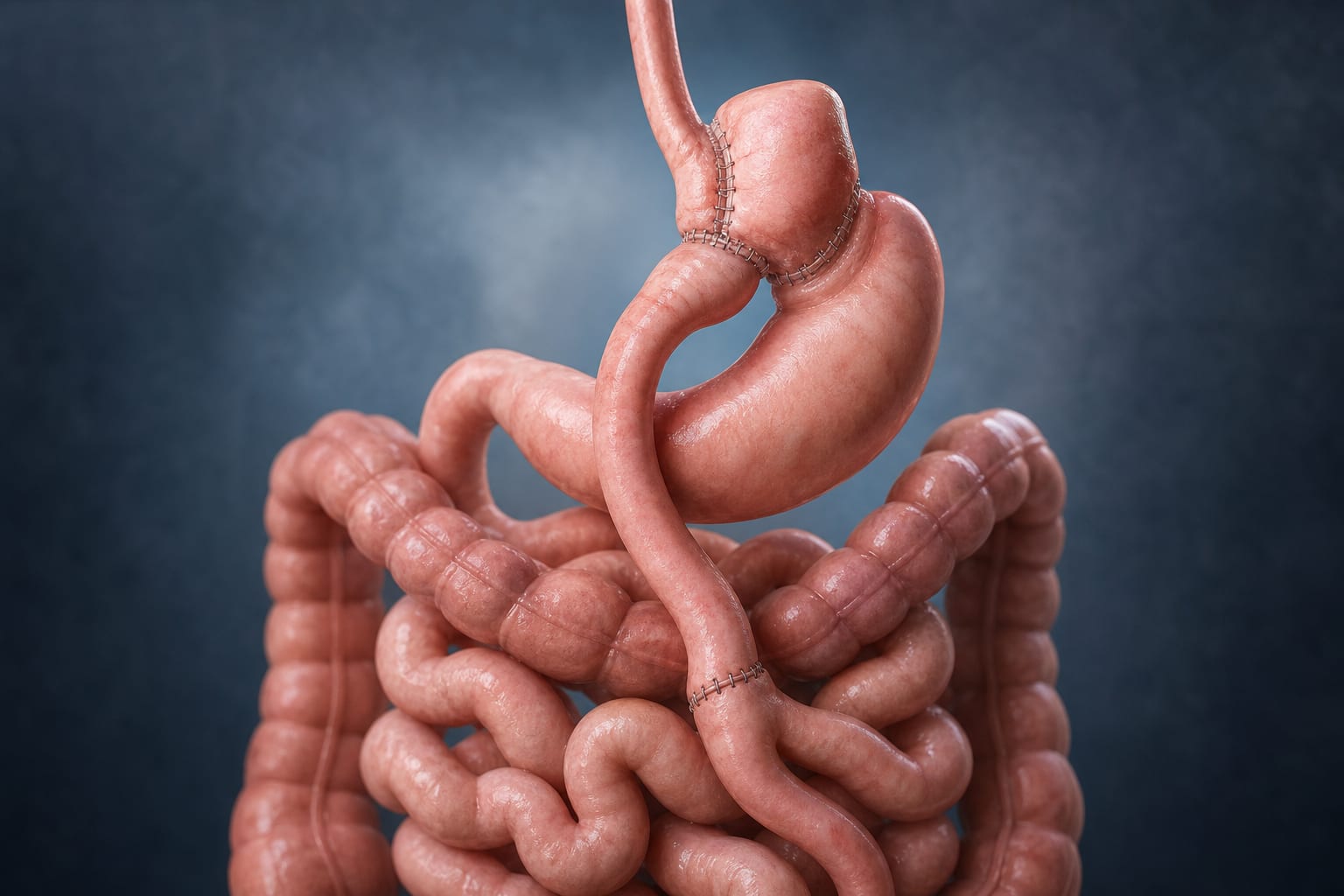
To evaluate the safety and effectiveness of OAGB as a conversion procedure for managing suboptimal initial response (SIR) or late postoperative clinical deterioration (LPCD) after primary restrictive bariatric surgical procedures.
Approach:
Surgical Techniques: All operations were performed laparoscopically using a minimum of 5 ports. The operative approach varied depending on the patient’s previous bariatric procedure, including specific techniques for LSG, LAGB, VBG, and GCP.
Key Findings:
Cumulative failure rates after primary restrictive procedures range from 30% to 60% at five years, according to the literature.
Conversion rates following bariatric metabolic surgery are reported between 10% and 25%, as noted in previous studies.
OAGB has shown comparable or superior effectiveness to RYGB for weight loss and remission of type 2 diabetes mellitus, based on existing research.
Interpretation:
The study aimed to provide insights into the effectiveness of OAGB as a revision surgery for patients experiencing failure from restrictive bariatric procedures.
Limitations:
The study is retrospective and may include biases associated with such designs, as noted in prior research.
Most prior studies on OAGB included small cohorts or did not specifically address outcomes after restrictive procedures, limiting the ability to draw firm conclusions.
Conclusion:
The study evaluates OAGB as a potential option for patients with weight loss failure after restrictive bariatric surgeries.