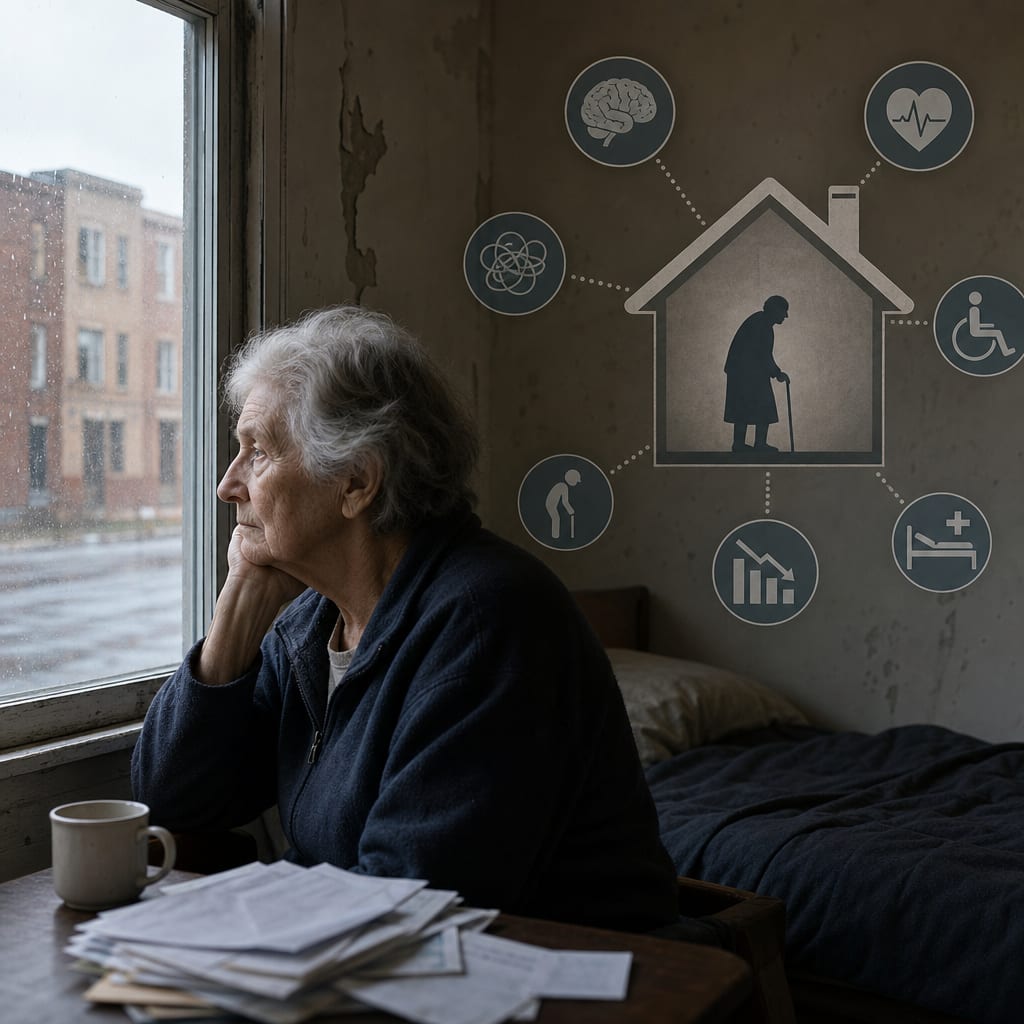
To evaluate the associations between forms of housing insecurity and the development of geriatric conditions and mortality among community-living older adults, addressing a critical knowledge gap.
Key Findings:
Housing insecurity is prevalent among older adults, with over 1 in 3 affected, highlighting the urgent need for intervention.
Poor housing affordability, quality, and neighborhood conditions are linked to increased risks of frailty, disability, and dementia, with specific statistics to illustrate these risks.
Higher mortality rates are associated with specific forms of housing insecurity, indicating a critical area for public health focus.
Interpretation:
The study highlights the significant impact of housing insecurity on health outcomes in older adults, suggesting that addressing these issues could improve geriatric health and reduce mortality, with implications for public health policy.
Limitations:
The study is observational and cannot establish causation, which limits the interpretation of the findings.
Data on housing quality and neighborhood quality were not collected during the COVID-19 pandemic, potentially affecting the comprehensiveness of the analysis.
Conclusion:
Addressing housing insecurity through targeted policy interventions, such as rental assistance and housing rehabilitation programs, may mitigate adverse health outcomes among older adults, emphasizing the need for strategic public health initiatives.