To provide insights into the dynamic ecosystem of the ocular surface, focusing on the interplay between microbial, immune, and environmental factors and their implications for ocular surface disorders.
Approach:
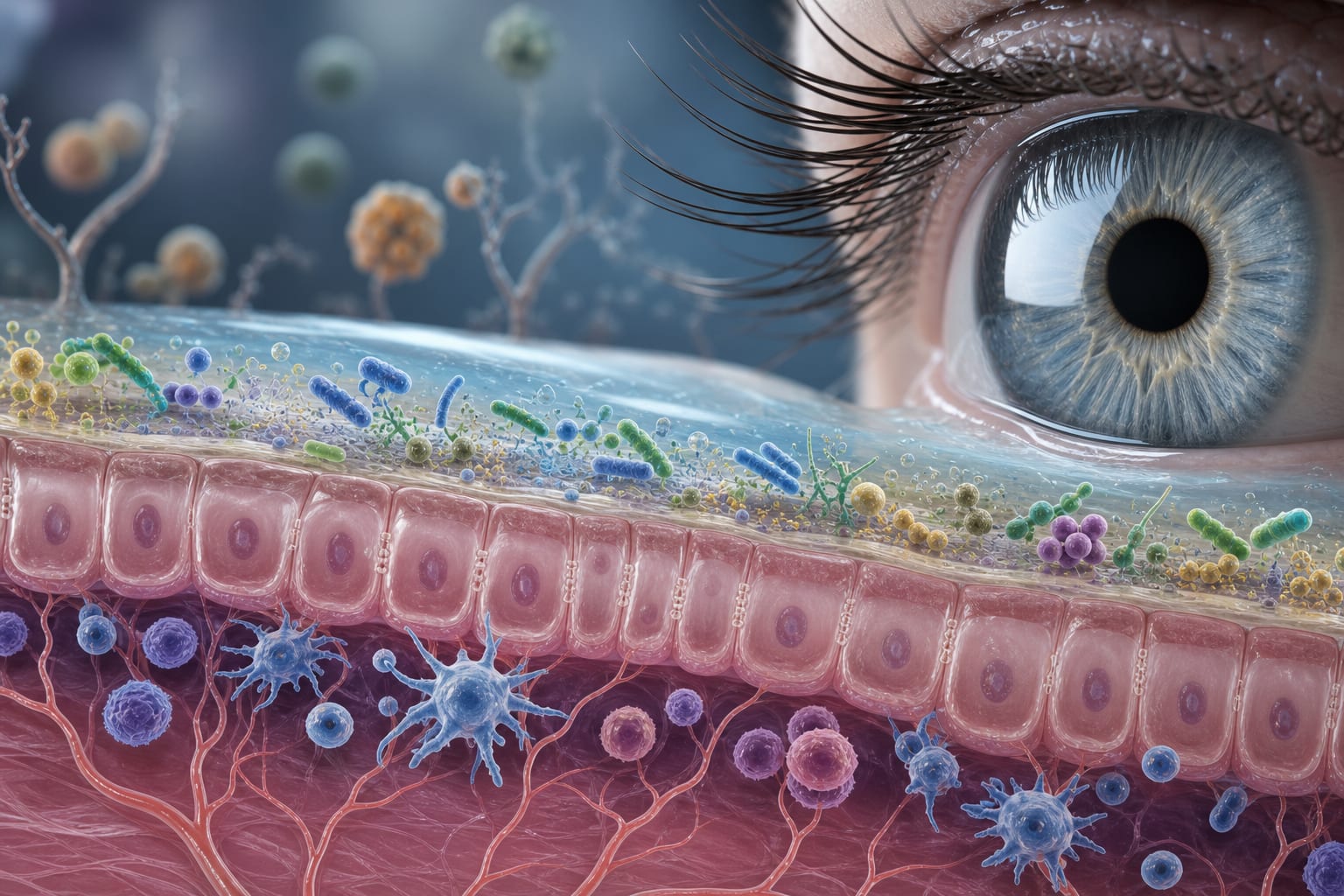
Ocular Surface Microbiome: Discusses the role of the ocular surface microbiome (OSM) in maintaining homeostasis and how dysbiosis can lead to ocular surface diseases.
Immune Architecture: Explores the specialized immune architecture of the ocular surface and its response to environmental and endogenous signals.
Immunometabolism: Examines the link between metabolic pathways in immune cells and their influence on inflammatory responses.
Environmental Influences: Highlights the impact of environmental factors such as allergens and pollutants on ocular surface health.
Key Findings:
The ocular surface microbiome is crucial for maintaining immune balance and epithelial integrity.
Dysbiosis of the ocular surface microbiome is linked to various ocular surface diseases, including dry eye disease and allergic eye disease.
The immune response at the ocular surface is complex, involving multiple pathways influenced by local and systemic factors.
Environmental factors, such as allergens and pollutants, significantly impact ocular surface health and can exacerbate diseases.
Interpretation:
The ocular surface functions as a complex ecosystem where microbial, immune, and environmental factors interact, significantly influencing both health and disease.
Limitations:
Inconsistent findings across studies due to variability in detection methods and sample handling, which complicates the understanding of the ocular surface microbiome.
The absence of a clearly defined 'core' ocular microbiome limits the ability to draw definitive conclusions.
There is a need for standardized methods and larger datasets to validate findings and improve understanding of ocular surface disorders.
Conclusion:
A comprehensive understanding of the interplay between the ocular surface microbiome, immune responses, and environmental factors is essential for effectively addressing ocular surface disorders.