Myelodysplastic Syndromes: Insights on Diagnosis, Risk Assessment, and Treatment Approaches for 2026
-
By
-
Guillermo Garcia-Manero
-
July 3, 2026
Objective:
To provide insights on the diagnosis, risk assessment, and treatment approaches for Myelodysplastic Syndromes (MDS) as of 2026.
Approach:
- Disease Overview: MDS is a heterogeneous group of myeloid malignancies with distinct natural histories, affecting 3 to 4 individuals per 105 in the US, with higher prevalence in older adults and males. Risk factors include prior chemotherapy or radiation, and it arises from hematopoietic stem cell dysfunction.
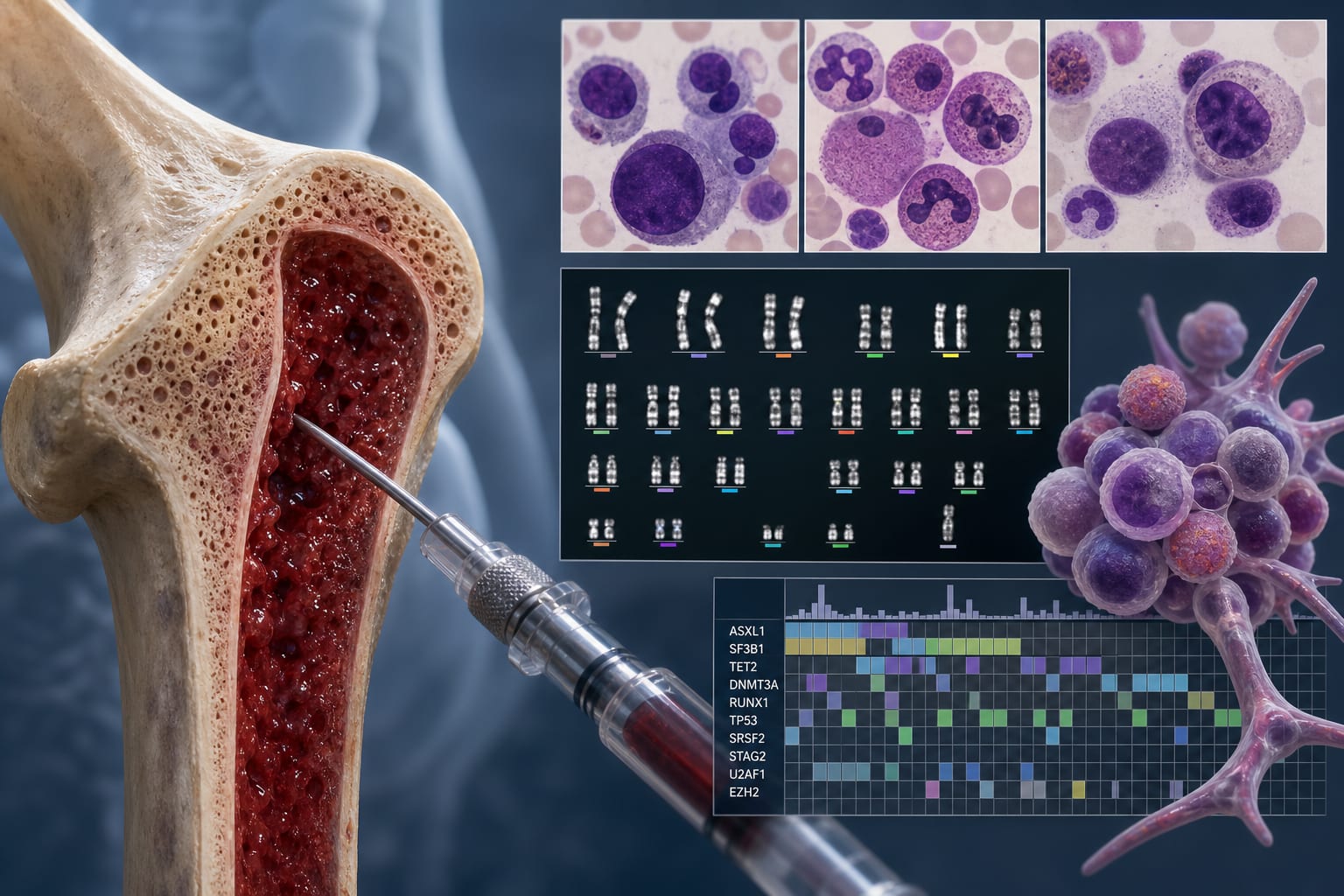
- Diagnosis: Diagnosis is suspected based on cytopenia and confirmed through bone marrow aspiration and biopsy, which evaluate cellular morphology and architecture. Dysplasia is key for diagnosis, with additional tests like cytogenetics and genomic sequencing aiding prognosis and risk stratification.
- Risk Assessment: Risk assessment is performed using the Revised International Prognostic Scoring System (IPSS-R), which incorporates clinical and cytogenetic factors to categorize patients into risk groups. This stratification informs treatment decisions and monitoring strategies.
- Treatment Approaches: Treatment options for MDS vary based on risk stratification and may include supportive care, disease-modifying agents like hypomethylating agents, and hematopoietic stem cell transplantation for eligible patients. Clinical trials are ongoing to evaluate novel therapies.
Key Findings:
- MDS prevalence increases with age, particularly in those over 60.
- Diagnosis relies on cytopenia and bone marrow evaluation, with dysplasia being crucial.
- Cytogenetic and genomic data are essential for risk assessment and treatment decisions.
- Diagnostic discrepancies can occur in about 20% of patients, particularly in early low-risk cases.
Interpretation:
MDS presents a complex clinical challenge that necessitates a multifaceted approach to diagnosis and management. The reliance on cytopenia and bone marrow evaluation underscores the importance of a thorough morphological assessment, while the role of dysplasia highlights the need for experienced pathologists in making accurate diagnoses. The integration of cytogenetic and genomic data into risk assessment allows for a more personalized treatment approach, which is crucial given the heterogeneity of the disease. Furthermore, the potential for transformation to acute myeloid leukemia (AML) in some patients necessitates vigilant monitoring and timely intervention. The ongoing research into novel therapies and treatment strategies is vital for improving outcomes in this patient population.
Limitations:
- Subjectivity in morphological assessment can lead to diagnostic discrepancies.
- Cytogenetic patterns may change over time, complicating prognosis.
Conclusion:
The understanding of MDS continues to evolve, with ongoing developments expected in classification and treatment strategies. As research progresses, it is anticipated that more refined diagnostic tools and targeted therapies will emerge, enhancing the ability to manage MDS effectively and improve patient outcomes. Continued collaboration among clinicians, pathologists, and researchers will be essential to address the complexities of MDS and to translate findings into clinical practice.
Sources:
Based on findings from:
Myelodysplastic Syndromes: 2026 Update on Diagnosis, Risk-Stratification and Management
Guillermo Garcia-Manero. American Journal Of Hematology, 2026.
https://onlinelibrary.wiley.com/doi/10.1002/ajh.70405
This content is an AI-generated, fully rewritten summary based on a published scholarly article. It does not reproduce the original text and is not a substitute for the original publication. Readers are encouraged to consult the source for full context, data, and methodology.