Vacuum sealing drainage as an adjunct to surgical debridement in pediatric acute hematogenous osteomyelitis: a retrospective cohort study - Summary - MDSpire
Conexiant’s news site is now MDSpire News. Learn more
Advertisement
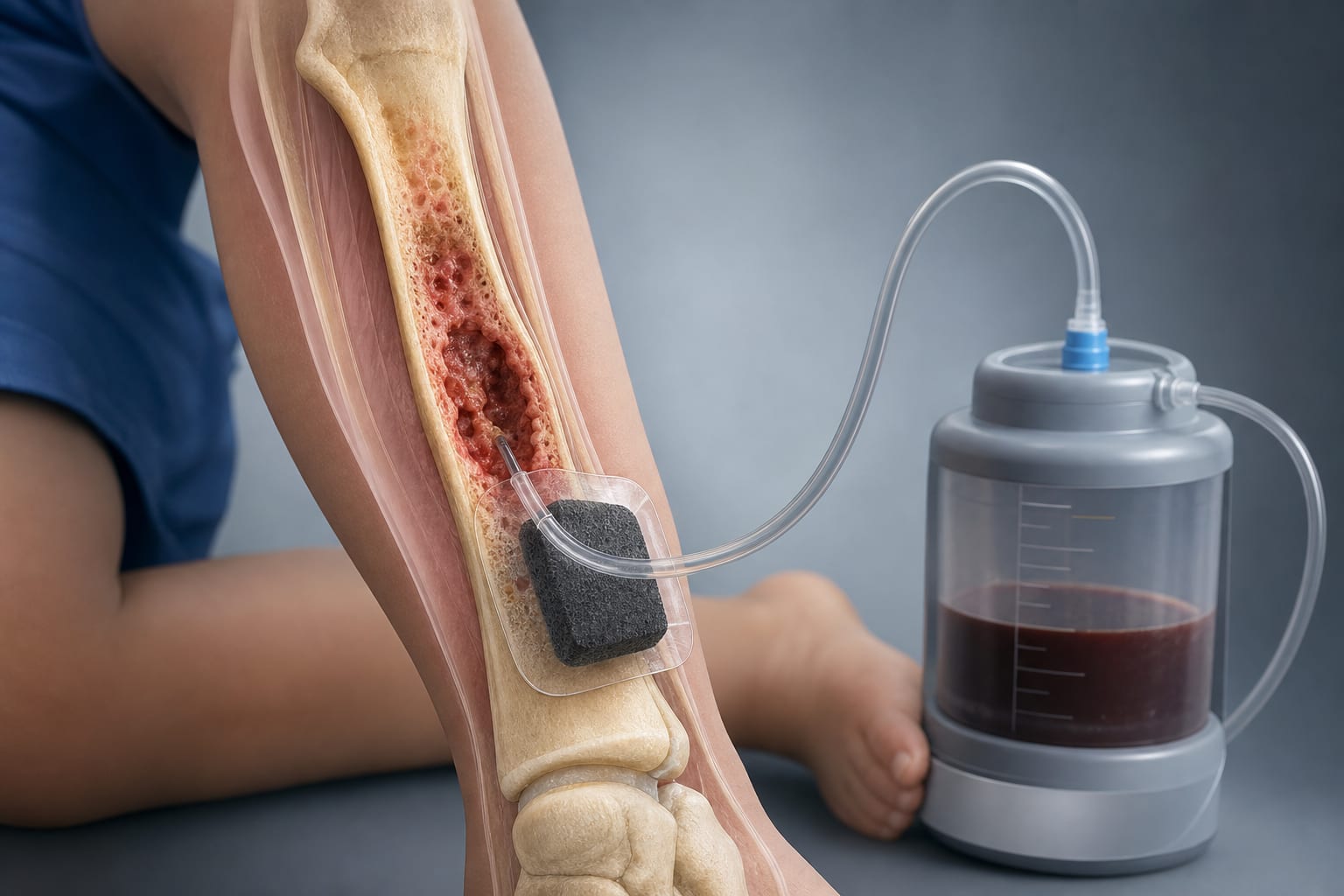
Utilizing Vacuum Sealing Drainage in Conjunction with Surgical Debridement for Pediatric Acute Hematogenous Osteomyelitis: A Retrospective Cohort Analysis
To compare the clinical outcomes of surgical debridement combined with vacuum sealing drainage (VSD) versus debridement alone in pediatric patients with acute hematogenous osteomyelitis (AHO).
Approach:
Study Design: Retrospective cohort study involving 55 consecutive children with AHO treated surgically between November 2019 and May 2025.
Participants: Included children aged ≤14 years diagnosed with AHO, treated with surgical debridement with or without VSD.
Outcomes: Primary outcome was length of hospital stay; secondary outcomes included number of surgical procedures, intravenous antibiotic duration, and infection recurrence within 3 months.
Statistical Analysis: Inverse probability of treatment weighting (IPTW) was used to address confounding.
Key Findings:
The VSD group had a longer hospital stay (33.2 ± 19.3 days) compared to the control group (21.0 ± 9.5 days, P = 0.003).
The VSD group underwent more surgical procedures (3.6 ± 1.5) than the control group (1.0 ± 0, P < 0.001).
No significant differences were found in intravenous antibiotic duration (P = 0.51), superinfection rate (P = 0.45), or 3-month recurrence (0% in both groups).
After IPTW adjustment, VSD remained associated with longer hospitalization (mean difference: 10.1 days; P = 0.009) and more procedures (mean difference: 2.5; P < 0.001).
Interpretation:
Adjunctive VSD therapy in children with AHO was associated with longer hospitalization and more surgical interventions without measurable improvements in infection control or recurrence.
Limitations:
Retrospective design may introduce bias.
Single-center study limits generalizability.
Lack of randomization.
Conclusion:
Findings indicate that adjunctive VSD therapy in uncomplicated pediatric AHO is associated with longer hospitalization and more surgical interventions.
A VHA study across 11 vendors finds AI-generated primary care notes score lower than clinician-written notes, with the largest deficits in thoroughness, organization, and usefulness