Convergent mitochondrial toxicity of fluorinated agents in oncological anaesthesia: sevoflurane, 5-fluorouracil, and the ACOD1/itaconate immune axis - Summary - MDSpire
Advertisement
Convergent mitochondrial toxicity of fluorinated agents in oncological anaesthesia: sevoflurane, 5-fluorouracil, and the ACOD1/itaconate immune axis
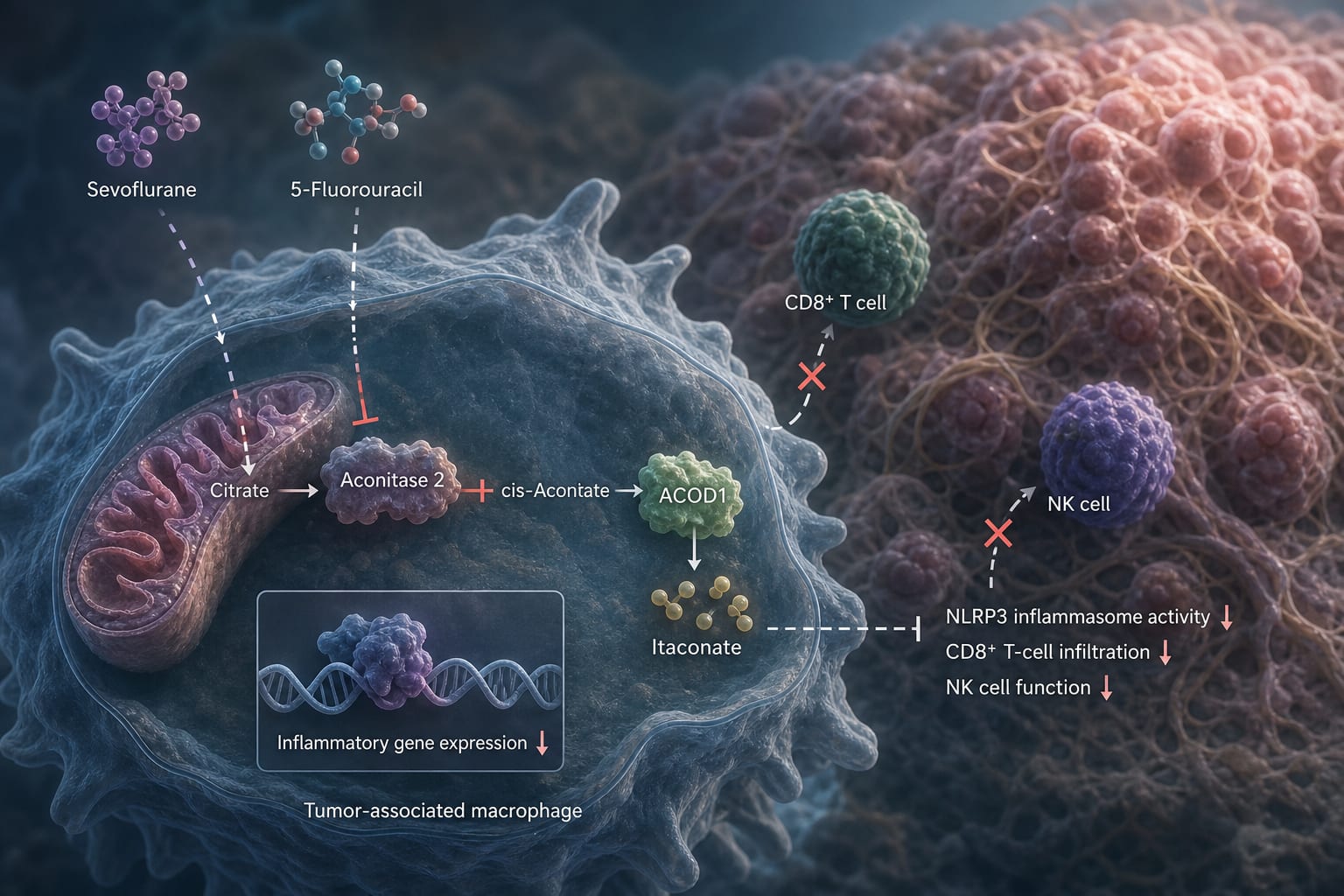
To explore the impact of sevoflurane and 5-fluorouracil on ACOD1/itaconate immune regulation in cancer patients undergoing anesthesia, highlighting the significance of these interactions in improving patient outcomes.
Key Findings:
5-fluorouracil (5-FU) generates fluoroacetate, which inhibits aconitase and depletes cis-aconitate for ACOD1, impacting immune regulation and potentially leading to adverse clinical outcomes.
Sevoflurane metabolism may produce aconitase-inhibitory species, further disrupting itaconate synthesis and affecting immune responses.
The perioperative period is critical for maintaining anti-tumor immune surveillance, which may be compromised by these agents, highlighting the need for careful anesthetic management.
Interpretation:
The concurrent use of sevoflurane and 5-FU may lead to a depletion of itaconate, resulting in both immune evasion at the tumor site and increased systemic inflammation, which could adversely affect patient recovery and outcomes.
Limitations:
The specific downstream products of sevoflurane metabolism and their aconitase-inhibitory potential require further investigation through targeted metabolomic studies.
Clinical implications of ACOD1/itaconate depletion in diverse patient populations need more comprehensive studies to understand the full impact on treatment outcomes.
Conclusion:
Pre-operative genotyping for DPYD and ACOD1 variants could guide anesthetic choices to mitigate adverse immunological effects in oncological surgeries, potentially improving patient outcomes.