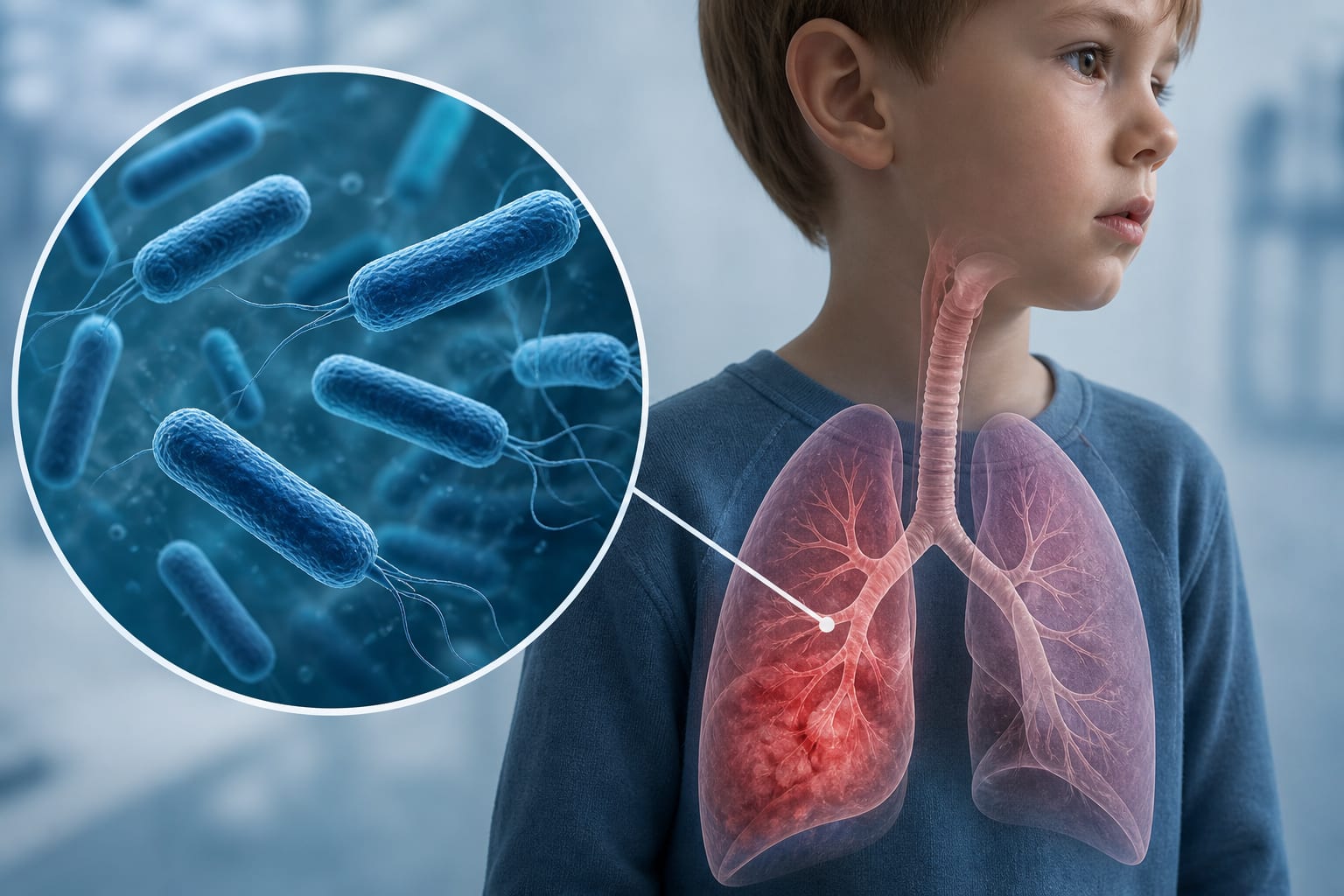
To provide an updated overview of Legionnaires’ disease (LD) in children through a case report and literature review.
Approach:
Literature Review: Reviewed pediatric LD case reports and case series from PubMed and Scopus involving patients aged 0–17 years, with extraction of clinical, diagnostic, treatment, and outcome data.
Case Report: Described a severe case of LD in a previously healthy 15-month-old girl, including her clinical course, diagnostic workup, and response to targeted therapy.
Key Findings:
Pediatric LD is rare, accounting for less than 1% of notified cases in Europe.
The review identified 44 pediatric cases; 64% occurred in children aged 1 year or younger, 61% had comorbidities, and 41% had immune deficiencies or immunosuppression.
Among cases with available acquisition data, 55% were healthcare-associated.
PCR was positive in 93% of cases with available data, while culture supported diagnosis in 57%.
Targeted antibiotic treatment was associated with lower odds of death in exploratory univariate analysis; overall mortality was 23%.
Interpretation:
Pediatric LD can be severe and difficult to recognize because clinical manifestations are often nonspecific. The findings support considering Legionella in children with severe pneumonia, particularly newborns, immunocompromised patients, healthcare-associated cases, and those who do not respond to beta-lactam antibiotics after 48 hours.
Limitations:
Evidence was limited to case reports and small case series with heterogeneous and incomplete reporting.
Multivariable analyses were not performed because of limited outcome events, missing data, and reporting variability.
Publication bias, possible confounding, and limited geographic representation may also affect the findings.
Conclusion:
Pediatric LD is rare but potentially severe, particularly in very young children and those with underlying conditions or healthcare exposure. Early recognition and timely targeted treatment may improve outcomes, while the high proportion of healthcare-associated cases underscores the need for strengthened prevention and infection-control strategies.