Pulmonary Artery Diameters in Children, Teenagers and Young Adults Derived from Quiescent Interval Slice Selective (QISS) Magnetic Resonance Angiography - Summary - MDSpire
Advertisement
Pulmonary Artery Diameters in Children, Teenagers and Young Adults Derived from Quiescent Interval Slice Selective (QISS) Magnetic Resonance Angiography
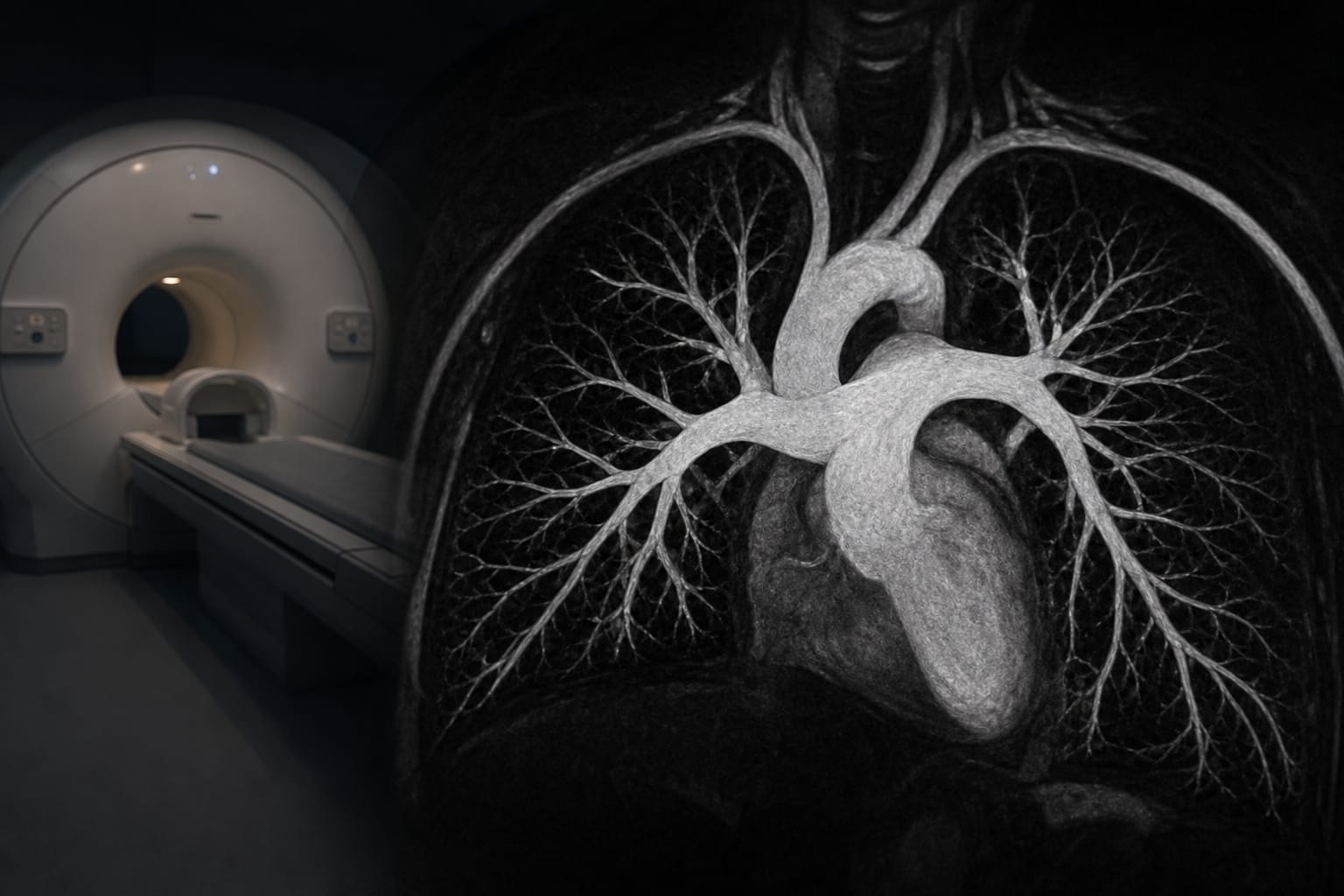
To measure the size of the main and branch pulmonary arteries in pediatric patients without pulmonary artery diseases using the radial QISS method and to identify variations related to sex, age, body height, body weight, and body surface area.
Approach:
Subjects: Retrospective analysis of CMR scans from pediatric patients without pulmonary artery diseases, examined at the University Hospital of Schleswig-Holstein, Campus Kiel, from 2018 to 2025.
Key Findings:
The study established reference values for the diameters and cross-sectional areas of the main and branch pulmonary arteries in pediatric populations.
Variations in pulmonary artery sizes were identified based on sex, age, body height, body weight, and body surface area.
Interpretation:
The radial QISS method provides a reliable and efficient approach to assess pulmonary artery dimensions in pediatric patients.
Limitations:
The study was limited to patients without pulmonary artery diseases, which may affect the generalizability of the findings.
Only two prior CMR studies have investigated pulmonary artery dimensions in children, complicating direct comparisons.
Conclusion:
The radial QISS method aids in establishing reference values for pulmonary artery dimensions in pediatric patients.