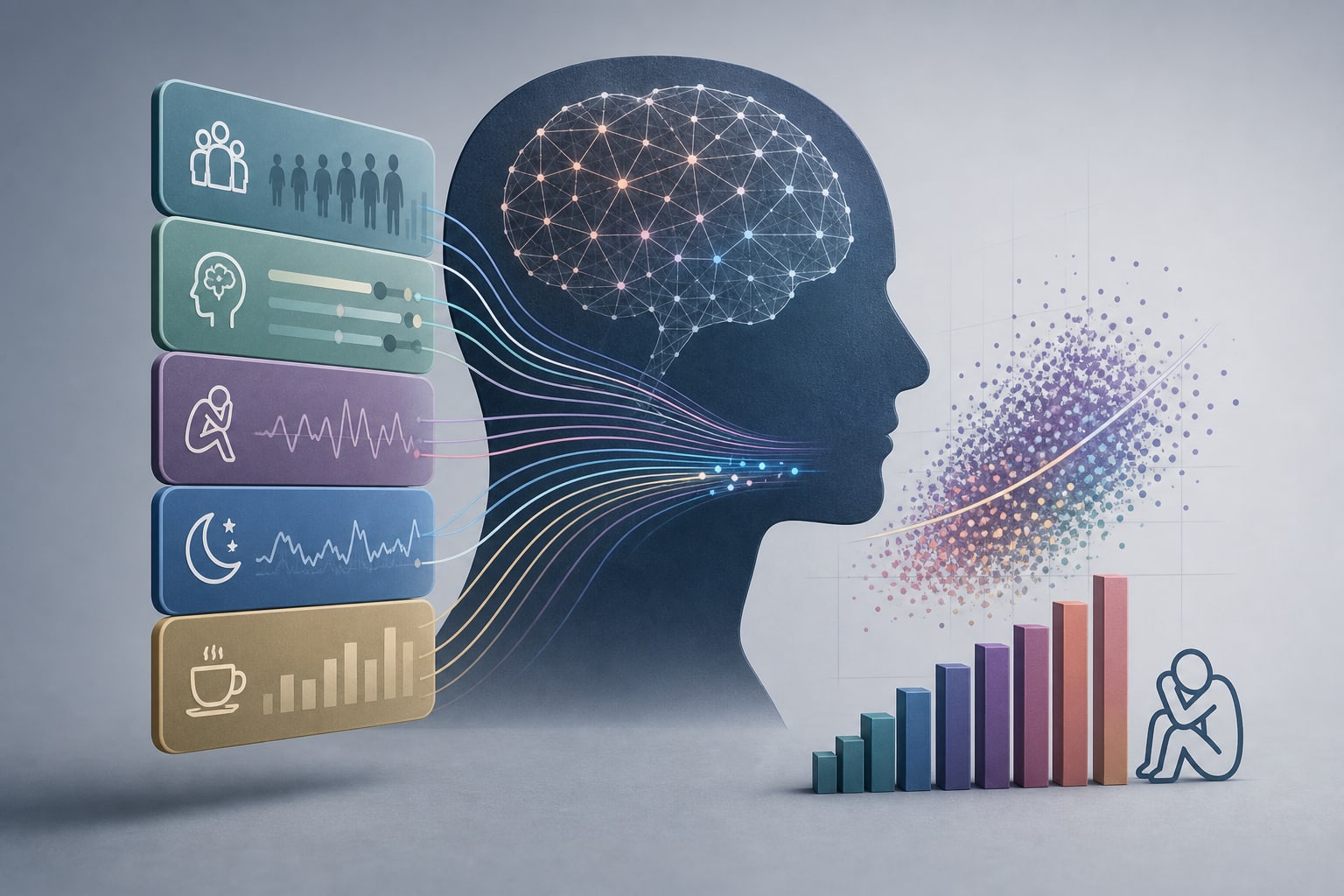
To evaluate the associations of lifestyle, psychological, and demographic factors with anxiety severity and explore the potential of machine learning in predicting anxiety levels, emphasizing its role in enhancing predictive accuracy.
Key Findings:
Significant associations were found between anxiety and factors such as stress, sleep duration, family history of anxiety, and occupation, highlighting the multifactorial nature of anxiety.
Ensemble machine learning algorithms demonstrated superior performance compared to single and linear-model approaches, indicating their effectiveness in predictive modeling.
Stress, sleep, and caffeine intake emerged as the top predictors of anxiety, underscoring the importance of lifestyle factors.
Interpretation:
The study highlights the multifactorial nature of anxiety and the effectiveness of machine learning in predicting anxiety severity, suggesting a need for integrated approaches in mental health care, such as combining lifestyle interventions with predictive analytics.
Limitations:
The study primarily relies on cross-sectional data, which limits causal inferences and the ability to determine the directionality of relationships.
Future research should incorporate longitudinal designs and biological/digital markers to enhance understanding of anxiety dynamics.
Conclusion:
The integration of statistical and machine learning methods underscores the complexity of anxiety and suggests potential for improved predictive modeling in mental health.