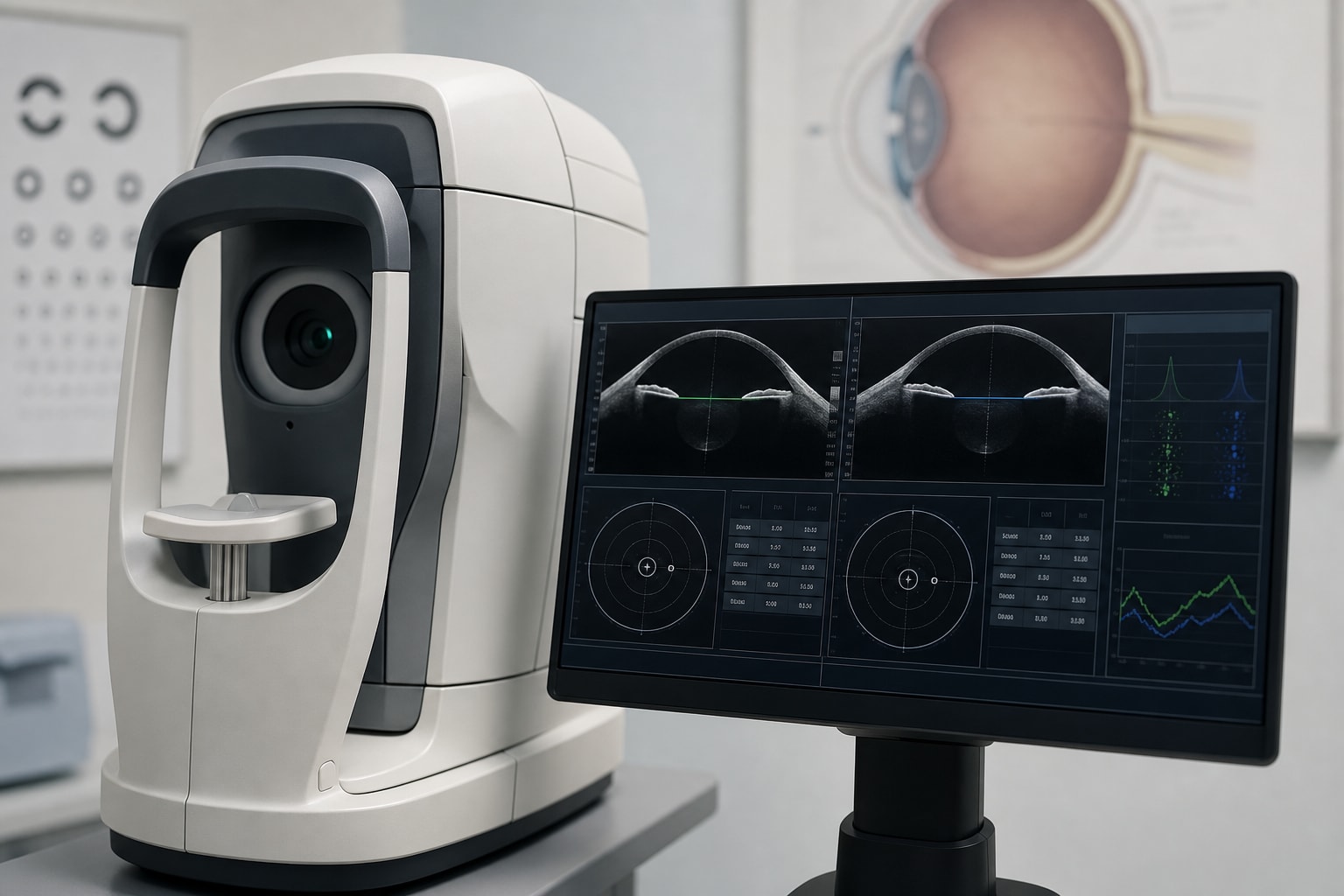
To describe clinical and ocular biometric characteristics of high myopia in children and adolescents, analyze relationships between age and axial length (AL) and axial ratio (AL/CR), identify high-risk structural populations, and evaluate binocular asymmetry and follow-up progression, emphasizing the clinical significance of these findings.
Key Findings:
Average SE of highly myopic eyes was −8.87 ± 2.58D.
Average AL was 26.41 ± 1.33 mm (n = 118); AL/CR ratio was 3.38 ± 0.19 (n = 73).
Age positively correlated with AL (r = 0.485, P < 0.001) and AL/CR (r = 0.505, P < 0.001).
Anisometropia was common, with | ΔSE| ≥ 2.0D in 27.7% of patients.
Annual growth rate of AL in follow-up subset was approximately 0.224 ± 0.264 mm/year.
Interpretation:
Age and refractive error independently contribute to axial elongation in children with high myopia, indicating the need for enhanced monitoring and potential interventions.
Limitations:
Study relies on retrospective data, which may have missing records and potential biases.
Does not construct a definitive predictive model.
Conclusion:
AL and AL/CR are key structural indicators for monitoring high myopia progression; unilateral high myopia or significant binocular asymmetry necessitates individualized monitoring and suggests the need for further research into effective monitoring strategies.