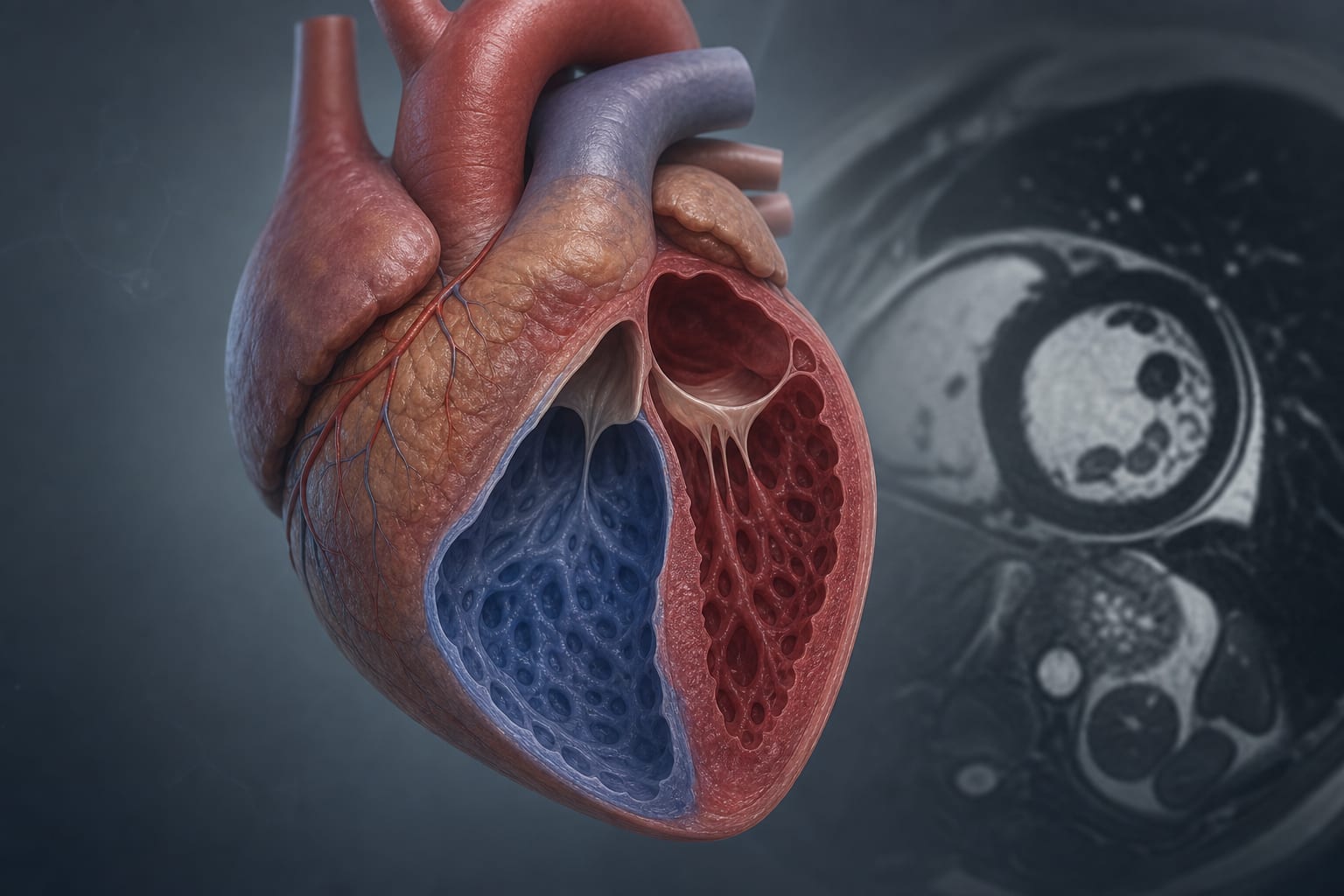
To evaluate the association between right ventricular (RV) dysfunction and the risk of sudden cardiac death (SCD) and ventricular arrhythmias (VAs), and to compare the prognostic value of RV function with left ventricular ejection fraction (LVEF).
Approach:
Statistical Analysis: Statistical analyses were performed using R software version 4.4.3 (R Foundation for Statistical Computing, Vienna, Austria) and followed the Cochrane Handbook for Systematic Reviews of Interventions. Dichotomous outcomes were pooled using random-effects models to calculate pooled odds ratios (ORs) with 95% confidence intervals (CIs). Continuous outcomes were analyzed using inverse-variance random-effects models to estimate mean differences (MDs). Heterogeneity was assessed using Cochran’s Q test and the I2 statistic.
Key Findings:
Reduced right ventricular fractional area change (RVFAC) is independently associated with increased risk of SCD or appropriate ICD therapy.
Approximately one-third of SCD cases occur in patients with LVEF ≤ 35%, while nearly half occur in individuals with preserved LV function.
Coexisting RV dysfunction in patients with LV dysfunction is linked to greater survival benefit from ICD implantation.
Interpretation:
The findings suggest that RV dysfunction may serve as an important predictor of SCD and VAs, potentially enhancing risk stratification beyond LVEF alone.
Limitations:
Exclusion of case reports, editorials, and studies without extractable outcome data may limit the comprehensiveness of the analysis.
Potential publication bias assessed but not definitively ruled out.
Conclusion:
RV dysfunction should be considered in the risk assessment for SCD and VAs, alongside traditional measures like LVEF.
by Toshinori Chiba, Amelie Beblo, Nora Wainstejn, Julia Lueg, Robert Hättasch, Felix Hohendanner, Verena Tscholl, Nikolaos Dagres, Gerhard Hindricks, Wilhelm Haverkamp
In adults diagnosed with pulmonary arterial hypertension within the previous year, adding sotatercept to background therapy reduced the risk of clinical worsening events by 76% compared with placebo.