Case Study: Two Instances of Idiopathic Plasmacytic Lymphadenopathy, a Subtype of Idiopathic Multicentric Castleman Disease, Accompanied by Xanthelasma Palpebrum from a Canadian Institution - Summary - MDSpire
Advertisement
Case Study: Two Instances of Idiopathic Plasmacytic Lymphadenopathy, a Subtype of Idiopathic Multicentric Castleman Disease, Accompanied by Xanthelasma Palpebrum from a Canadian Institution
To present two cases of idiopathic plasmacytic lymphadenopathy (iMCD-IPL) diagnosed in British Columbia, Canada, and explore the association with xanthelasma palpebrum, highlighting its clinical significance.
Key Findings:
Both patients exhibited normolipemic bilateral xanthelasma palpebrum, a novel finding in iMCD-IPL that may indicate a unique clinical presentation.
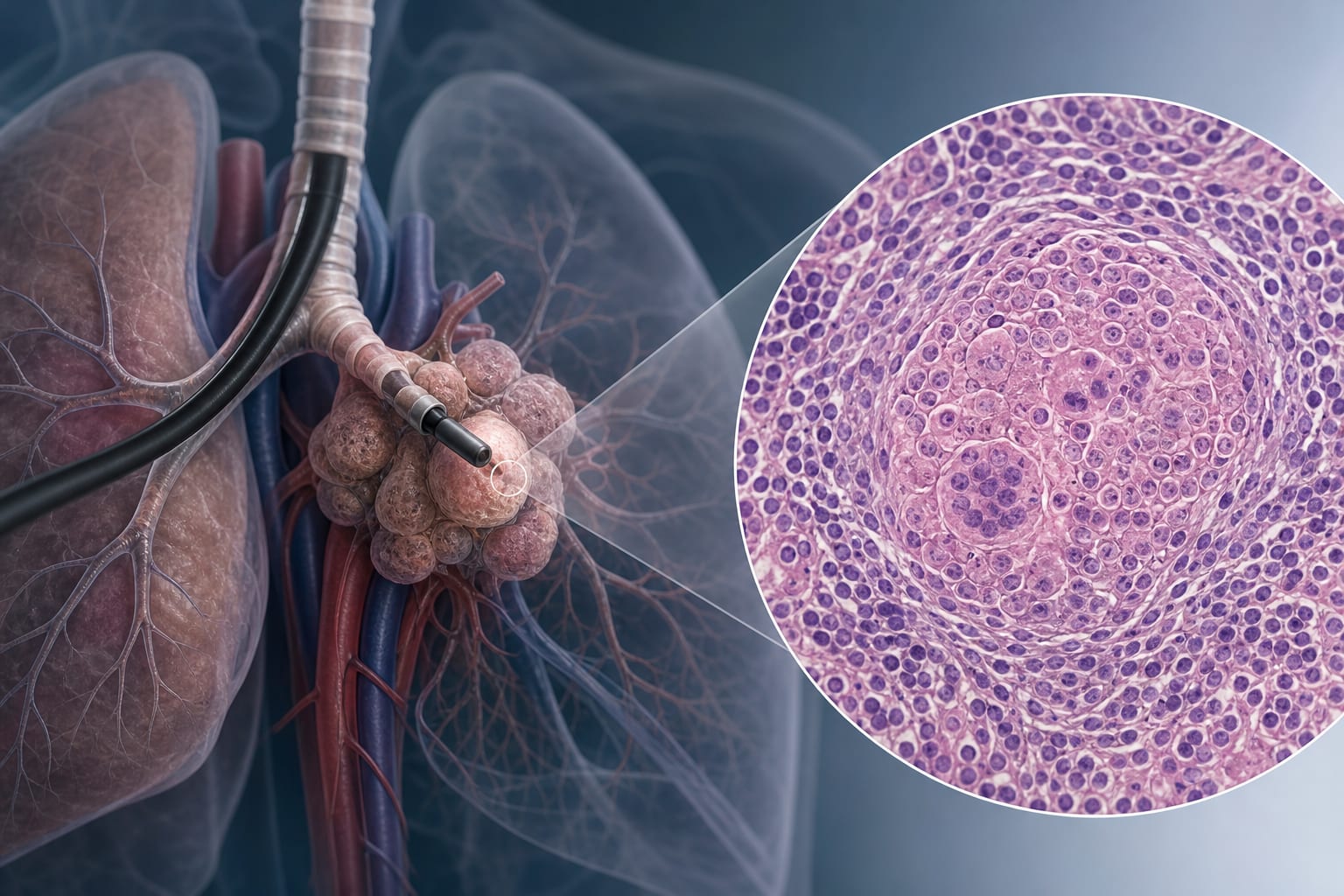
Histological examination confirmed iMCD-IPL with plasmacytic histology.
Partial response to siltuximab was noted, but no change in xanthelasmas.
Interpretation:
The presence of xanthelasma in these patients suggests a potential pathophysiological link between Castleman disease and xanthomas, warranting further investigation despite the lack of regression with treatment.
Limitations:
Limited number of cases presented.
Lack of long-term follow-up data on the patients' conditions.
Need for more diverse case studies to strengthen findings.
Conclusion:
This case study highlights the need for awareness of iMCD-IPL in Western populations and its potential association with xanthelasma, emphasizing the importance of further investigation into this relationship.
by Andrew A. Y. Chen, Vivian T. Yin, Paula Blanco, Mark Trinder, Richard I. Crawford, Ryan Henrie, Stephen Parkin, Nasreen Khalil, Mollie Carruthers, Lu Zhang, Luke Y. C. Chen