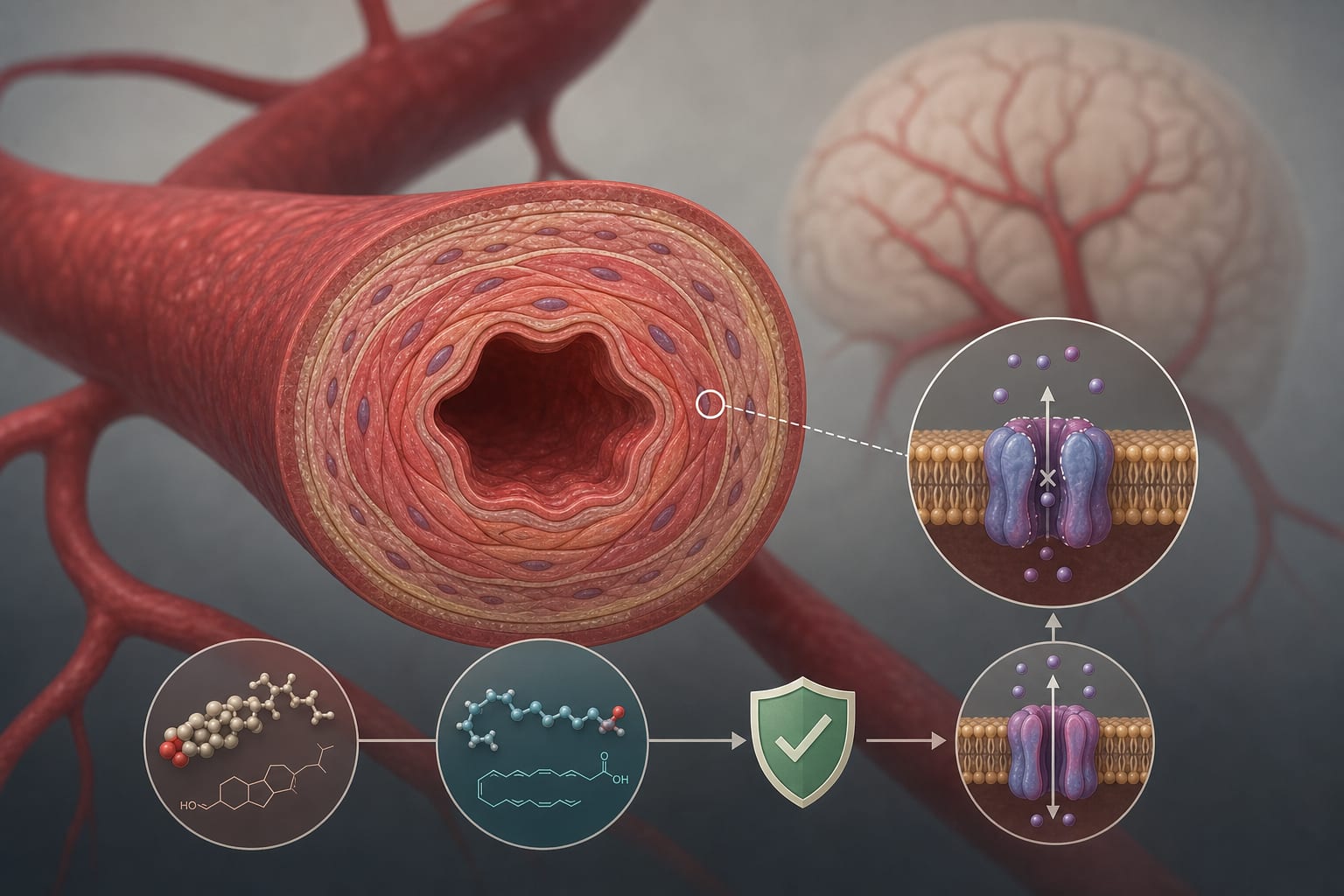
To examine the combined effects of cholesterol and DHA dietary supplementation on alcohol-induced changes in rat cerebral artery diameter and to investigate the underlying mechanisms.
Approach:
Animal Model: Sprague-Dawley rats were placed on a high-cholesterol diet and randomized into DHA supplementation and control groups.
In Vivo and Ex Vivo Experiments: Cranial window experiments were conducted to assess the effects of alcohol on cerebral artery diameter, with DHA administered both in vivo and ex vivo.
Key Findings:
High-cholesterol diet and DHA supplementation independently protect against alcohol-induced constriction of cerebral arteries.
DHA did not further modify the protective action of high-cholesterol diet.
Interpretation:
The findings suggest that cholesterol and DHA may share a common protective mechanism against alcohol-induced cerebrovascular constriction, potentially involving the BK channel α-subunit.
Limitations:
The study primarily used male and female rats, which may limit the generalizability of the findings to other populations.
The specific molecular mechanisms underlying the shared protection remain to be fully elucidated.
Conclusion:
Cholesterol and DHA may offer protection against alcohol-related constriction of cerebral arteries.