Hepatic Steatosis Severity Prediction in Nonobese Individuals: Machine Learning Model Development and Validation
-
By
-
Yitong Zhu
-
Yongshuai Wang
-
Shenyu Zhang
-
Jian Yang
-
Feng Zhang
-
Yan Liu
-
Jun Shang
-
Yongliang Zhang
-
Jizhou Wang
-
Lianxin Liu
-
June 19, 2026
-
Objective:
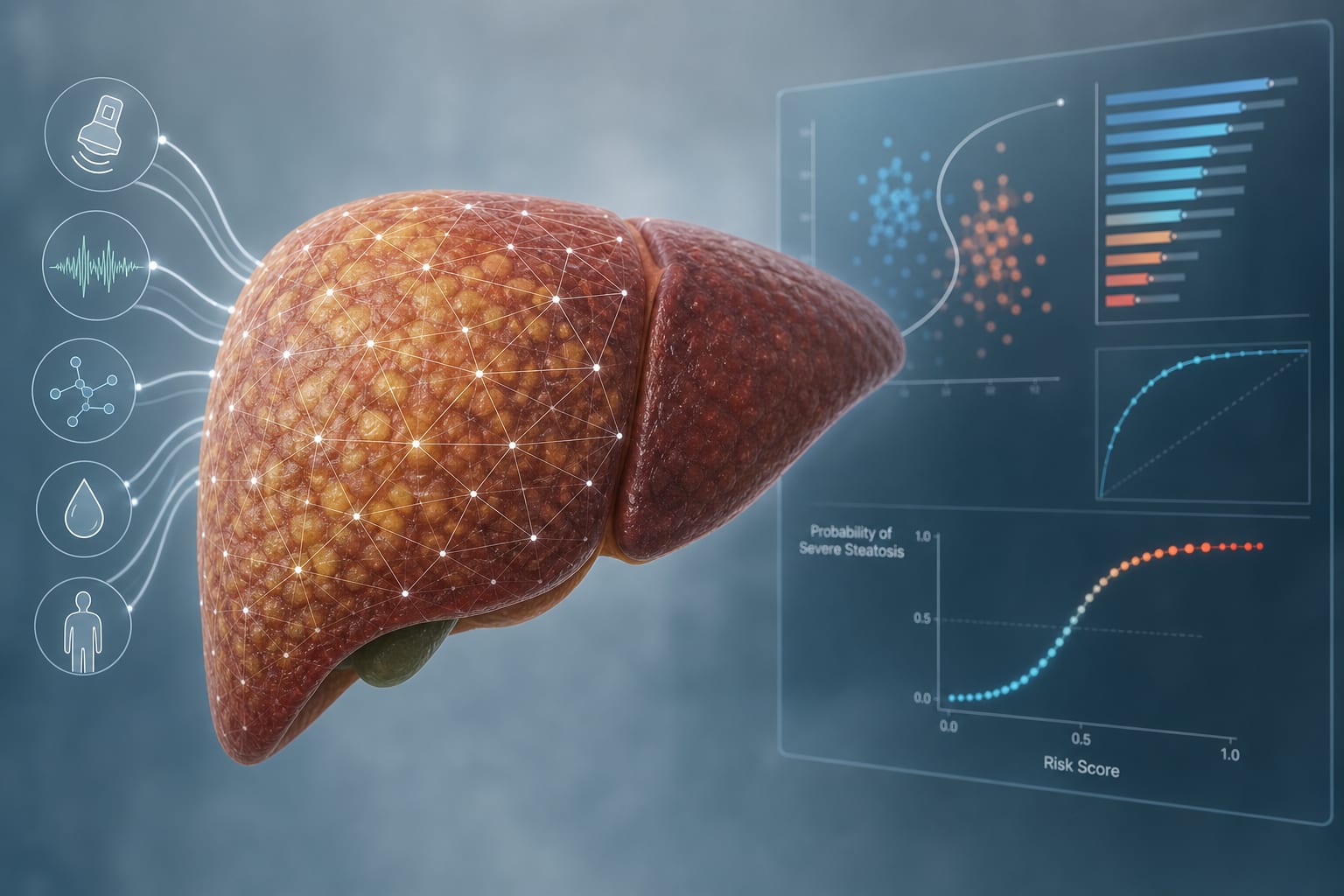
To develop and validate an optimal multiclass machine learning model for predicting hepatic steatosis severity in nonobese populations.
Approach:
Key Findings:
- Machine learning models demonstrated high accuracy in predicting hepatic steatosis severity based on the study's analysis.
- CAP provided a reliable quantitative alternative for steatosis grading compared to traditional ultrasound methods, as indicated by the results.
- The study identified the need for tailored screening strategies for nonobese individuals at risk of liver disease.
Interpretation:
The study presents a machine learning approach for predicting hepatic steatosis severity in nonobese populations, addressing a diagnostic gap.
Limitations:
- The study's findings may not be generalizable beyond the specific population studied.
- The reliance on retrospective data may introduce biases.
Conclusion:
The developed machine learning model offers a tool for multiclass risk stratification in nonobese individuals.