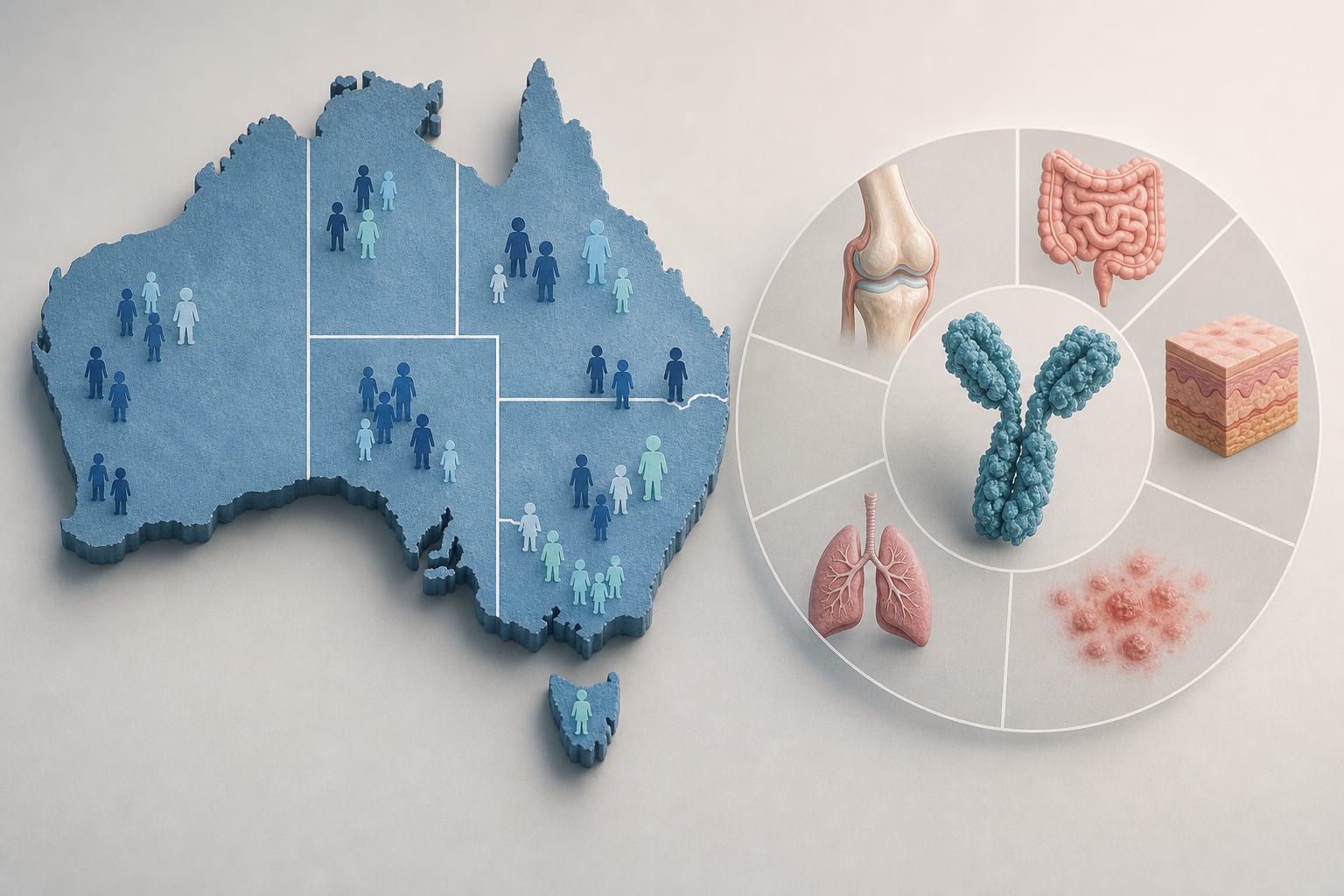
To quantify the uptake and use of biologic medicines for pediatric immune-mediated inflammatory diseases (IMIDs) and to characterize the Australian pediatric population initiating these treatments.
Approach:
Study Setting and Data Source: Utilized PBS dispensing claims from a random sample of the PBS-eligible Australian population aged under 25 years, covering two time periods: 1 February 2013 to 30 June 2017 and 1 July 2017 to 31 December 2020.
Study Design and Population: Conducted a population-based study involving children aged 1–17 years who were dispensed at least one biologic medicine during the study period.
Conditions and Medicines of Interest: Examined biologic medicines approved by the TGA and listed on the PBS for pediatric use in various IMIDs, including inflammatory arthropathies, IBD, inflammatory skin conditions, and severe asthma.
Key Findings:
The study identified nine biologic medicines of interest for pediatric IMIDs.
PBS dispensing claims provided demographic information, including sex and year of birth, and details of medicines dispensed, such as PBS-specific medicine codes, treatment indications, dates of dispensing, and quantities dispensed.
Interpretation:
Limitations:
PBS data do not capture medicines dispensed to public hospital inpatients or private dispensings.
Safety knowledge of biologic medicines is primarily based on adult populations.
Conclusion:
This study aims to provide insights into the utilization of biologic treatments in pediatric IMIDs in Australia.
Phoenix Children’s today announced the appointment of Joshua D. Koch, MD, as Senior Vice President, Hospital Based In Chief, a newly established executive physician leadership role created to strengthen coordination across the health system’s hospital-based clinical services.