Orchestrating the gut microbiota–mitochondrial–immune axis in gynecological diseases: mechanisms and dual-targeting therapeutic strategies - Summary - MDSpire
Conexiant’s news site is now MDSpire News. Learn more
Advertisement
Integrating the Gut Microbiome, Mitochondrial Function, and Immune Response in Gynecological Disorders: Mechanistic Insights and Combined Therapeutic Approaches
To analyze the interaction between gut microbiota and mitochondrial function in gynecological disorders and propose a dual-targeted treatment approach.
Approach:
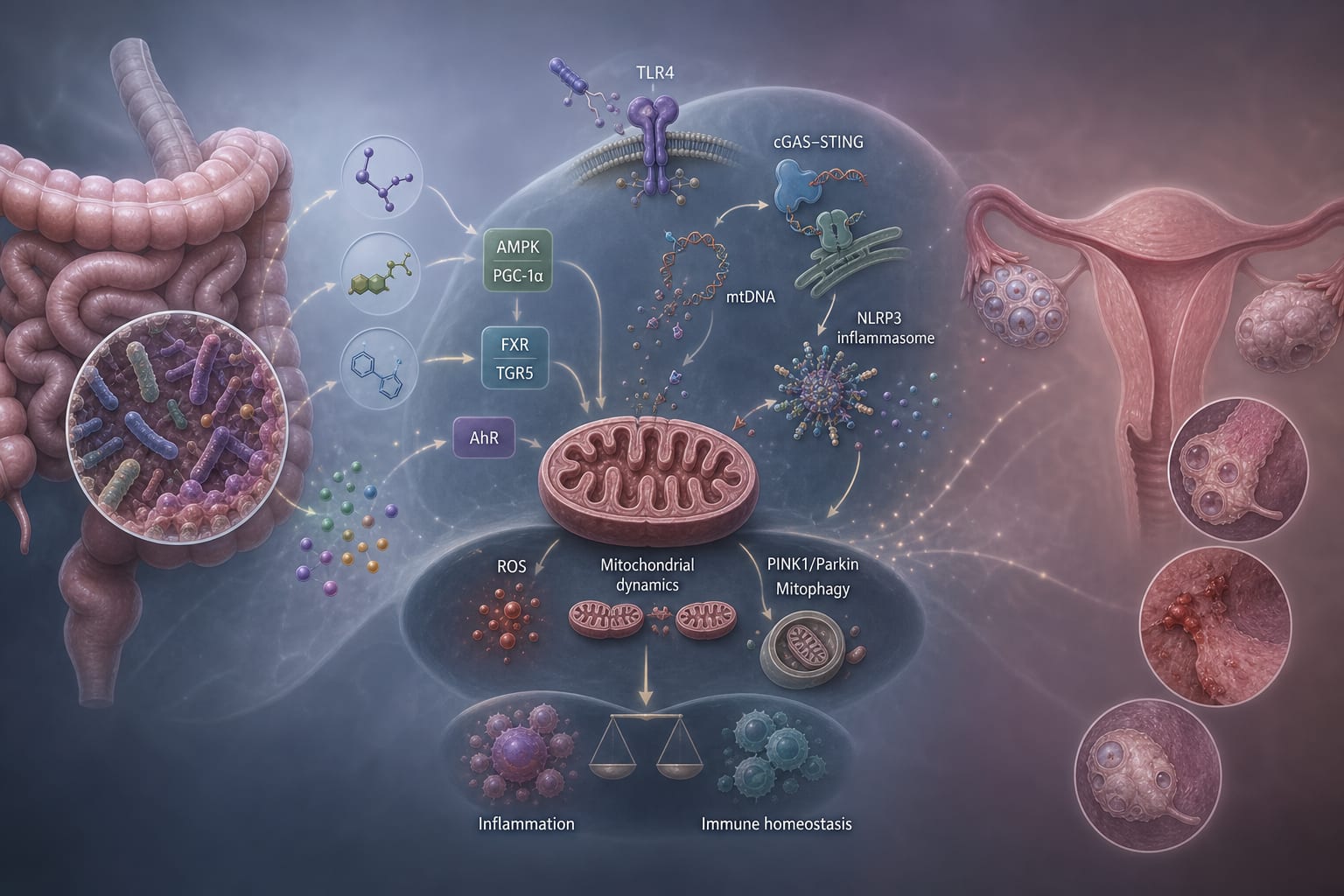
Theoretical Framework: The review constructs a hierarchical framework of 'microbiota-metabolomics-mitochondria' to clarify targeted phenotypes in the pathway.
Disease Correlation Analysis: Analyzes disease-specific correlations among polycystic ovary syndrome, endometriosis, premature ovarian insufficiency, and gynecological malignancies.
Intervention Plans: Proposes interventions focusing on microbiota to adjust metabolite spectrum and endotoxin levels, and mitochondria-centered interventions to restore energy metabolism.
Key Findings:
Gut microbiota dysbiosis is present in PCOS, leading to reduced SCFA production and increased mitochondrial oxidative stress.
In endometriosis, lipopolysaccharide and mitochondrial DNA release can activate chronic inflammation.
Microbial metabolites can induce mitochondrial apoptosis and metabolic reprogramming in POI and gynecological malignancies.
Interpretation:
The gut microbiota–mitochondria axis is a critical mechanism in the pathogenesis of gynecological diseases, suggesting a need for integrated research approaches.
Limitations:
Current studies often focus on gut microbiota dysbiosis or mitochondrial damage separately, lacking integration of their mechanisms.
Limited human clinical interventional evidence exists to support findings.
Conclusion:
The integration of multi-omics technology and targeted interventions may lead to breakthroughs in precision medicine for gynecological diseases.
Single-nucleus sequencing of menstrual fluid identified epithelial gene signatures and prioritized five candidate biomarkers that warrant validation in larger studies.