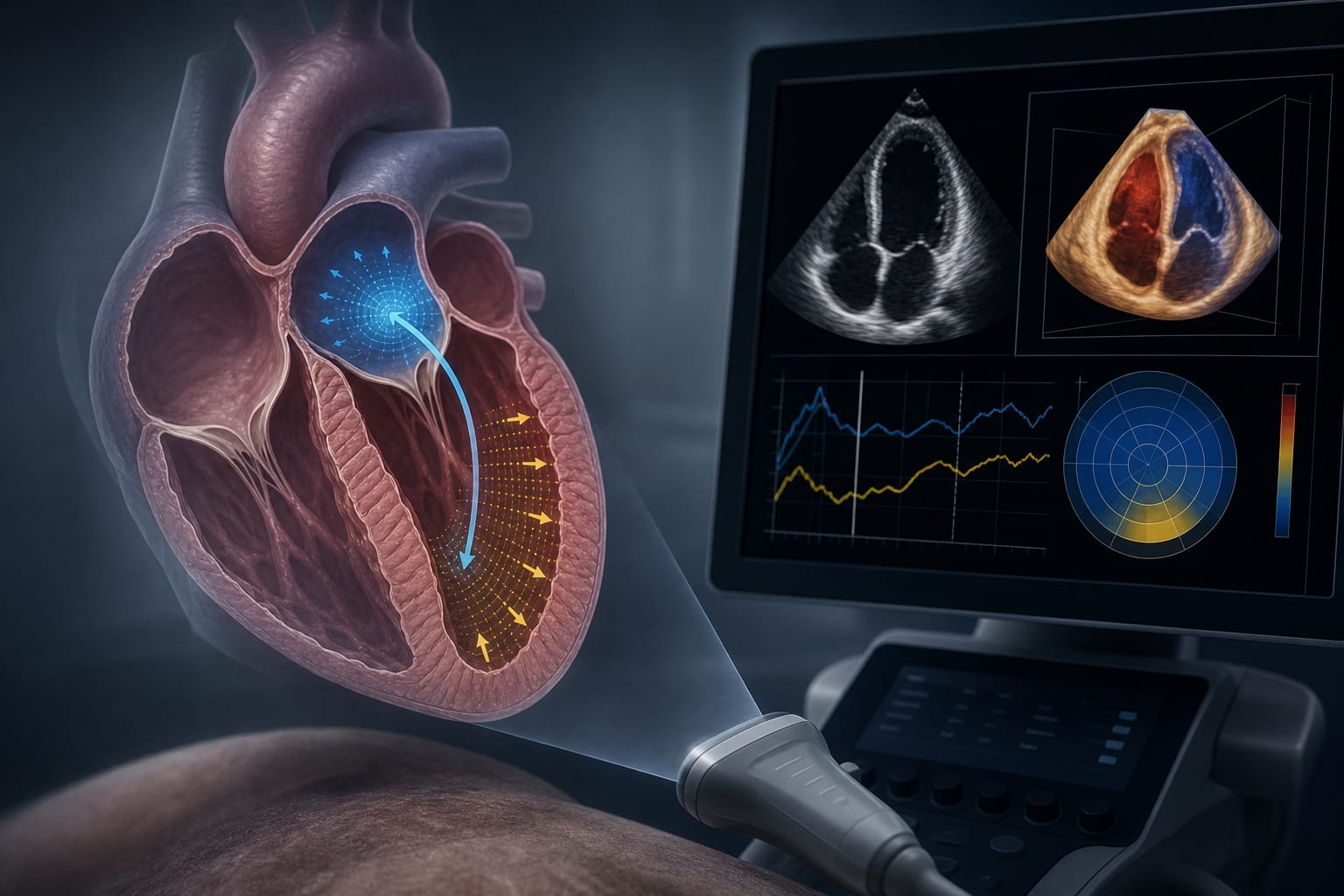
To evaluate the technical characteristics and standardization challenges of Left Atrioventricular Coupling Index (LACI) measurement approaches in echocardiography.
Approach:
Measurement Approaches: This review compares four LACI measurement approaches: two-dimensional echocardiography (2DE), real-time three-dimensional echocardiography (RT-3DE), speckle-tracking echocardiography (STE), and artificial intelligence (AI)-assisted analysis, highlighting their technical characteristics and clinical applicability.
Key Findings:
2DE is optimal for screening purposes.
RT-3DE shows the highest consistency with cardiovascular magnetic resonance for precise diagnosis.
3DE-LACI has demonstrated independent prognostic value in cardiac amyloidosis.
STE aids mechanistic exploration but requires algorithmic standardization.
AI shows potential but needs multicenter validation.
Key limitations include absent cross-platform calibration, fragmented reference values, and lack of externally validated cutoffs.
Interpretation:
LACI is a promising marker of diastolic function with proven prognostic value; however, technical heterogeneity and inconsistent thresholds have hindered its clinical application.
Limitations:
Absence of cross-platform calibration.
Fragmented reference values.
Lack of externally validated cutoffs.
Conclusion:
Future efforts should focus on cross-manufacturer standardization, the establishment of reference values for specific populations, and randomized controlled trials evaluating LACI as a guide for treatment.