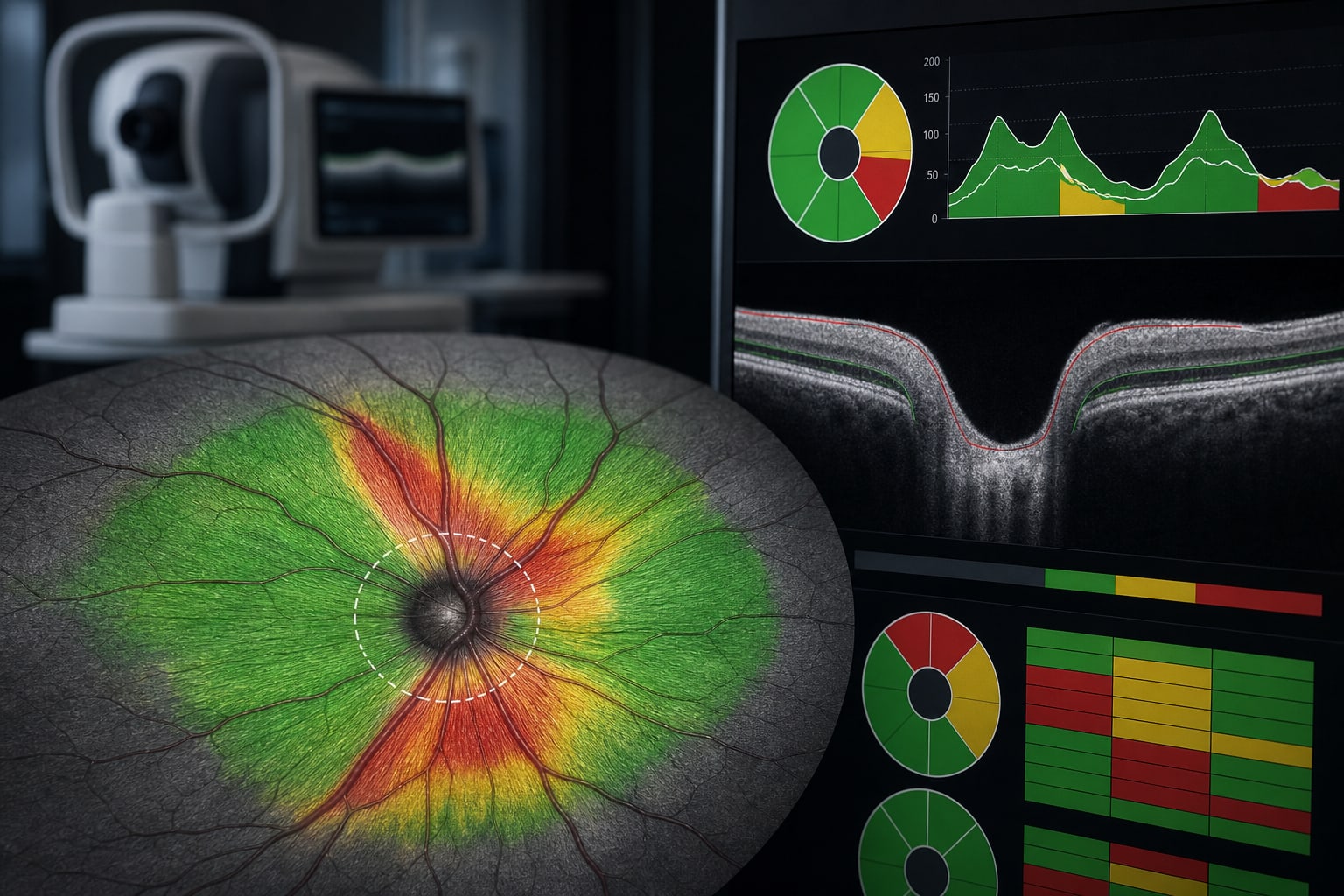
To highlight the limitations and clinical implications of color-coded OCT RNFL maps in glaucoma diagnosis due to narrow normative datasets.
Approach:
Key Findings:
Current normative datasets for OCT RNFL analysis are limited in demographic and biometric diversity, leading to potential misclassification.
Color-coded outputs can misclassify healthy eyes as abnormal or mask early damage due to reliance on narrow reference populations.
There is a need for greater transparency regarding the composition of normative datasets used in OCT, particularly concerning proprietary algorithms.
Interpretation:
RNFL color maps should be viewed as statistical summaries that require correlation with other diagnostic tools for accurate diagnosis.
Limitations:
Normative datasets are often based on small sample sizes and may not represent diverse populations.
Proprietary algorithms limit the ability to assess performance across different demographics, leading to potential misinterpretation of results.
Conclusion:
Enhancing transparency and developing inclusive normative frameworks, along with collaborative efforts, can improve the reliability of OCT RNFL analysis in glaucoma diagnosis.