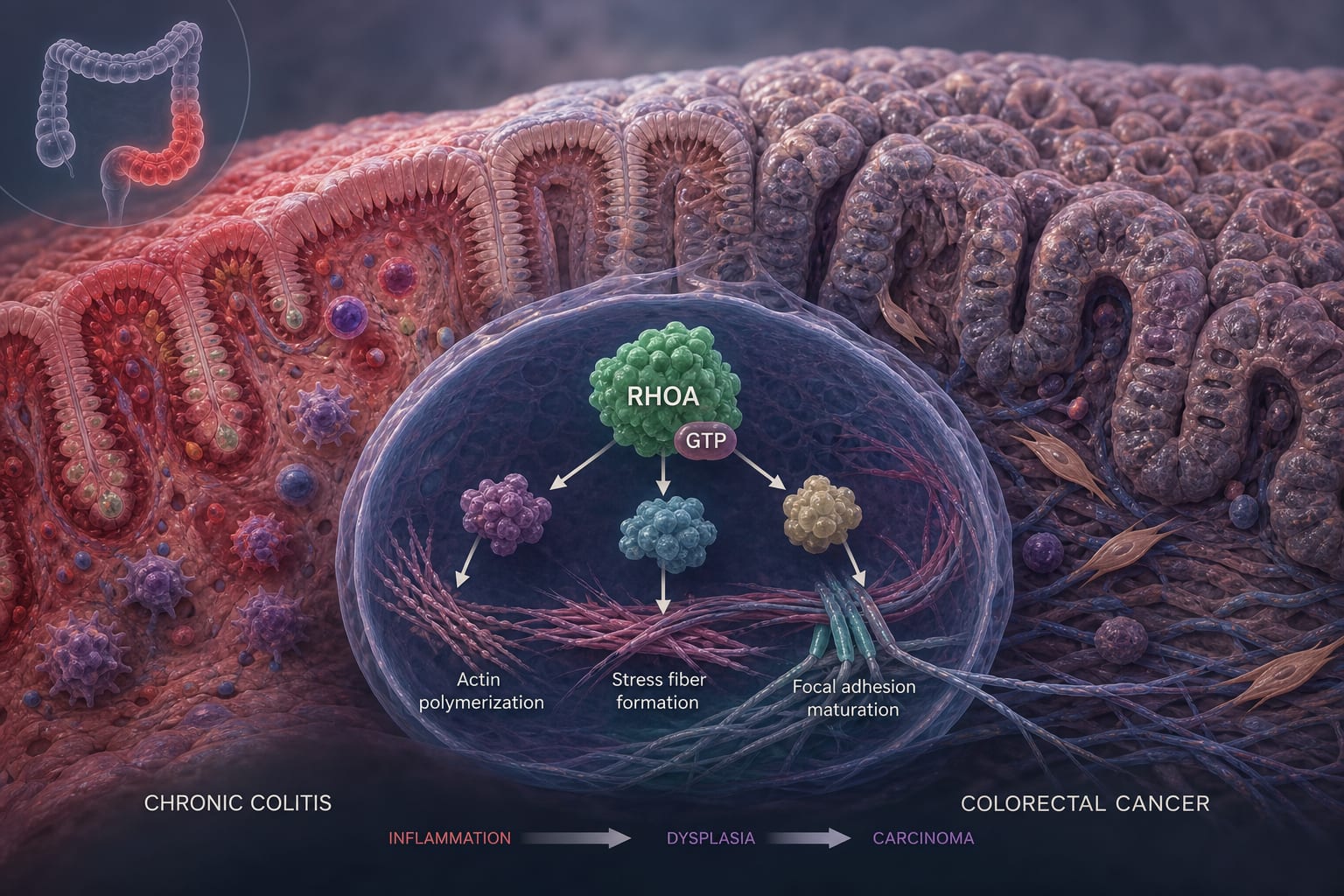
To summarize the mechanisms of RHOA function and regulation in colorectal cancer (CRC), focusing on its role in sporadic CRC and colitis-associated cancer (CAC), and to explore therapeutic targeting opportunities.
Approach:
Overview of RHOA: Discusses the dual role of RHOA in cancer, its involvement in oncogenic pathways, and the impact of inflammation on its function.
Colorectal Cancer Context: Examines the rising incidence of CRC, especially in younger populations, and the differences between sporadic CRC and CAC.
Mechanistic Insights: Analyzes the pathways leading to CRC, including the adenoma-carcinoma sequence and serrated neoplasia pathway.
Genetic and Molecular Profiles: Highlights the distinct genetic profiles of sporadic CRC and CAC, emphasizing the role of Rho GTPases and inflammatory mediators.
Key Findings:
Colorectal cancer (CRC) accounts for approximately 10% of all malignant tumors and is the second leading cause of cancer-related death.
Colitis-associated cancer (CAC) arises from chronic inflammation and has a poorer prognosis compared to sporadic CRC.
Distinct genetic features exist between sporadic CRC and CAC, with specific mutations associated with Rho GTPase networks.
Interpretation:
The role of RHOA in CRC is complex and influenced by the inflammatory context, necessitating further research to clarify its functions and therapeutic potential.
Limitations:
Gaps in research regarding predictive biomarkers and therapeutic targets in CAC.
Limited understanding of the specific mechanisms by which RHOA influences tumor development in different contexts.
Conclusion:
Understanding RHOA's function in CRC may help identify limitations in current treatment strategies and pave the way for new therapeutic approaches.