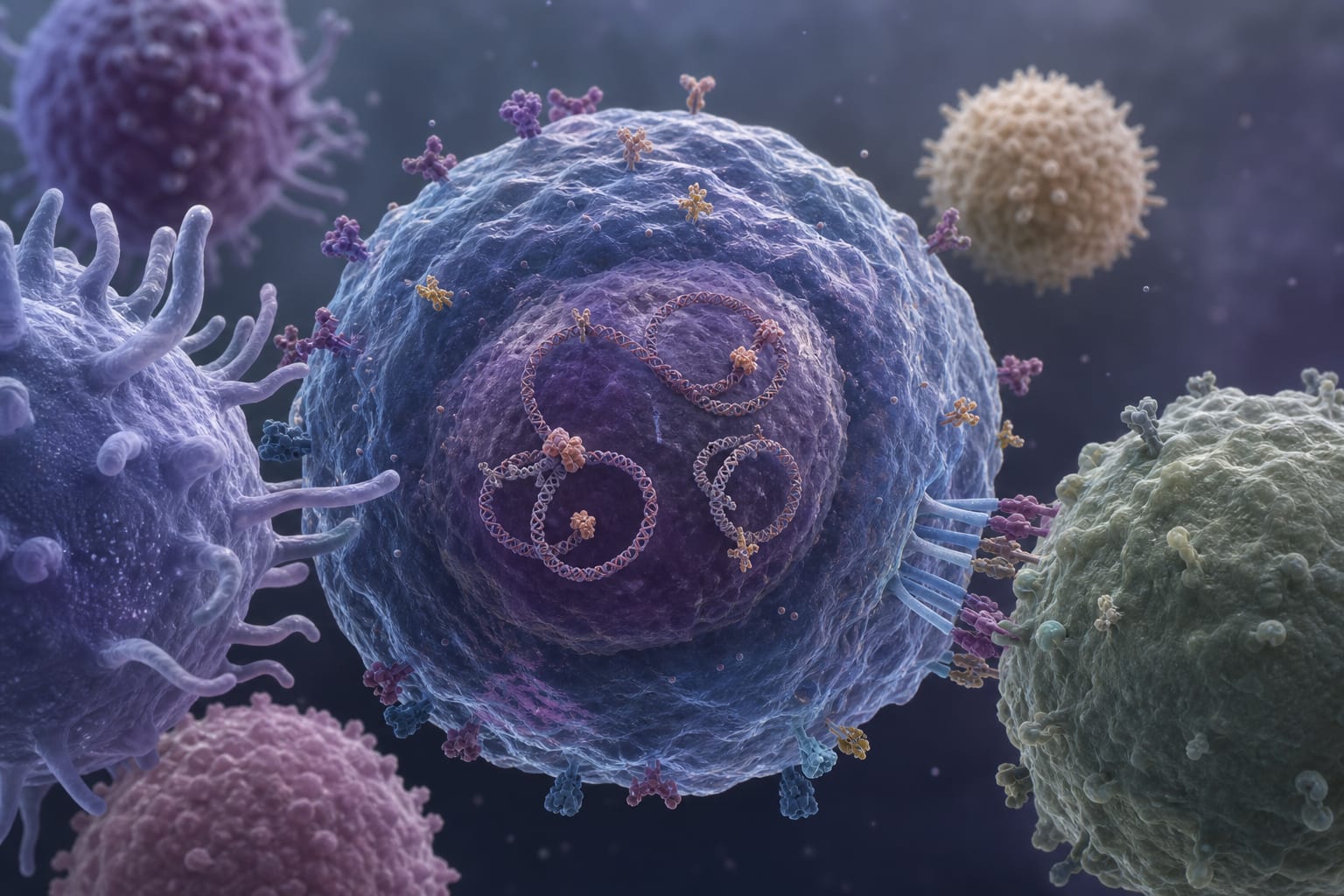
To explore the complex interplay between Epstein-Barr virus (EBV) and the human host, focusing on mechanisms of viral persistence and immune regulation.
Approach:
Sausen et al.: Investigated how EBV promotes an immunoregulatory microenvironment that enables tumor cells to evade immune surveillance.
Silva et al.: Described EBV's manipulation of host immune responses through latent proteins and microRNAs.
Vietzen et al.: Studied immune responses in EBV-positive lymphoma and identified potential immunotherapeutic targets.
Desimio et al.: Examined NK cell responses during EBV infection and the role of viral proteins in immune evasion.
Amarillo et al.: Analyzed CD4+ and CD8+ T cell responses in children with EBV infection.
Mihatsch et al.: Investigated myeloid-derived suppressor cells (MDSCs) in pediatric patients with infectious mononucleosis.
Ma et al. and Chen et al.: Reported cases of EBV-associated hemophagocytic lymphohistiocytosis and its progression to malignancies.
Xue et al.: Described a rare case of EBV-positive small cell neuroendocrine carcinoma.
Key Findings:
EBV establishes a lifelong, largely asymptomatic infection through immune evasion mechanisms.
Tumor cells can evade immune surveillance via immunoregulatory microenvironments induced by EBV.
EBV employs latent proteins and microRNAs to manipulate host immune responses.
NKG2A receptor targeting may restore NK-cell-mediated control in EBV-positive tumors.
Dynamic shifts in MDSC subsets correlate with disease severity in EBV infections.
Interpretation:
Limitations:
The studies primarily focus on specific populations and may not be generalizable.
Further research is needed to fully understand the mechanisms of immune evasion.