Intraoperative desaturation in pediatric patients at high altitude: incidence, risk factors, and a non-linear body weight safety threshold - Summary - MDSpire
To investigate the incidence, independent risk factors, and postoperative outcomes of intraoperative desaturation during mechanical ventilation in pediatric patients at 3,650 m altitude, focusing on physical development indicators.
Approach:
Key Findings:
Overall incidence of intraoperative desaturation was 3.5% (63/1,793).
Independent risk factors included younger age (adjusted OR 0.80, 95% CI: 0.72–0.90), severe underweight (adjusted OR 4.57, 95% CI: 2.18–9.58), lower preoperative hemoglobin (adjusted OR 0.85, 95% CI: 0.74–0.98), prolonged mechanical ventilation (adjusted OR 1.46, 95% CI: 1.24–1.73), and female sex (adjusted OR 1.76, 95% CI: 1.01–3.04).
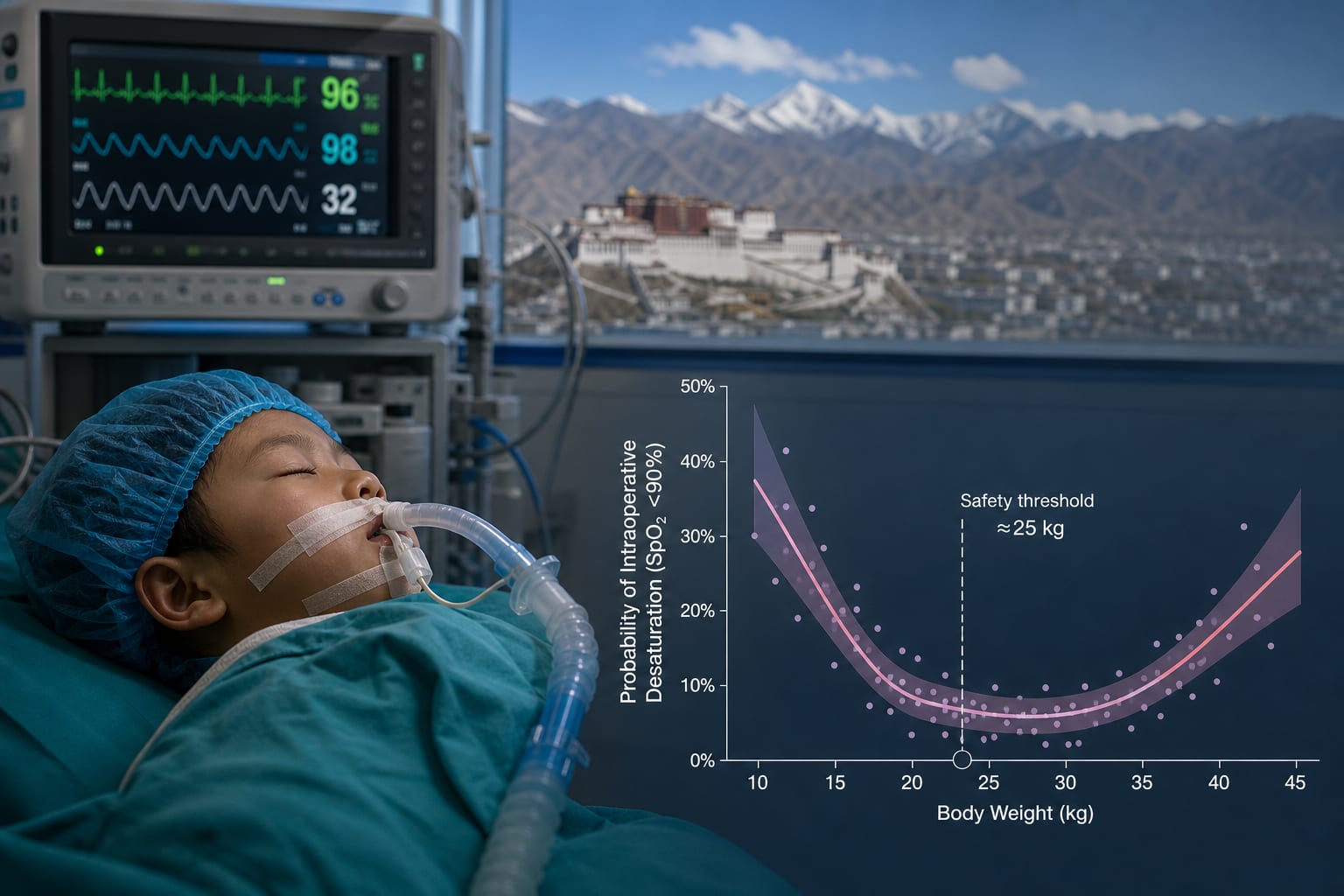
A non-linear L-shaped relationship was found between absolute body weight and desaturation risk, with an exploratory safety threshold at 26.95 kg.
Interpretation:
The identified risk factors and the non-linear relationship between body weight and desaturation risk provide insights for preoperative risk stratification in high-altitude pediatric anesthesia.
Limitations:
The study was conducted in a single center, which may limit generalizability.
Retrospective design may introduce biases in data collection and analysis.
Conclusion:
Intraoperative desaturation in pediatric patients at extreme high altitude is influenced by several independent risk factors.