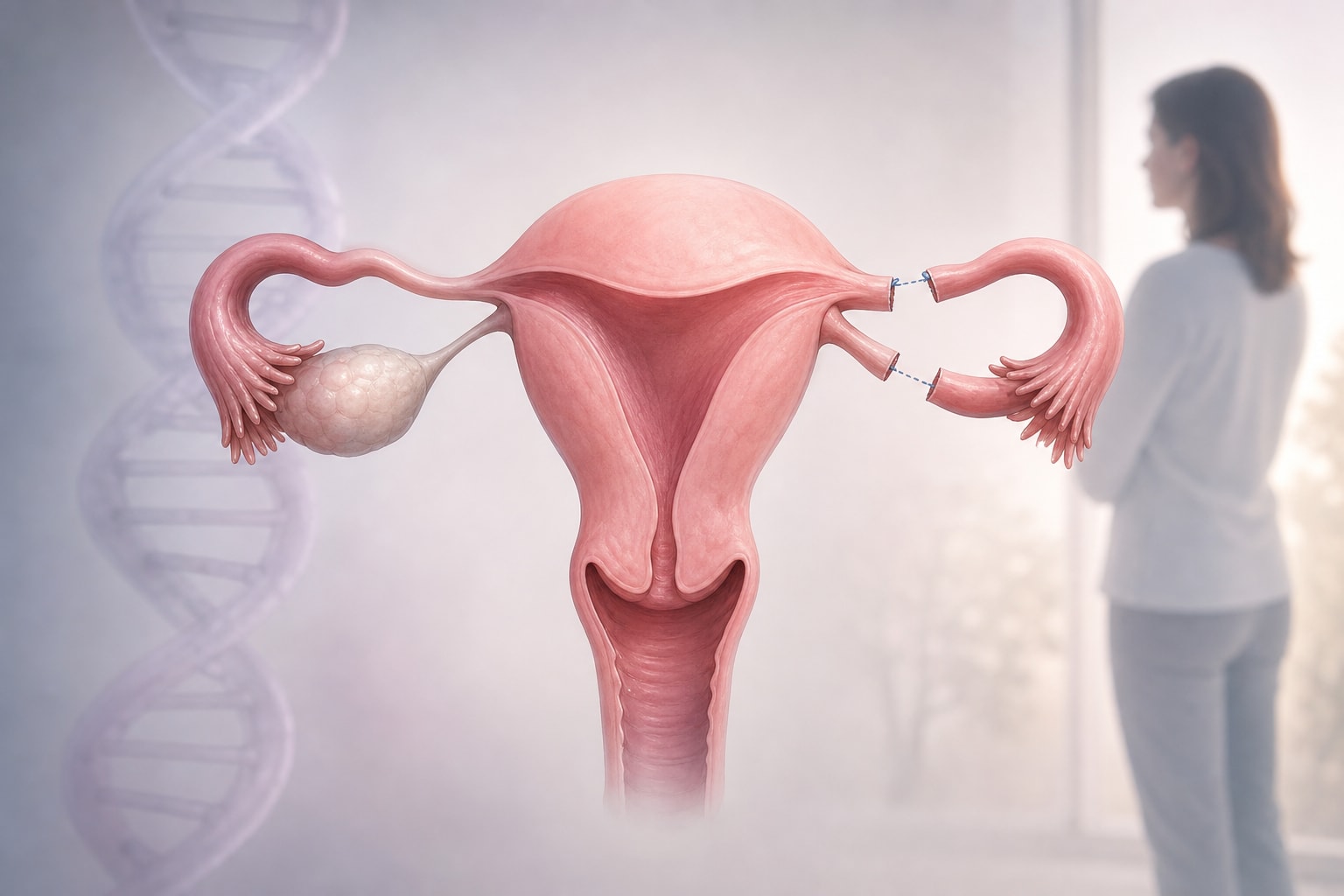
To compare sexual function and quality of life outcomes between risk-reducing salpingo-oophorectomy (RRSO) and interval salpingectomy with delayed oophorectomy (ISDO).
Approach:
WISP Study: Followed participants for 24 months, assessing changes in sexual function post-surgery.
Comparison Studies: Included Rowen et al, WHAM, and TUBA studies, which evaluated sexual function and menopausal symptoms in BRCA carriers opting for RRSO or ISDO.
Key Findings:
RRSO was associated with worse sexual function at 6 and 12 months, but not at 24 months, according to the WISP study.
Hormone replacement therapy (HRT) improved menopausal symptoms and mental health, as noted in the WISP study.
Only 1.8% of participants undergoing surgery had occult cancer, with no interval cancers reported in 73 months of follow-up in the WISP study.
ISDO was linked to better sexual function and fewer menopausal symptoms compared to RRSO, consistent with findings from the TUBA study.
Interpretation:
ISDO may offer superior quality-of-life and sexual health outcomes for premenopausal women compared to RRSO, particularly when considering the use of HRT.
Limitations:
The studies were nonrandomized and had small sample sizes.
Variability in HRT use and patient preferences may affect outcomes.
Conclusion:
ISDO is a promising risk-reducing strategy with high patient acceptability, warranting further discussion in shared decision-making regarding surgical options.