Treatment patterns and outcomes in patients with multiple myeloma in second relapse in Colombia (freedomm): a multicenter observational study - Summary - MDSpire
Advertisement
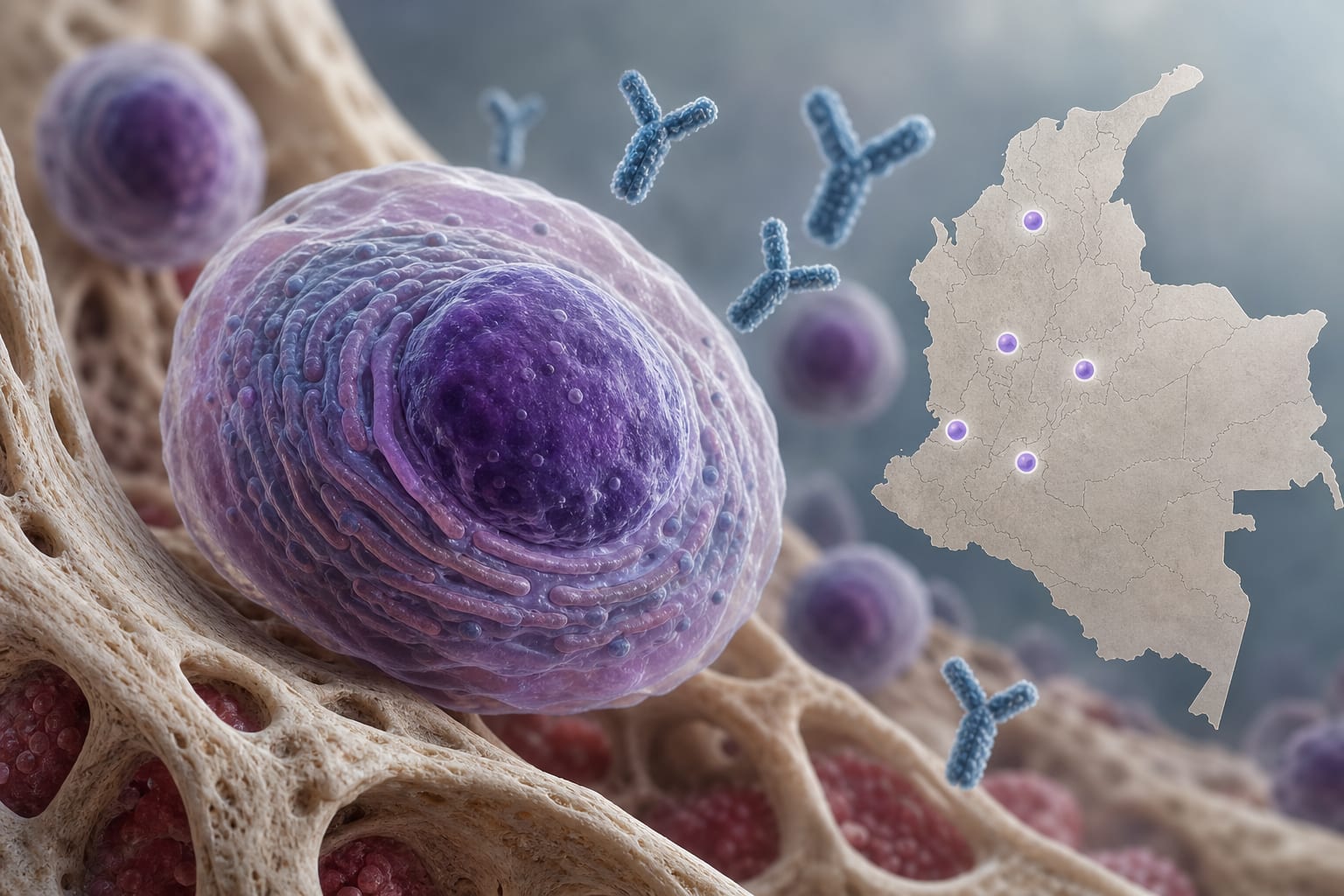
Treatment patterns and outcomes in patients with multiple myeloma in second relapse in Colombia (freedomm): a multicenter observational study
To describe the clinical characteristics, treatment patterns, effectiveness, and safety of third-line therapy in patients with multiple myeloma experiencing a second relapse in routine clinical practice across five Colombian institutions.
Approach:
Study Design: Multicenter retrospective observational study using medical records from five specialized institutions in Colombia.
Patient Selection: Included patients with multiple myeloma who experienced a second relapse and initiated third-line therapy between 2013 and 2022.
Data Analysis: Descriptive analysis of baseline characteristics, treatment patterns, effectiveness, and safety of third-line therapy.
Key Findings:
The study included 84 participants with multiple myeloma who experienced a documented second relapse.
The median age at diagnosis was 63.5 years (IQR 57.0 - 70.0), 56% were male, and bone disease and anemia were the most frequent presenting features.
The median time from diagnosis to second relapse was 3.2 years (IQR 1.8 - 4.9).
First-line therapy was mainly bortezomib-based, most frequently the combination of bortezomib, cyclophosphamide, and dexamethasone (36.9%).
Second-line treatment shifted toward lenalidomide-based regimens, with lenalidomide plus dexamethasone administered to 29.8% of patients.
Autologous stem cell transplantation was performed in 36.9% of patients.
Third-line treatment patterns were diverse, with greater use of novel agent–based combinations, including regimens containing daratumumab and carfilzomib.
In the third-line setting, the overall response rate was 47.1%.
The median overall survival from initiation of treatment at second relapse was 27.5 months, while the median progression-free survival and time to treatment failure were 14.6 months and 5.94 months, respectively.
Treatment-emergent adverse events (TEAEs) occurred in 11.9% of patients, mostly moderate.
Interpretation:
Treatment patterns were heterogeneous, with a notable increase in the use of novel agent-based combinations. The study highlights the effectiveness of third-line therapies in a real-world setting.
Limitations:
Lack of health-related quality of life data.
Study conducted in a limited geographical area, potentially affecting generalizability.
Conclusion:
This study provides insights into the treatment landscape for multiple myeloma in Colombia, emphasizing the need for more comprehensive data on patient outcomes and quality of life.