Predictive model for in-hospital acute cerebral infarction in patients with acute gastrointestinal bleeding: a retrospective cohort study - Summary - MDSpire
Advertisement
Predictive model for in-hospital acute cerebral infarction in patients with acute gastrointestinal bleeding: a retrospective cohort study
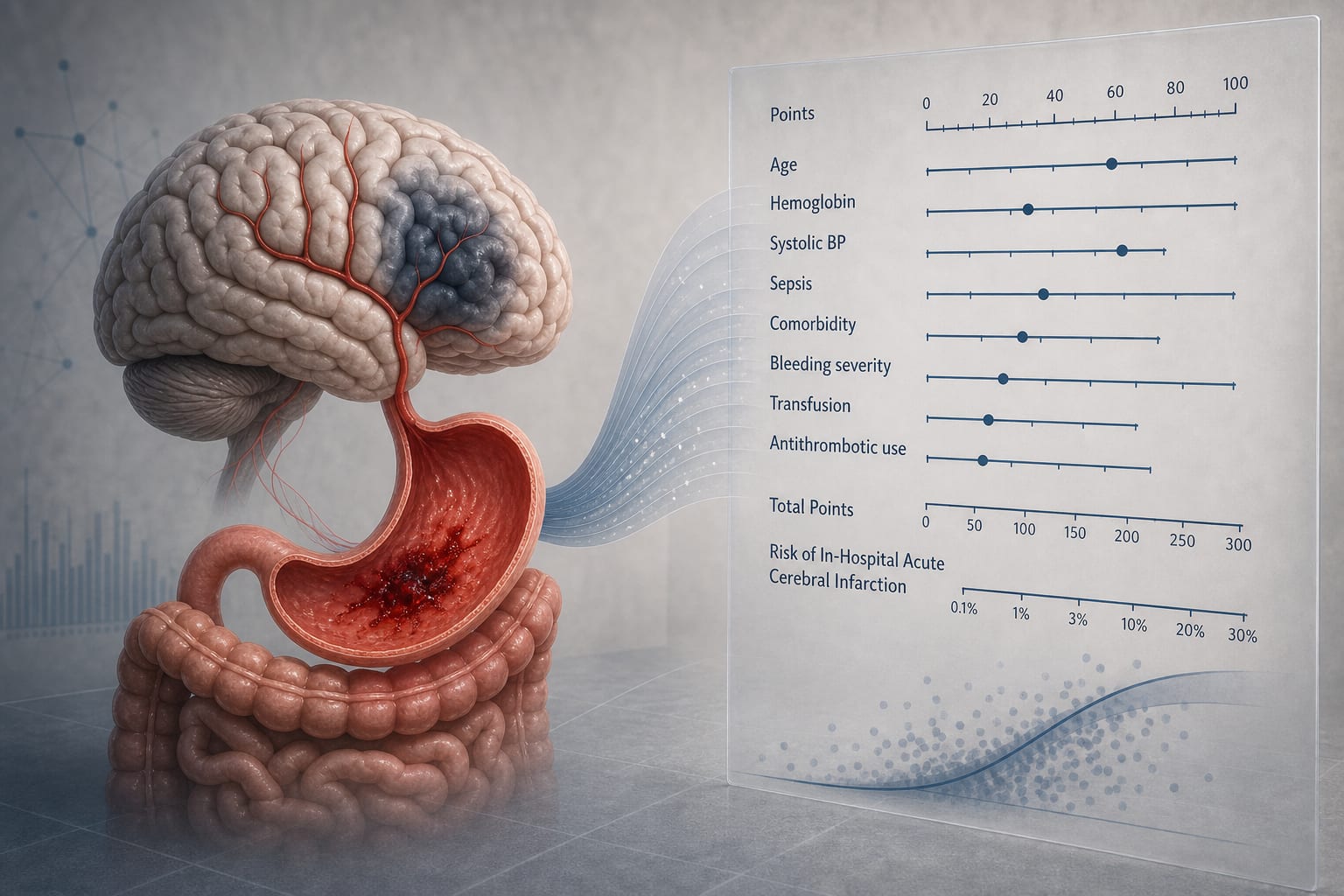
To evaluate the occurrence of in-hospital ACI among individuals with and without GIB, determine the variables linked to in-hospital ACI in patients experiencing GIB, and create a clinically relevant nomogram to enhance risk stratification in clinical practice.
Key Findings:
In-hospital ACI was more frequent in the GIB cohort (7.8%) compared to the non-GIB cohort (5.2%).
Independent predictors of in-hospital ACI in the GIB population included antecedent cerebral infarction, sepsis, cerebral hemorrhage, anemia, age, and duration of hospital admission.
The nomogram demonstrated strong internal performance with an AUC of 0.864, based on a total of 2,380 matched pairs.
Interpretation:
GIB is associated with a higher incidence of in-hospital ACI, and the developed nomogram can assist in risk stratification for affected patients, potentially improving clinical outcomes.
Limitations:
Single-center study may limit generalizability and introduce biases.
External validation of the nomogram is necessary before clinical application.
Conclusion:
The study establishes a link between GIB and increased in-hospital ACI incidence, with a clinically useful nomogram for risk assessment pending further validation to ensure its applicability in broader clinical settings.