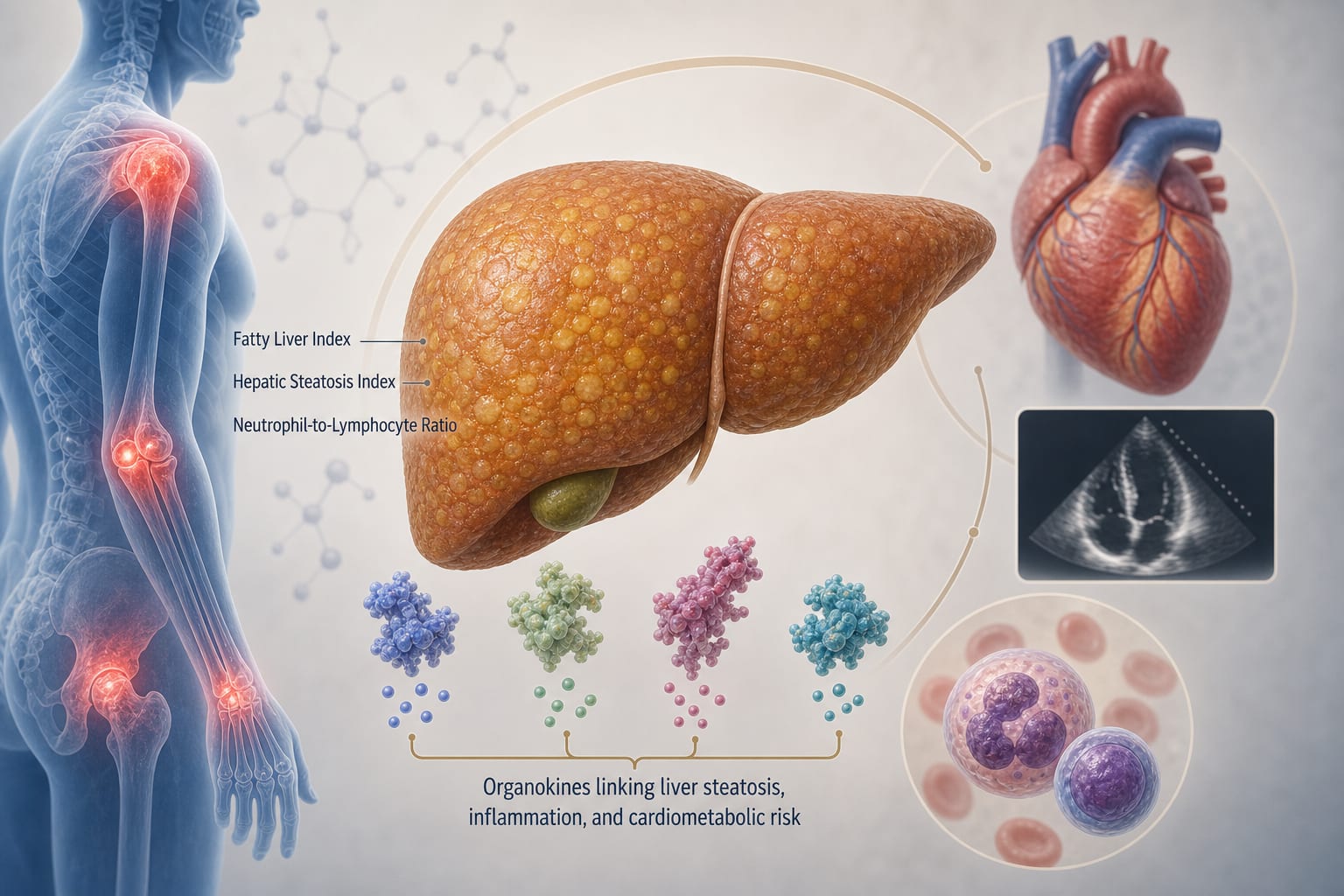
To evaluate the prevalence of metabolic dysfunction-associated steatotic liver disease (MASLD) in rheumatoid arthritis (RA) patients and assess the diagnostic performance of liver fat indices and organokines.
Key Findings:
MASLD was detected in approximately one-third of participants.
FLI and FABP4 showed the best diagnostic discrimination for MASLD with AUC values of 0.81 and 0.82, respectively.
FLI was positively associated with cardiovascular risk scores and left ventricular diastolic dysfunction parameters.
Neutrophil-to-lymphocyte ratio was significantly associated with increased MASLD risk (OR 2.53, p = 0.03).
Interpretation:
Remove unsupported conclusions and focus on summarizing findings.
Limitations:
Small sample size of 51 patients.
Exploratory nature of the study requires confirmation in larger cohorts.
Need for more accurate liver fat quantification and adequately adjusted models.
Conclusion:
Revise to eliminate unsupported claims about the utility of FLI and HSI.