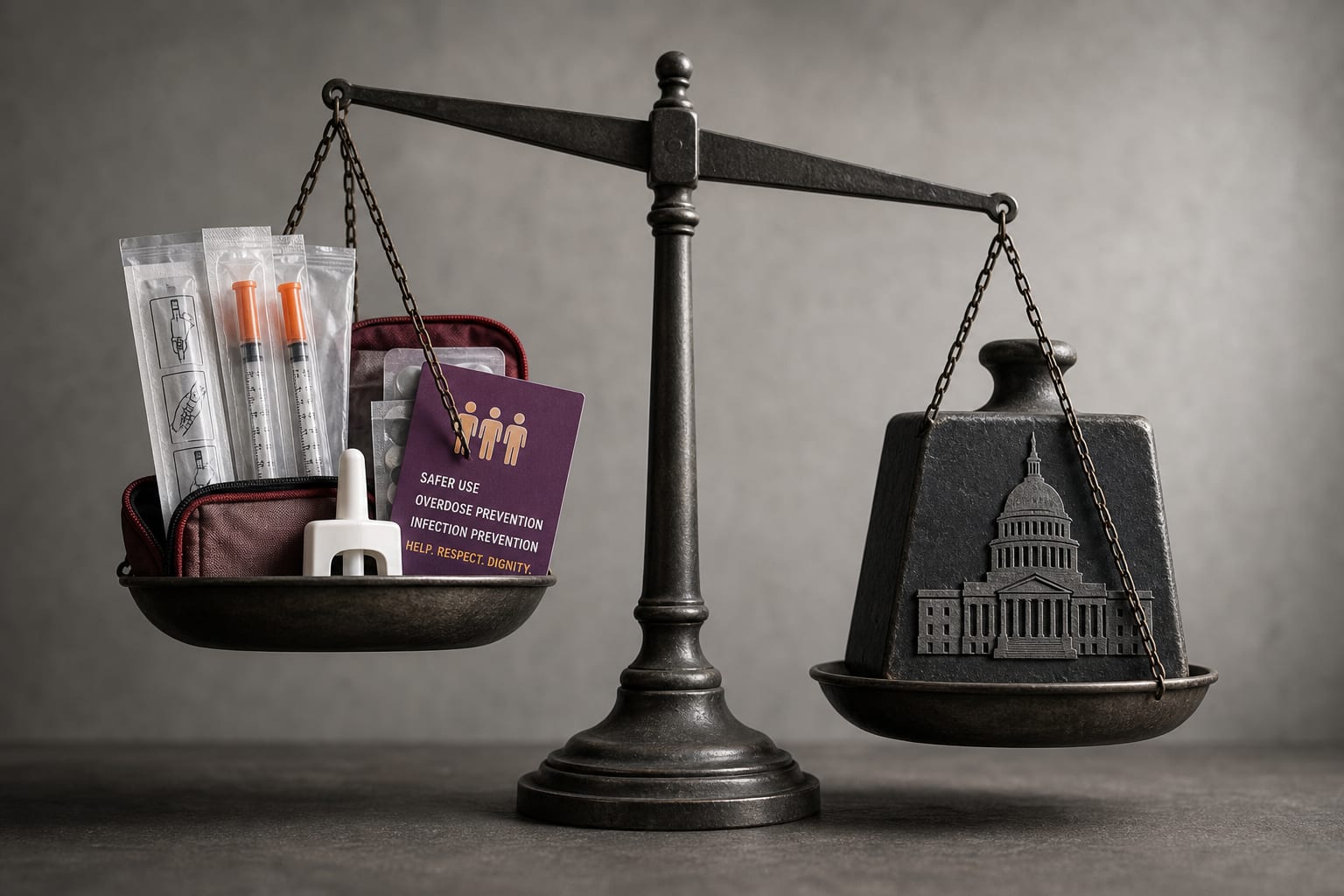
To estimate the potential outcomes of reducing federal funding for syringe service programs (SSPs) on mortality among persons who inject drugs in the US, specifically focusing on the implications for public health.
Key Findings:
SSPs are underfunded and critical for reducing overdose risk and infectious complications.
Elimination of federal funding could lead to significant service reductions, particularly in rural areas, exacerbating the overdose epidemic.
The executive order on July 24, 2025, threatens SSP funding and could significantly worsen the ongoing overdose crisis.
Interpretation:
The potential impact of reduced federal funding for SSPs on overdose mortality remains uncertain, necessitating further research to clarify key uncertainties and their implications.
Limitations:
The model assumes a linear relationship between funding levels and service provision, which may not reflect real-world complexities.
Variability in service disruptions and funding sources may affect the accuracy of the projections, highlighting the need for caution in interpretation.
Conclusion:
The study highlights the critical role of federal funding in sustaining SSPs and the potential consequences of funding cuts on public health, emphasizing the urgency for policy action.
by Kirk B. Fetters, Pranav Padmanabhan, Kristina Yamkovoy, Xiaoyu Guan, Sarah E. Scott, Lauren Kerr, Kathleen Joseph, Gwenyth L. Day, Marina Plesons, Tyler S. Bartholomew, Hansel E. Tookes, Alia Al-Tayyib, Joshua A. Barocas