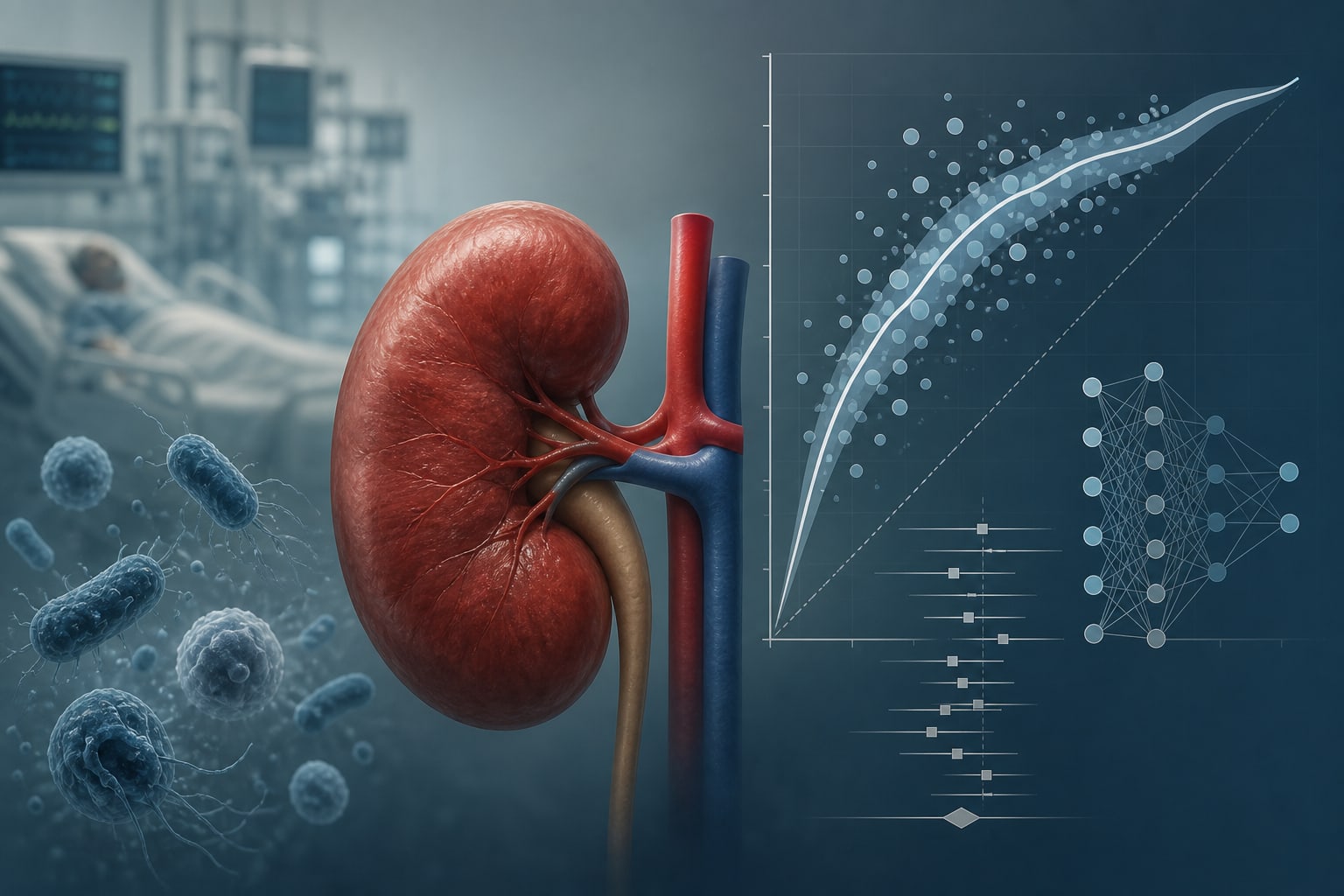
To evaluate the effectiveness of predictive risk models in identifying sepsis-associated acute kidney injury (SA-AKI) and to examine factors influencing their performance in clinical settings.
Approach:
Search Strategy: Systematic search of PubMed, The Cochrane Library, Web of Science, and Embase for cohort studies on prediction models for SA-AKI published until March 30, 2023.
Key Findings:
The meta-analysis included 15 studies with 46,490 patients.
The pooled C-statistic for SA-AKI prediction was 0.817 (95% CI: 0.781–0.847), indicating moderate-to-good discrimination.
Substantial heterogeneity was observed (I2 = 92.8%).
Models from Asian regions showed a higher pooled C-statistic compared to those from North America (0.845 vs. 0.777).
Studies with low risk of bias had better predictive performance than those with high risk (0.847 vs. 0.762).
No significant impact of validation type or publication language on model performance was found.
Interpretation:
Existing SA-AKI prediction models demonstrate moderate-to-good predictive performance, but significant variability exists across studies.
Limitations:
High heterogeneity among included studies.
Limited number of studies contributing to external validation subgroup.
Potential biases in study designs affecting results.
Conclusion:
Future research should focus on external validation and reducing bias risk.
Biomarker-guided patient selection may help identify patients with sepsis who could benefit from endotoxin-targeted therapy, although confirmatory evidence is still needed.