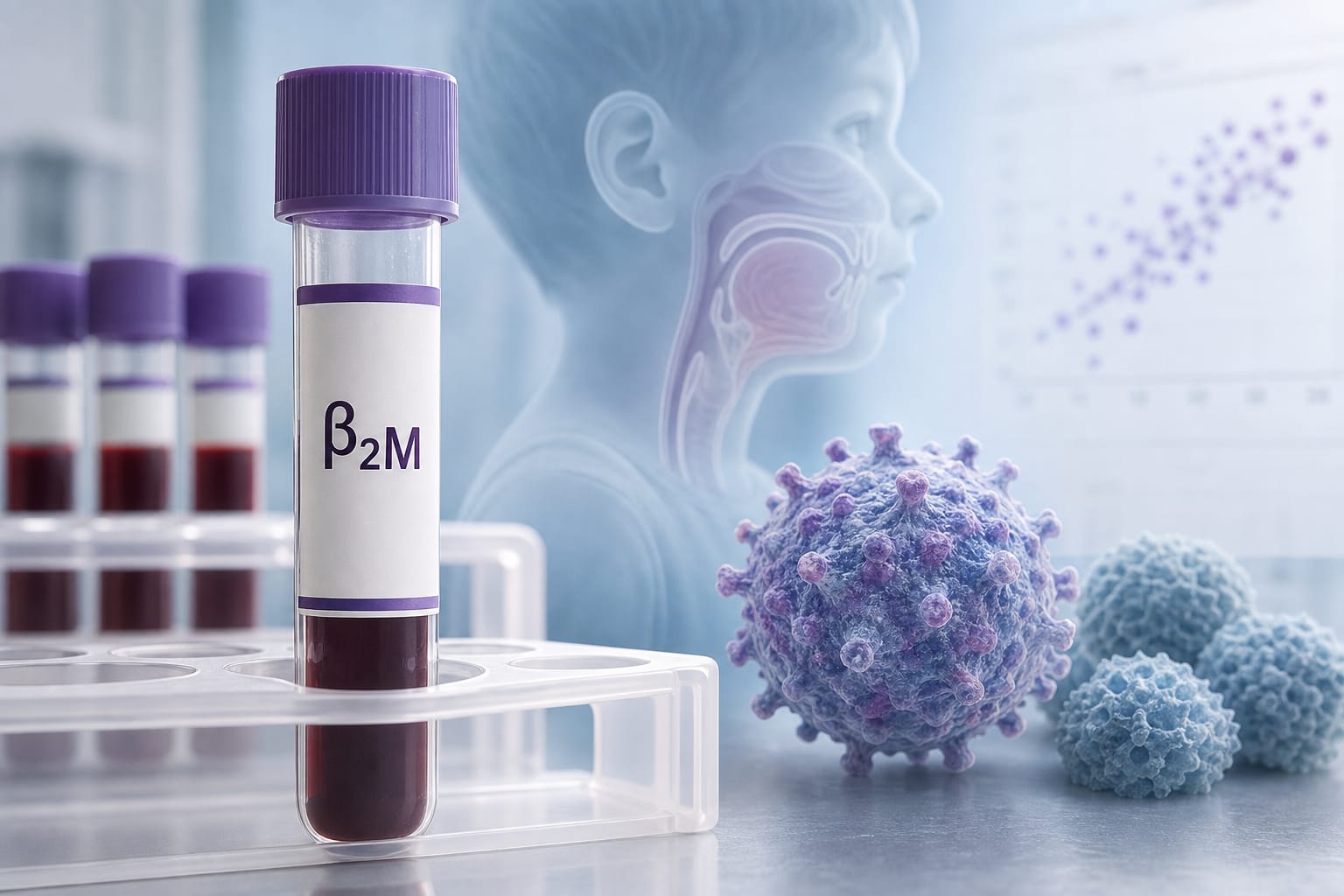
To evaluate serum beta-2 microglobulin (β2M) as a diagnostic biomarker for acute primary Epstein–Barr virus (EBV) infection in children and to compare serum vitamin D3 levels between EBV-infected children and those with viral upper respiratory tract infections.
Approach:
Study Design: A retrospective cross-sectional study involving 129 children with acute primary EBV infection and 130 control children with viral upper respiratory tract infections.
Data Analysis: Comparison of age, gender, laboratory indicators, and correlation analysis between β2M and serum EBV-DNA concentration using Pearson's correlation.
ROC Curve Analysis: Receiver operating characteristic (ROC) curve was drawn to calculate the threshold and area under the curve (AUC) of β2M for diagnosing EBV infection.
Key Findings:
White blood cell count, serum lactate dehydrogenase, and alanine aminotransferase levels were significantly higher in the EBV group (P < 0.0001).
Serum β2M levels were significantly higher in the EBV group than in the control group (P < 0.001).
Serum vitamin D3 levels were significantly lower in the EBV group (P < 0.001).
A positive correlation was found between serum β2M levels and serum EBV-DNA load (r = 0.469, P < 0.01).
The AUC of serum β2M for diagnosing EBV infection was 0.907, with an optimal threshold of 3.3 mg/L, specificity of 62.1%, and sensitivity of 90.8%.
Interpretation:
Serum β2M levels are significantly increased during primary EBV infection in children.
Limitations:
The study is retrospective and conducted at a single center, which may limit generalizability.
The sample size may not be sufficient to fully establish β2M as a definitive diagnostic tool.
Conclusion:
Serum β2M is associated with primary EBV infection in children, while serum vitamin D3 levels are significantly reduced in this population.
Brazilian pediatric intensive care unit study found underweight status was associated with respiratory complications, longer hospitalization, and mortality among critically ill patients with COVID-19.