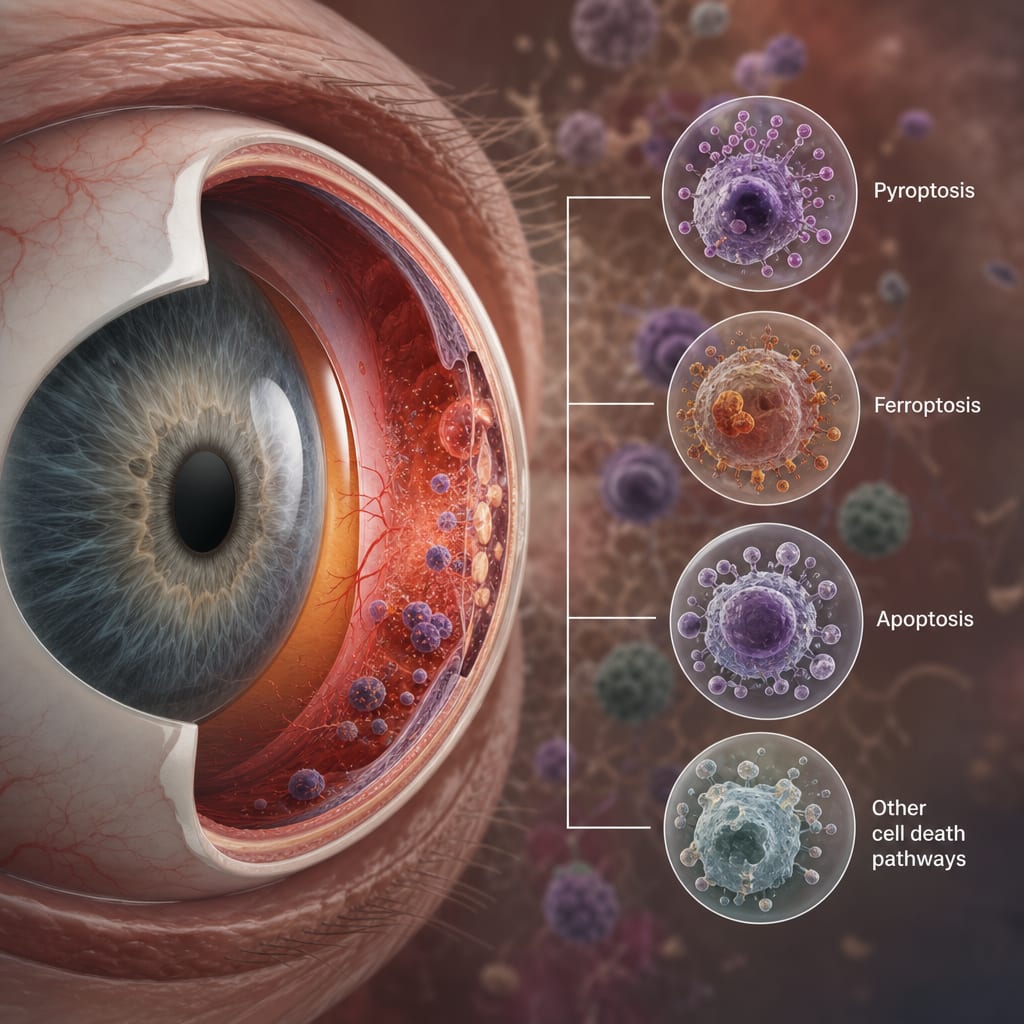
To summarize the roles of various forms of cell death in the pathogenesis of uveitis and explore specific therapeutic strategies targeting these pathways, such as biomarkers and combination therapies.
Key Findings:
Different forms of cell death play a dual role in uveitis, with pyroptosis and necroptosis contributing to inflammation and tissue damage, highlighting the need for targeted therapies.
Pyroptosis is linked to elevated IL-1β levels in uveitis patients, correlating with disease activity, suggesting a potential biomarker for monitoring treatment response.
Ferroptosis and NETosis promote Th17 cell activation, exacerbating uveitis, indicating that targeting these pathways may mitigate disease severity.
Apoptosis aids in the resolution of uveitis but can also contribute to disease progression when immune homeostasis is disrupted, underscoring the complexity of therapeutic interventions.
Interpretation:
Understanding the mechanisms of cell death in uveitis provides insights into disease pathology and potential therapeutic targets, paving the way for personalized treatment approaches that can be tailored to individual patient profiles.
Limitations:
The molecular mechanisms of necroptosis in uveitis remain incompletely understood, which limits the development of targeted therapies.
Further research is needed to validate therapeutic strategies targeting specific cell death pathways, emphasizing the importance of continued investigation in this area.
Conclusion:
Targeting cell death mechanisms in uveitis may lead to the development of effective biomarkers and combination therapies, enhancing treatment outcomes.