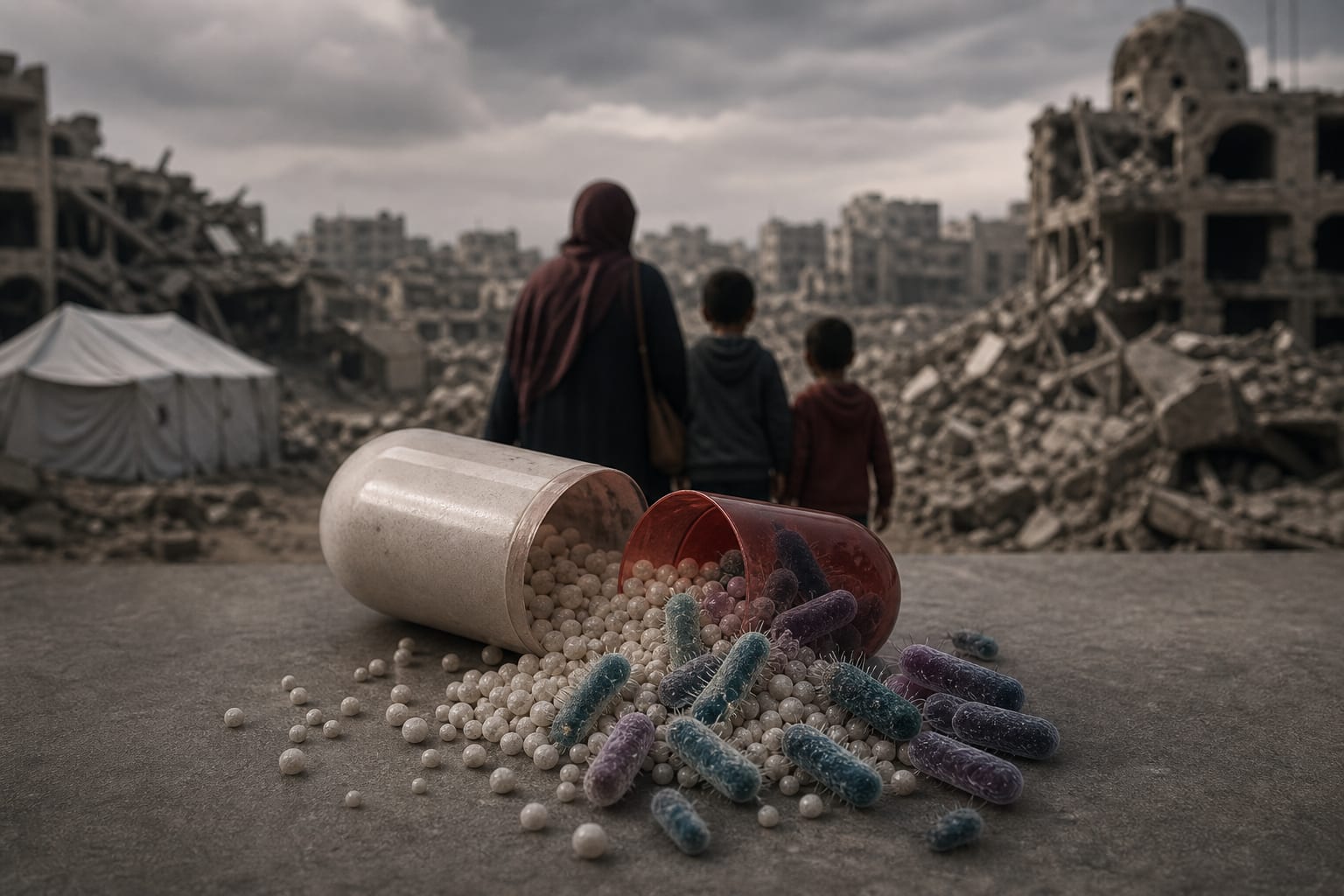
To estimate reported antibiotic self-medication before and during the 2023 Gaza War and assess participants’ antibiotic-related knowledge, attitudes, practices, and perceptions of antimicrobial resistance.
Approach:
Study Design: A cross-sectional survey was conducted from May through October 2025. Participants reported on antibiotic use before and during the war.
Study Population: Eligible participants were adults aged 18 years or older who lived in the Gaza Strip during the 2023 conflict.
Data Collection: Participants were recruited at primary healthcare centers, community pharmacies, and displacement shelters. Questionnaires were completed on paper or online.
Sampling Technique: Convenience recruitment within predefined geographic and residential-setting groups produced a sample of 422 participants.
Study Instruments: A structured Arabic questionnaire collected information on antibiotic self-medication, reasons for use, sources of antibiotics, and knowledge and perceptions of antimicrobial resistance.
Key Findings:
Reported antibiotic self-medication increased from 60.4% before the war to 80.6% during the war (P < 0.001). These are reports from the surveyed participants, not population-wide prevalence estimates.
During the war, participants commonly cited difficulty accessing healthcare (75.4%), overcrowded facilities (74.6%), and treatment costs (69.0%) as reasons for self-medication.
Overall knowledge, attitudes, and practices scored 67.46% on average. Although antimicrobial-resistance perceptions scored relatively high, only 41.2% correctly identified that antibiotics are ineffective against influenza.
Interpretation:
The rise in reported self-medication occurred alongside substantial barriers to formal care. Moderate awareness did not consistently translate into appropriate antibiotic-use practices; the study cannot establish that the war caused the reported increase.
Limitations:
Convenience sampling and the high proportion of university-educated participants limit generalizability.
Self-reported practices may be affected by reporting bias. Recalling pre-war behavior approximately two years later may have introduced recall bias, and the cross-sectional design cannot establish causation.
Conclusion:
Among surveyed Gaza residents, reported antibiotic self-medication was substantially higher during the war than before it. The authors call for improved access to healthcare, public education, and antibiotic stewardship in response to the reported practices and barriers.