Controversies in the management of asymptomatic carotid stenosis: from best medical therapy to a redefinition of surgical indications - Summary - MDSpire
Advertisement
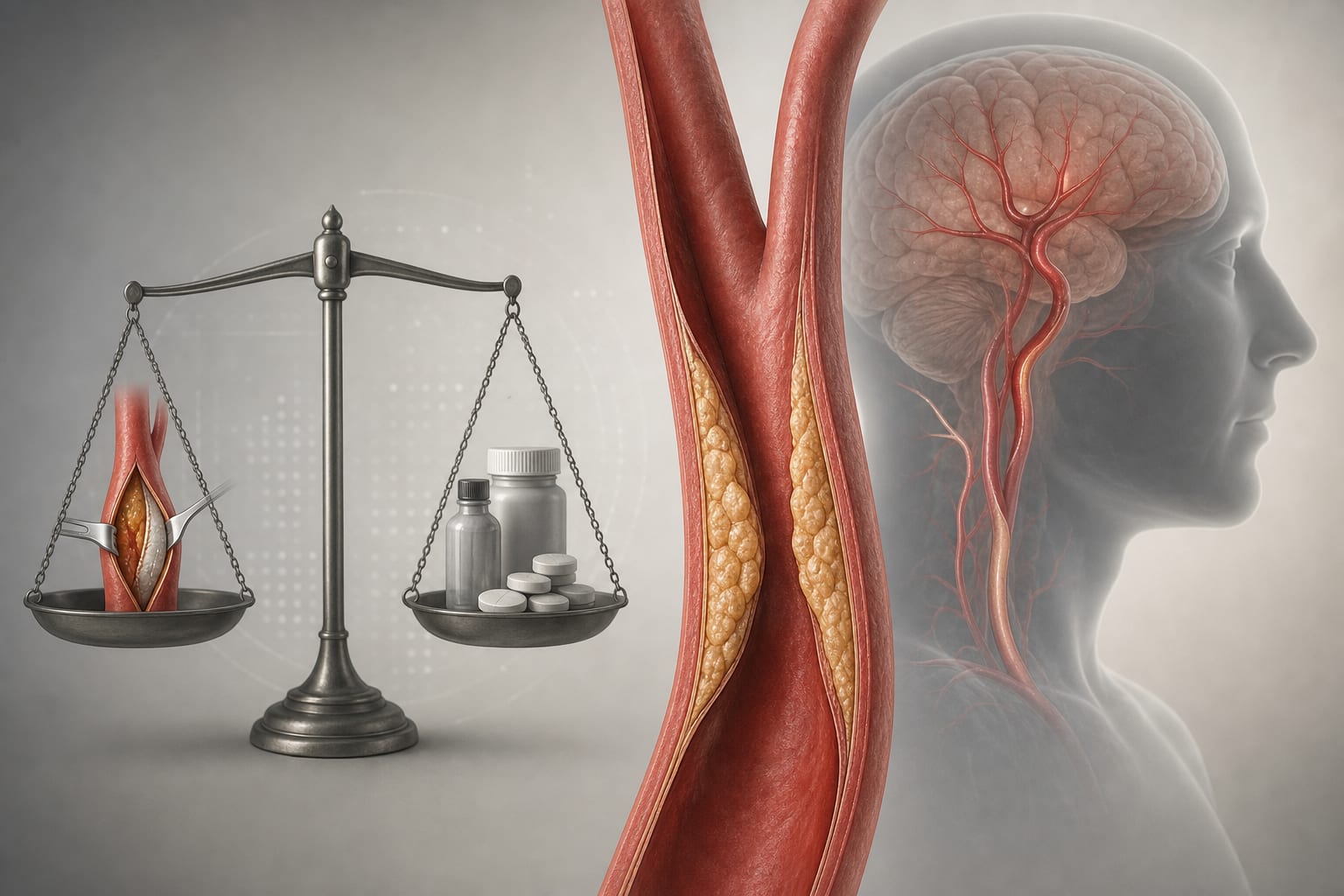
Controversies in the management of asymptomatic carotid stenosis: from best medical therapy to a redefinition of surgical indications
To summarize key evidence regarding contemporary medical therapy, revascularization trials, and emerging approaches to risk assessment in asymptomatic carotid stenosis (aCAS) from 2021 to 2026.
Approach:
Epidemiological Context: Discusses the increasing detection of aCAS due to aging populations and advanced imaging techniques.
Historical Trials Review: Reviews landmark trials (ACAS, ACST-1) that established carotid endarterectomy as a treatment option and their limitations.
Contemporary Medical Therapy: Explores advancements in medical therapy, including lipid-lowering strategies and improved control of vascular risk factors.
Emerging Risk Assessment: Examines new methods for identifying vulnerable plaques and high-risk disease, including imaging and biomarker analysis.
Redefining Asymptomatic: Considers the definition of 'asymptomatic' by including covert cognitive impairment.
Individualized Management Framework: Proposes a precision-management framework based on multimodal biomarkers.
Key Findings:
The prevalence of aCAS increases with age, particularly in individuals over 60.
Contemporary best medical therapy has significantly reduced the incidence of ipsilateral ischemic stroke.
Recent trials challenge the reliance on luminal stenosis as the primary criterion for intervention.
Interpretation:
The management of aCAS is shifting from a focus on anatomical assessment to a more nuanced approach that incorporates biological risk factors and advanced medical therapies.
Limitations:
Historical trials were conducted before the advent of modern medical therapies, limiting their applicability to current treatment paradigms.
The definition of 'asymptomatic' may need reevaluation to include cognitive impairments.
Conclusion:
The evolving landscape of aCAS treatment emphasizes the importance of individualized risk assessment and the integration of advanced medical therapies.