Itch, Scratching, and Sleep Mediate the Association between Disease Severity and Quality of Life in Pruritic Dermatoses: A Cross-Sectional Study - Summary - MDSpire
Conexiant’s news site is now MDSpire News. Learn more
Advertisement
The Role of Itch, Scratching, and Sleep in Linking Disease Severity to Quality of Life in Patients with Pruritic Dermatoses: A Cross-Sectional Analysis
To confirm associations between disease severity, itch-related outcomes, and impairment of quality of life in pruritic skin conditions and to determine which dimensions of itch mediate this association.
Approach:
Study Design: A prospective, cross-sectional study involving patients with chronic pruritus from various dermatological conditions, assessed by board-certified dermatologists.
Data Collection: Demographic and clinical data were collected, including disease severity assessed by specific indices for each condition.
Mediation Analysis: Mediation analyses were performed to evaluate the impact of itch dimensions on the relationship between disease severity and quality of life.
Key Findings:
Confirmed associations between disease severity, itch, and quality of life impairment.
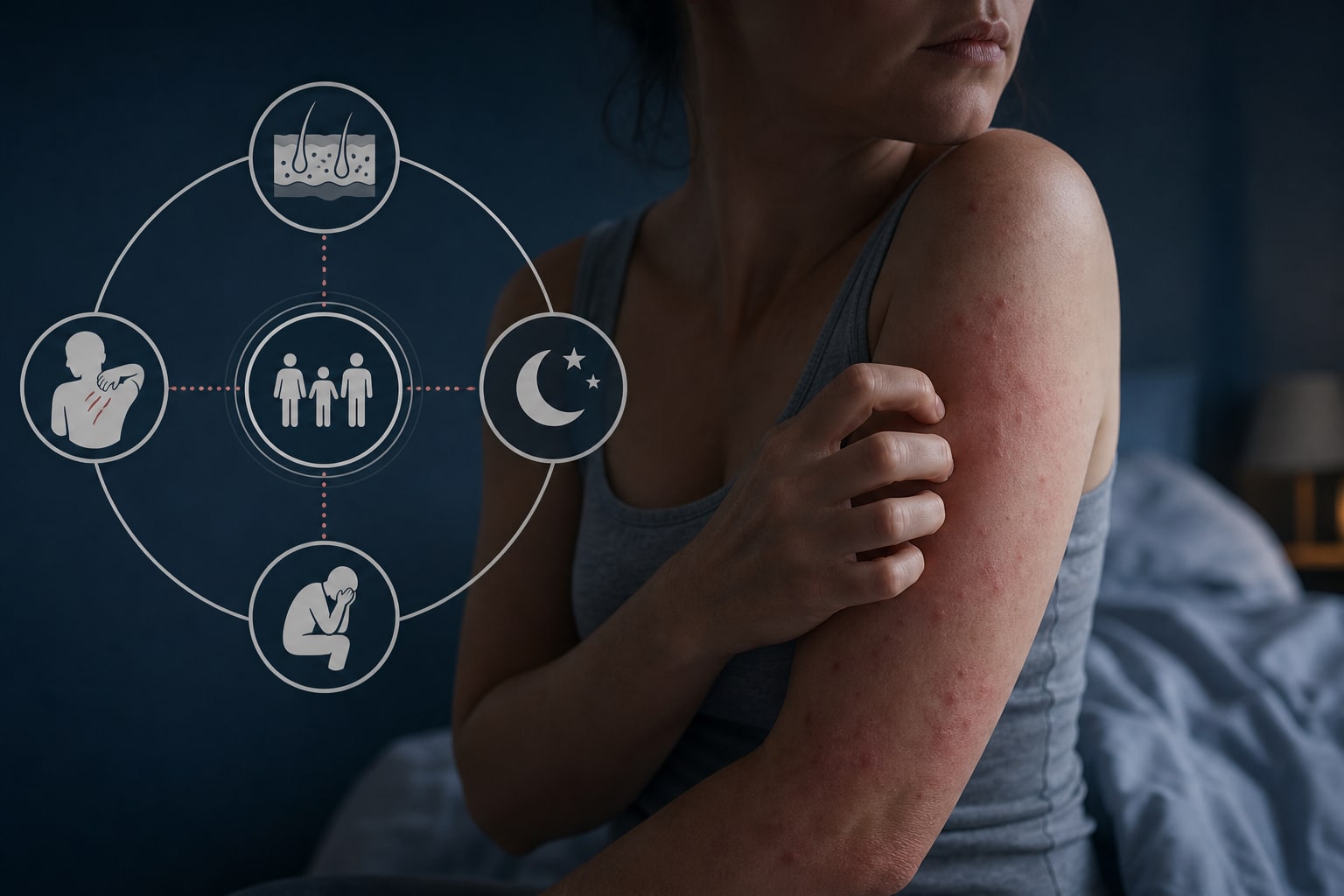
Daily itch duration significantly mediated the relationship between disease severity and quality of life.
Sleep disturbance, scratching frequency, and average itch intensity also played mediating roles, while itch intensity peaks did not.
Interpretation:
The study highlights the importance of evaluating various dimensions of itch in chronic inflammatory skin conditions to better understand their impact on quality of life.
Limitations:
The study is cross-sectional, limiting causal inferences.
Data were collected from specific geographical locations, which may affect generalizability.
Conclusion:
Addressing key itch dimensions through targeted interventions may improve quality of life in patients with pruritic dermatoses.
Investigational inhibitor was not associated with treatment-related serious adverse events and produced biomarker changes consistent with pathway inhibition in healthy volunteers.
Daily itch duration emerged as the strongest factor linking disease severity with quality of life, ahead of sleep disturbance, scratching frequency, and average itch intensity.