First diagnosis of familial partial lipodystrophy syndrome type 3 during pregnancy associated with a novel heterozygous PPARG variant and a concurrent ABCC8 variant: a case report - Summary - MDSpire
Conexiant’s news site is now MDSpire News. Learn more
Advertisement
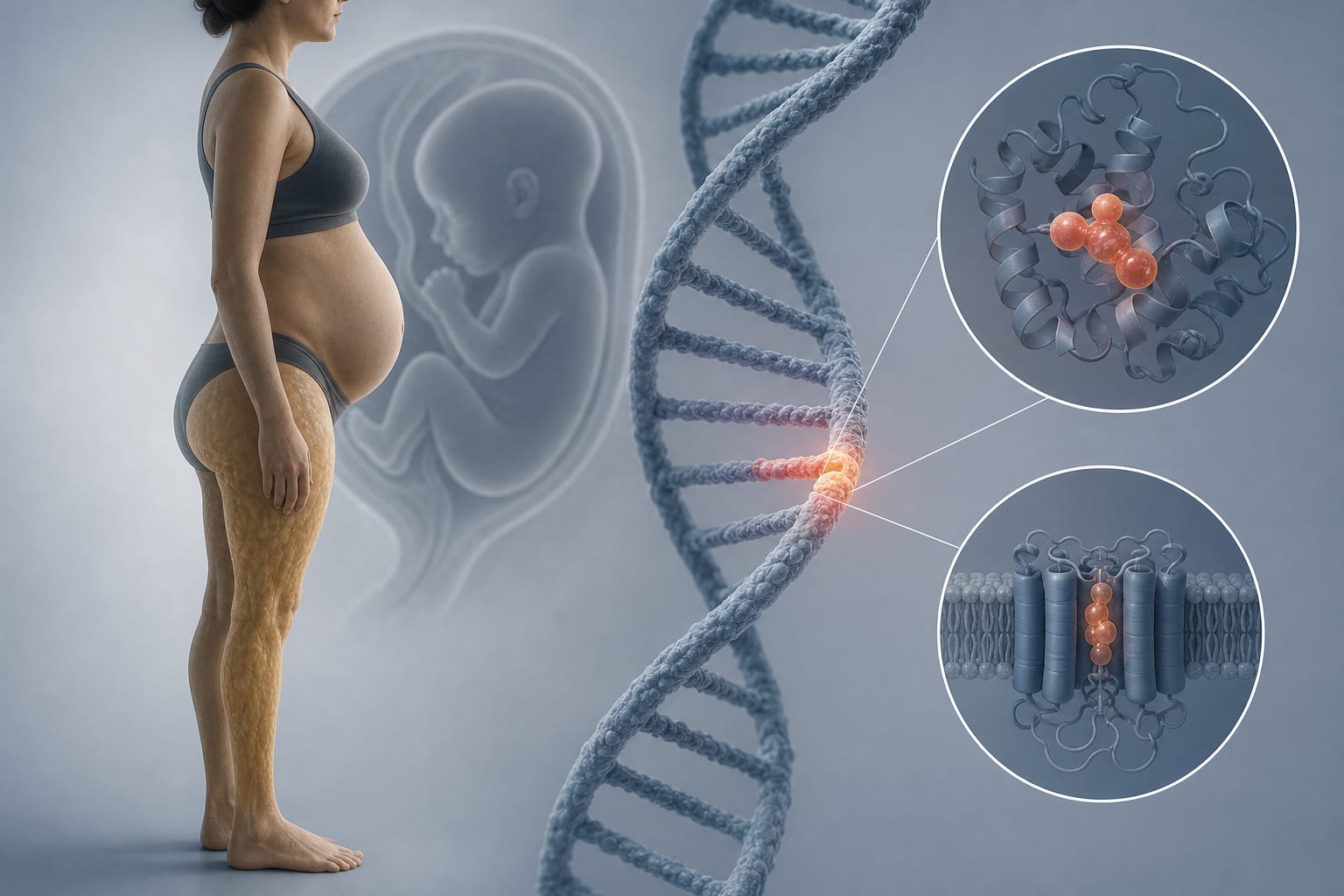
Diagnosis of Familial Partial Lipodystrophy Type 3 During Pregnancy Linked to a Novel Heterozygous Variant in PPARG and a Concurrent Variant in ABCC8: A Case Study
To report a case of a woman with severe hypertriglyceridaemia and acute pancreatitis during pregnancy, leading to the diagnosis of familial partial lipodystrophy type 3 (FPLD3) and identification of genetic variants.
Approach:
Key Findings:
The patient was diagnosed with severe FPLD3 due to a novel heterozygous variant c.380A>C, p.(Glu127Ala) in PPARG, classified as likely pathogenic.
A concurrent heterozygous variant c.328G>A, p.(Ala110Thr) in ABCC8 was identified, classified as of uncertain significance.
Interpretation:
Early recognition of FPLD is crucial in high-risk settings such as pregnancy, and multidisciplinary metabolic management can stabilize severe complications.
Limitations:
The rarity of FPLD and its complex clinical manifestations can lead to delayed diagnosis.
Limited clinical experience with pregnancy in women with FPLD restricts generalizability of findings.
Conclusion:
The case highlights the importance of genetic diagnosis and intensive management in pregnant women with FPLD to improve maternal and fetal outcomes.
These 10 states have paid family or medical leave programs and health, wellness, peer support, or monitoring resources available to physicians or other health professionals.