To examine how armed conflict harms children’s survival, health, education, development and recovery, and to describe related legal duties and effects on healthcare systems and workers.
Approach:
Framework: The commentary frames war as a political determinant of health and discusses obligations under the UN Convention on the Rights of the Child and international humanitarian law.
Scope: It considers conflict drivers, damage to civilian and healthcare infrastructure, workforce effects, and healthcare professionals’ responsibilities.
Key Findings:
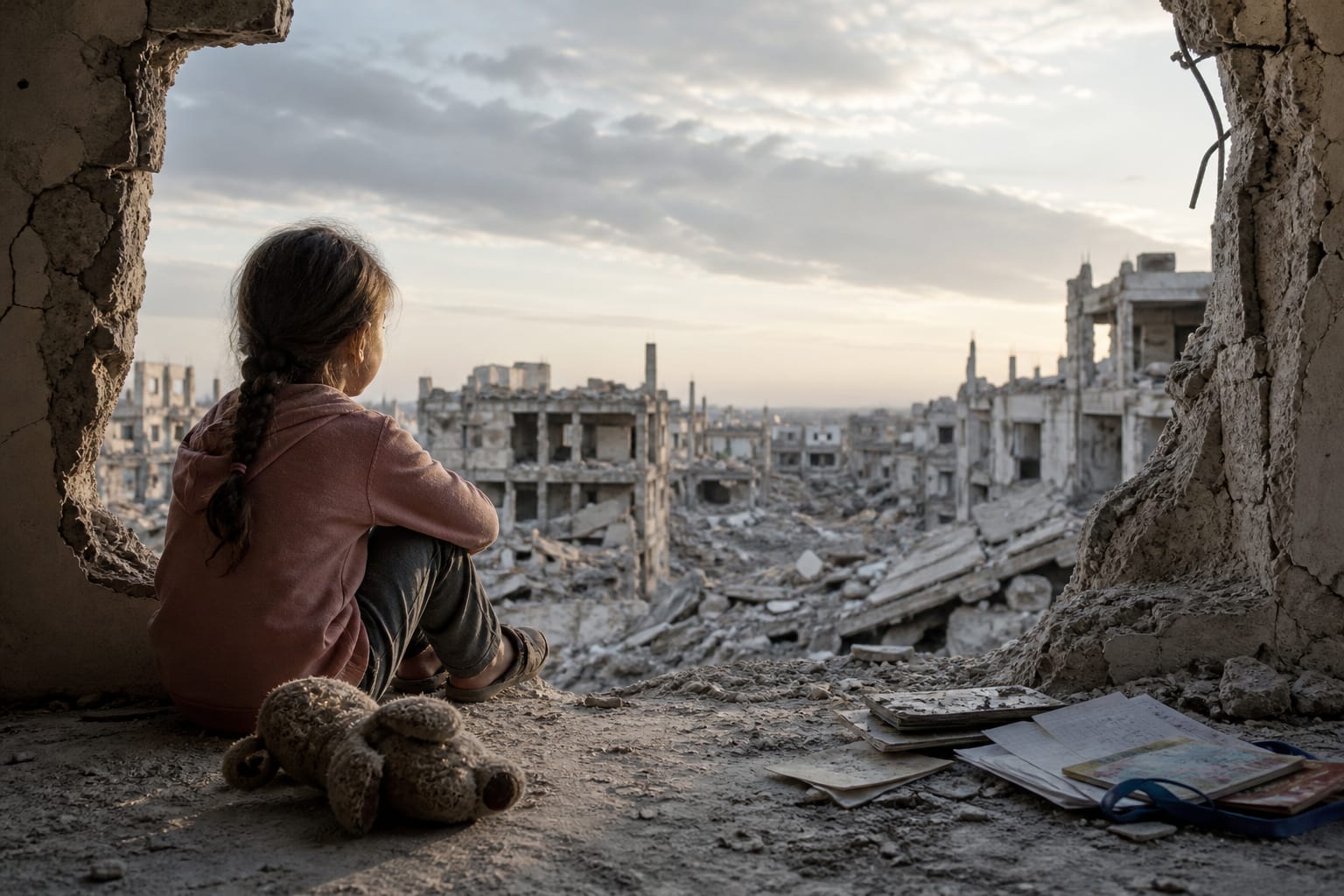
The commentary discusses how armed conflict threatens children’s rights to survival and development, protection from violence, health, education, and recovery from trauma.
In Gaza, at least 590 school attacks reportedly damaged or destroyed 88% of educational facilities; healthcare facilities have also been struck repeatedly.
An ICRC study recorded 655 violent incidents involving healthcare in 16 countries over two and a half years and concluded that insecurity prevented adequate documentation.
The commentary describes how attacks and displacement deplete healthcare infrastructure and expertise, placing an extraordinary moral and psychological burden on the health professionals who remain.
Interpretation:
The commentary argues that children’s harms reflect both the character of contemporary warfare and the structural conditions under which conflict persists.
Limitations:
The provided text is a commentary, not a systematic review or original empirical study.
The provided excerpt ends mid-sentence in its discussion of healthcare professionals’ responsibilities.
Conclusion:
The excerpt discusses the legal duties that apply during armed conflict and begins to address healthcare professionals’ responsibilities, but ends before completing that discussion.