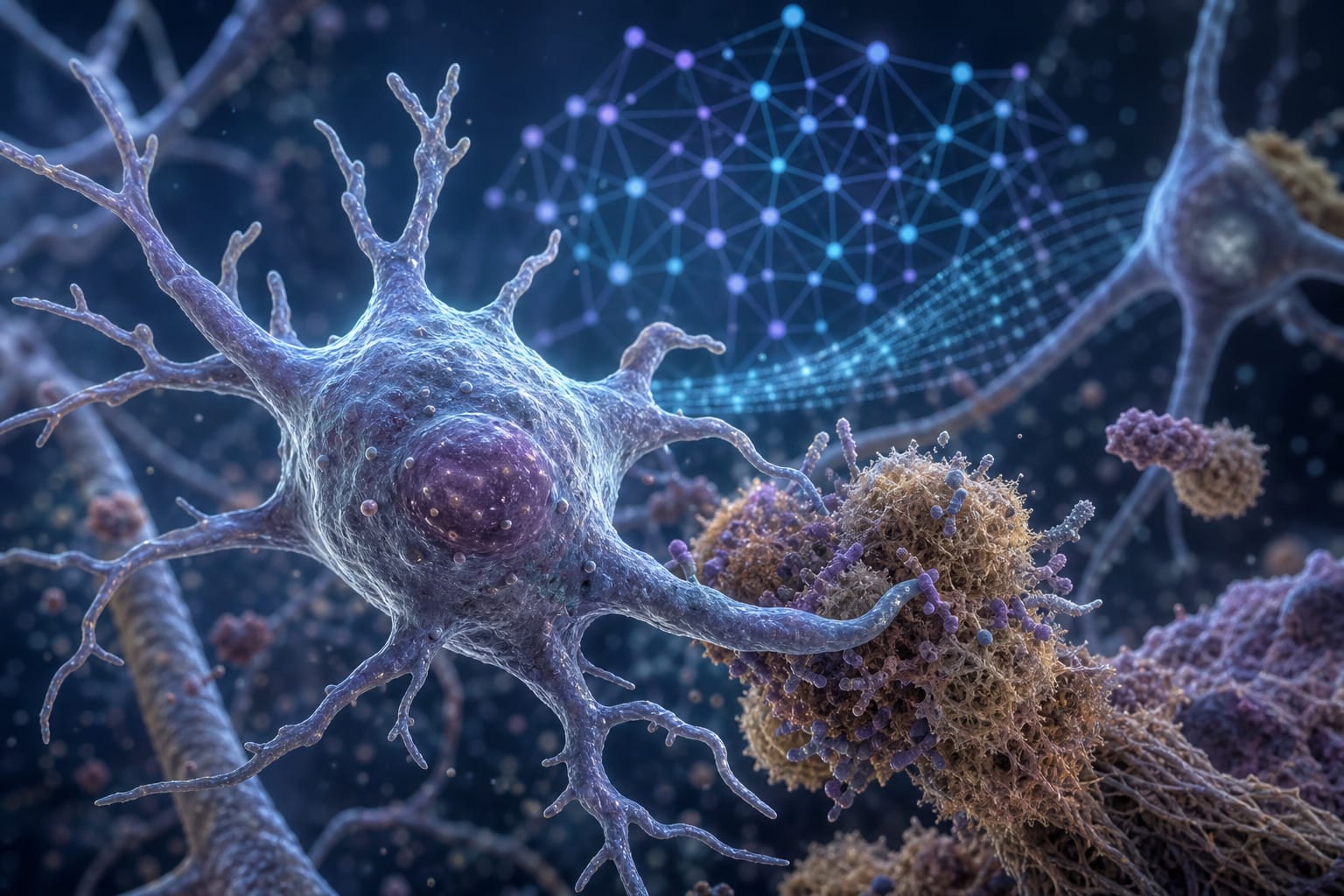
To explore the role of microglia in Alzheimer's disease and propose therapeutic strategies that adjust microglial states and immune-metabolic interactions.
Approach:
Key Findings:
Anti-Aβ monoclonal antibodies show statistically significant disease-modifying effects but limited cognitive improvement.
Microglia are central to Alzheimer's disease susceptibility and progression, influenced by genetic and environmental factors.
The traditional M1/M2 polarization model is inadequate; microglia exist in dynamic states influenced by various factors, as highlighted in the source.
Interpretation:
Future therapies for Alzheimer's disease should integrate both pathology removal and microenvironment protection, tailored to individual patient profiles, as suggested in the source.
Limitations:
Current therapeutic strategies for adjusting microglial states remain unproven, as stated in the source.
The complexity of microglial states and their interactions with various factors complicates treatment approaches.
Conclusion:
A shift in therapeutic focus from amyloid clearance to microglial state calibration is suggested in the source for effective Alzheimer's disease management.