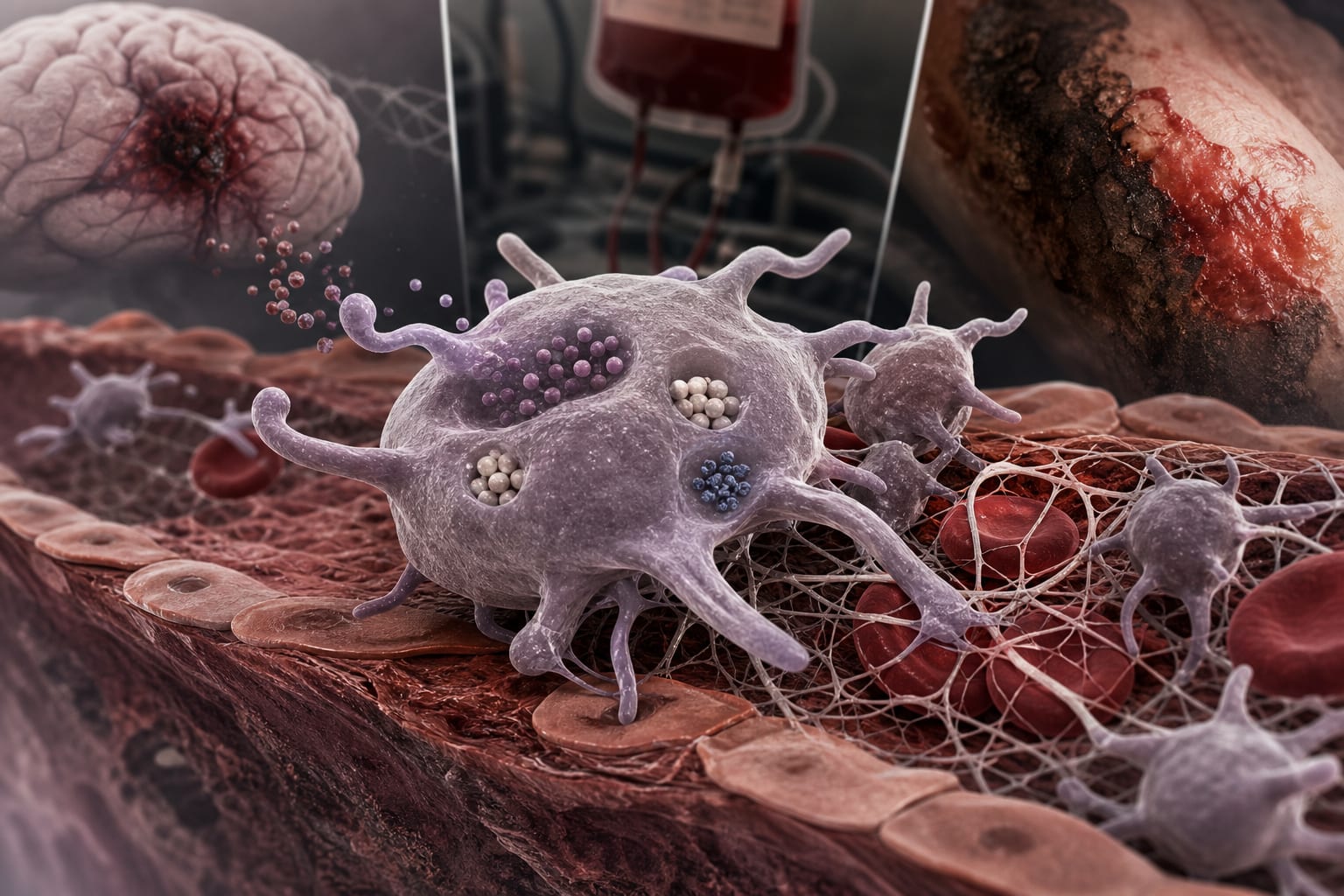
To provide a comprehensive overview of how different types of traumatic injury impact platelet function and to explore the mechanisms involved in trauma-related platelet abnormalities.
Approach:
Literature Review: A narrative review design was utilized, focusing on the roles of platelets in coagulation and inflammation across various trauma contexts.
Key Findings:
Trauma significantly disrupts the balance between hemostasis and immune function, impacting platelet activity.
Different types of trauma, including traumatic brain injury (TBI), hemorrhagic shock, and burns, lead to distinct but interconnected platelet dysfunctions.
Platelet dysfunction manifests as impairments in activation, adhesion, aggregation, and granule secretion.
Trauma-induced coagulopathy (TIC) affects approximately one quarter of trauma patients, who are associated with increased procoagulant states.
Platelets play critical roles in hemostasis, inflammation, and tissue repair following trauma.
Interpretation:
The review presents the complex interplay between trauma and platelet function.
Limitations:
The review is based on existing literature and may not encompass all recent findings.
The narrative review design may introduce bias in the selection and interpretation of studies, potentially affecting the comprehensiveness of the findings.
Conclusion:
Understanding the mechanisms of trauma-related platelet dysfunction can inform the development of future platelet-targeted therapies.