Environmental and family correlates of daily TV-watching time in children with autism spectrum disorder and typically developing children - Summary - MDSpire
Conexiant’s news site is now MDSpire News. Learn more
Advertisement
Influence of Environmental and Familial Factors on Daily Television Viewing in Children with Autism Spectrum Disorder Compared to Typically Developing Peers
To investigate environmental and family factors associated with daily television watching time among children with autism spectrum disorder (ASD) and typically developing (TD) children.
Approach:
Key Findings:
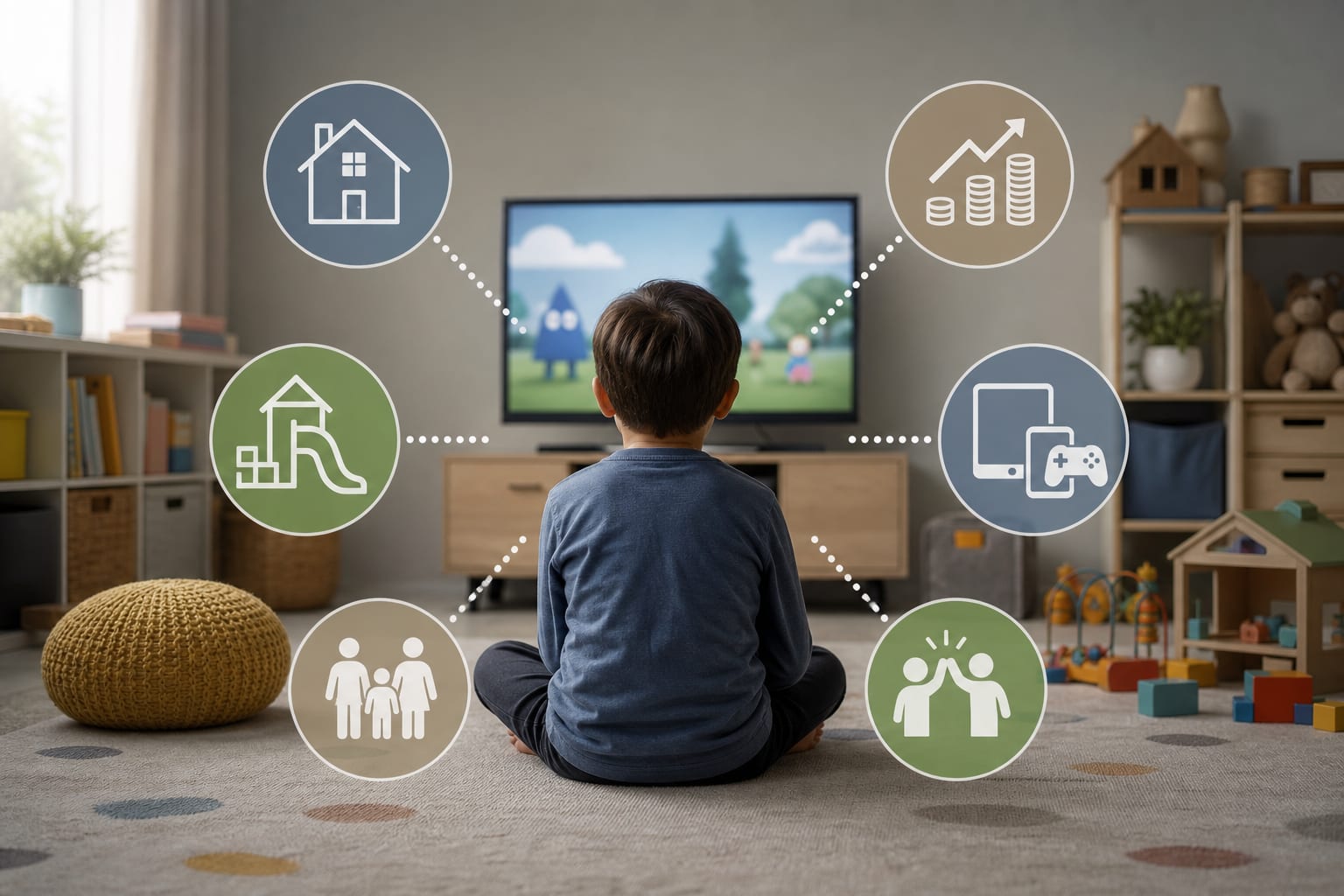
Non-television electronic device usage time (p <.001) and indoor space availability (p =.012) significantly associated with TV watching time.
Children with ASD watched slightly less TV daily (M = 1.88 h) than TD children (M = 2.03 h).
Greater family interaction during holidays was associated with lower TV watching time among children with ASD.
Lower SES and limited indoor play spaces were associated with longer TV watching time.
Interpretation:
The findings suggest the importance of family involvement and environmental factors in shaping TV watching behaviors, particularly among children with ASD.
Limitations:
The final regression model demonstrated modest explanatory power (adjusted R² =.11).
The study relies on caregiver-reported data, which may introduce bias.
Conclusion:
The study highlights the potential role of structured family engagement in supporting healthier TV watching habits.