Validation of a portable video head impulse test using an iPod touch and an oral stabilization three-dimensional (3D) - printed mount: a method-comparison study - Summary - MDSpire
Advertisement
Validation of a portable video head impulse test using an iPod touch and an oral stabilization three-dimensional (3D) - printed mount: a method-comparison study
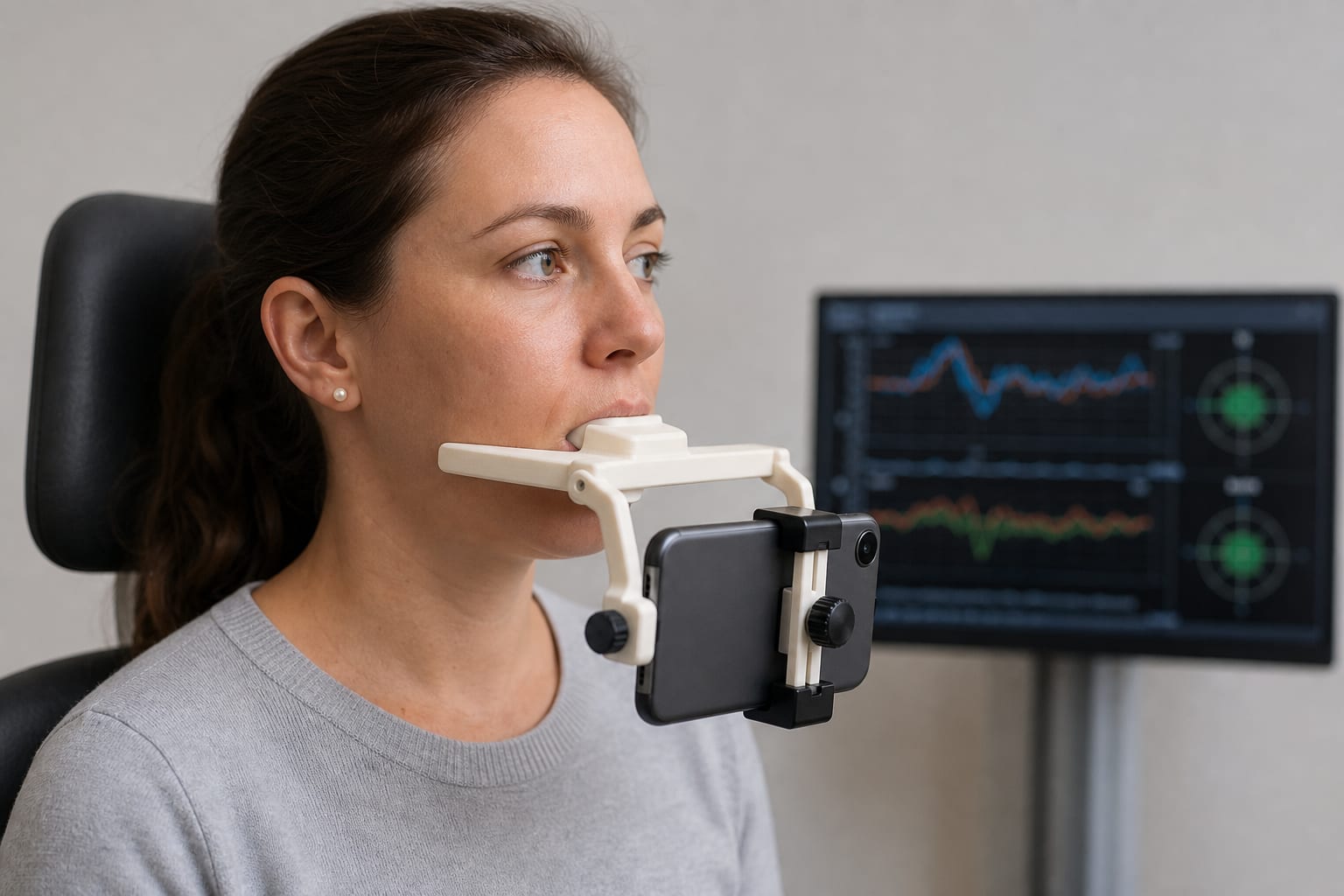
To evaluate a portable vHIT application using an iPod touch with an oral stabilization mount for detecting laterality in unilateral vestibular hypofunction and to assess its noninferiority compared to a medical-grade device.
Approach:
Key Findings:
Both systems showed higher VOR gains on the unaffected side.
Mean laterality difference was 0.518 ± 0.180 for the medical-grade device and 0.453 ± 0.118 for the portable system.
The between-device difference was −0.065 (95% CI: −0.149 to 0.018), supporting noninferiority.
In healthy volunteers, abnormal classifications occurred in 2 of 28 ears (7.1%) and 2 of 14 participants (14.3%) with the portable system.
Interpretation:
The portable vHIT system effectively detected laterality in unilateral vestibular hypofunction and met noninferiority criteria relative to the medical-grade device.
Limitations:
Small sample size of patients and healthy volunteers.
Individual-ear agreement remained variable despite small average bias.
Conclusion:
Larger studies are warranted to refine quality control and define individual-ear absolute VOR gain agreement.