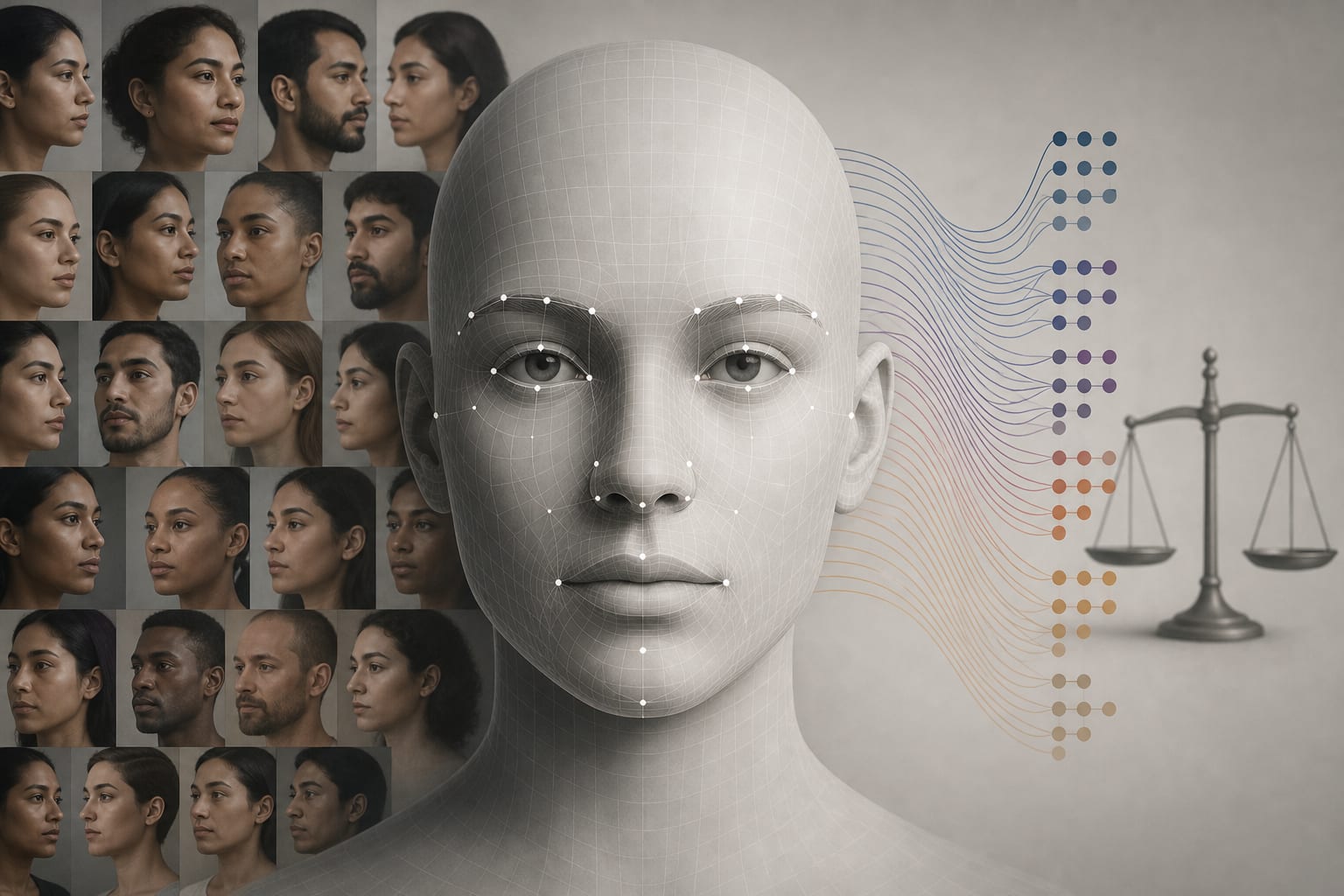
Developing AI Systems for Evaluating Facial Aesthetics: A Comprehensive Review and Strategy to Address Uniformity Bias
By
Anisha R Kumar
Lav R Varshney
June 15, 2026
Objective: To review AI training methodologies for aesthetic evaluation, examine sources of bias in training, and evaluate current practices for mitigating bias.
Approach: Key Findings: Distinctiveness negatively affects attractiveness perception universally, while femininity positively influences attractiveness assessments of female faces. Facial symmetry and masculinity do not consistently influence attractiveness judgments. Cultural preferences significantly modulate aesthetic judgments, indicating the need for culturally diverse AI models. AI models trained on biased datasets risk perpetuating narrow beauty ideals and eliminating distinctive ethnic characteristics. Interpretation:
Limitations: Current AI models may not adequately represent diverse patient populations. Existing training datasets may be limited in size and diversity. Conclusion: