Astaxanthin as a potential therapeutic agent in polycystic ovary syndrome: a review of its antioxidant, anti-inflammatory, and metabolic mechanisms - Summary - MDSpire
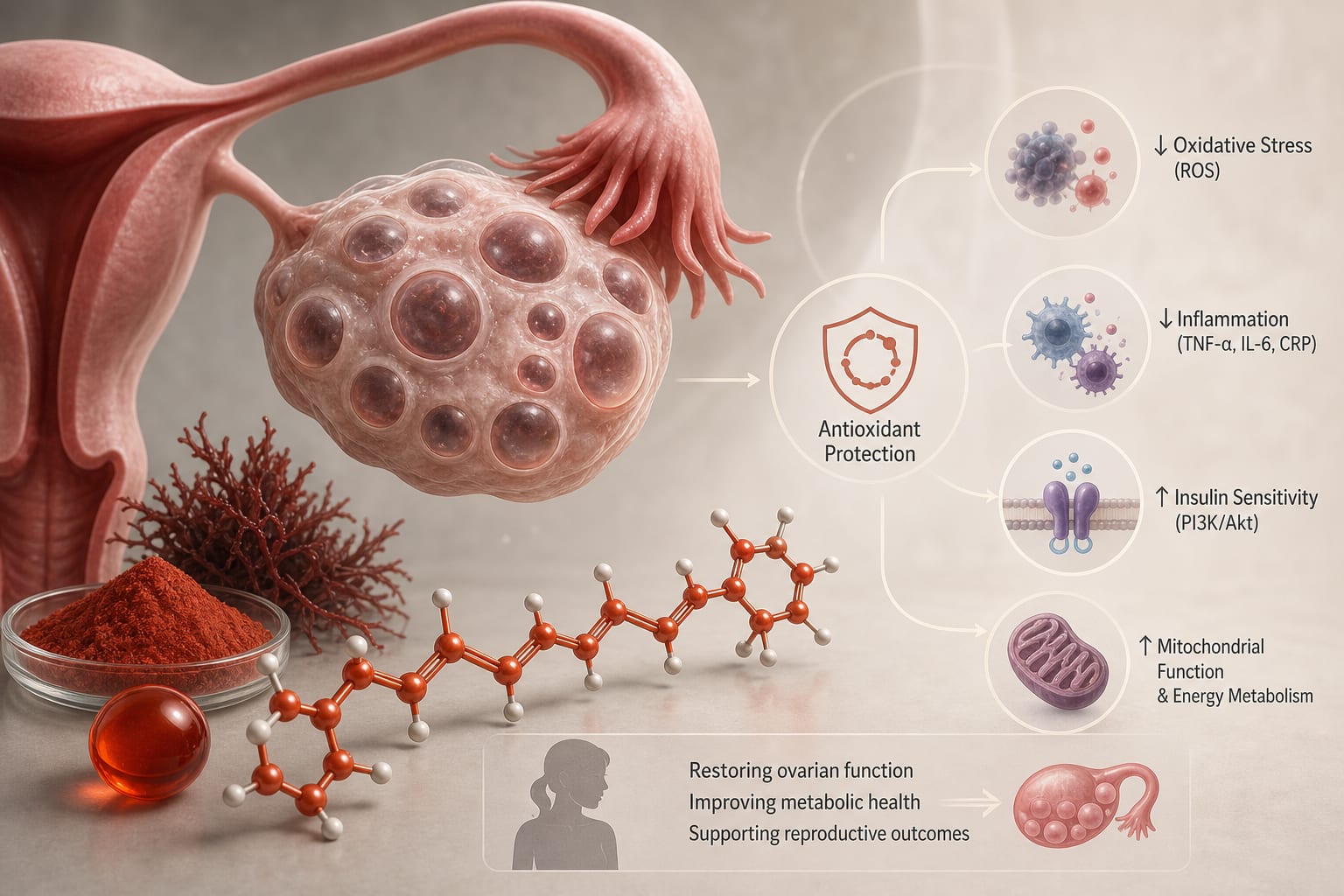
To systematically evaluate the therapeutic potential of astaxanthin for PCOS and its mechanisms of action.
Approach:
Literature Search: A comprehensive literature search was performed across PubMed, Web of Science, and Scopus for relevant studies published between January 2020 and March 2026.
Inclusion Criteria: Retrieved records were screened based on predefined inclusion and exclusion criteria.
Mechanistic Analysis: Included studies were subjected to mechanistic analysis to evaluate the effects of astaxanthin.
Key Findings:
Astaxanthin exhibits significant antioxidant, anti-inflammatory, anti-proliferative, and anti-apoptotic activities.
It enhances insulin sensitivity and activates the Nrf2 antioxidant pathway.
Astaxanthin inhibits the NF-κB inflammatory signaling pathway and modulates cellular apoptosis.
Interpretation:
Astaxanthin may serve as a potential adjuvant therapy for PCOS by improving symptoms through its antioxidant and anti-inflammatory properties.
Limitations:
Existing pharmacological treatments for PCOS have limitations in efficacy and safety.
The heterogeneity of the PCOS population complicates targeted treatment strategies.
Conclusion:
Astaxanthin shows promise as a dietary supplement for improving PCOS symptoms, warranting further investigation.
Federal prosecutors allege that a Florida physician and research staff fabricated clinical trial records that were submitted into database systems used to evaluate investigational drugs.
In a nationwide US cohort, parental subfecundity was associated with higher odds of autism spectrum disorder and modest increases in behavioral symptoms, while in vitro fertilization showed no statistically significant associations with neurodevelopmental outcomes.