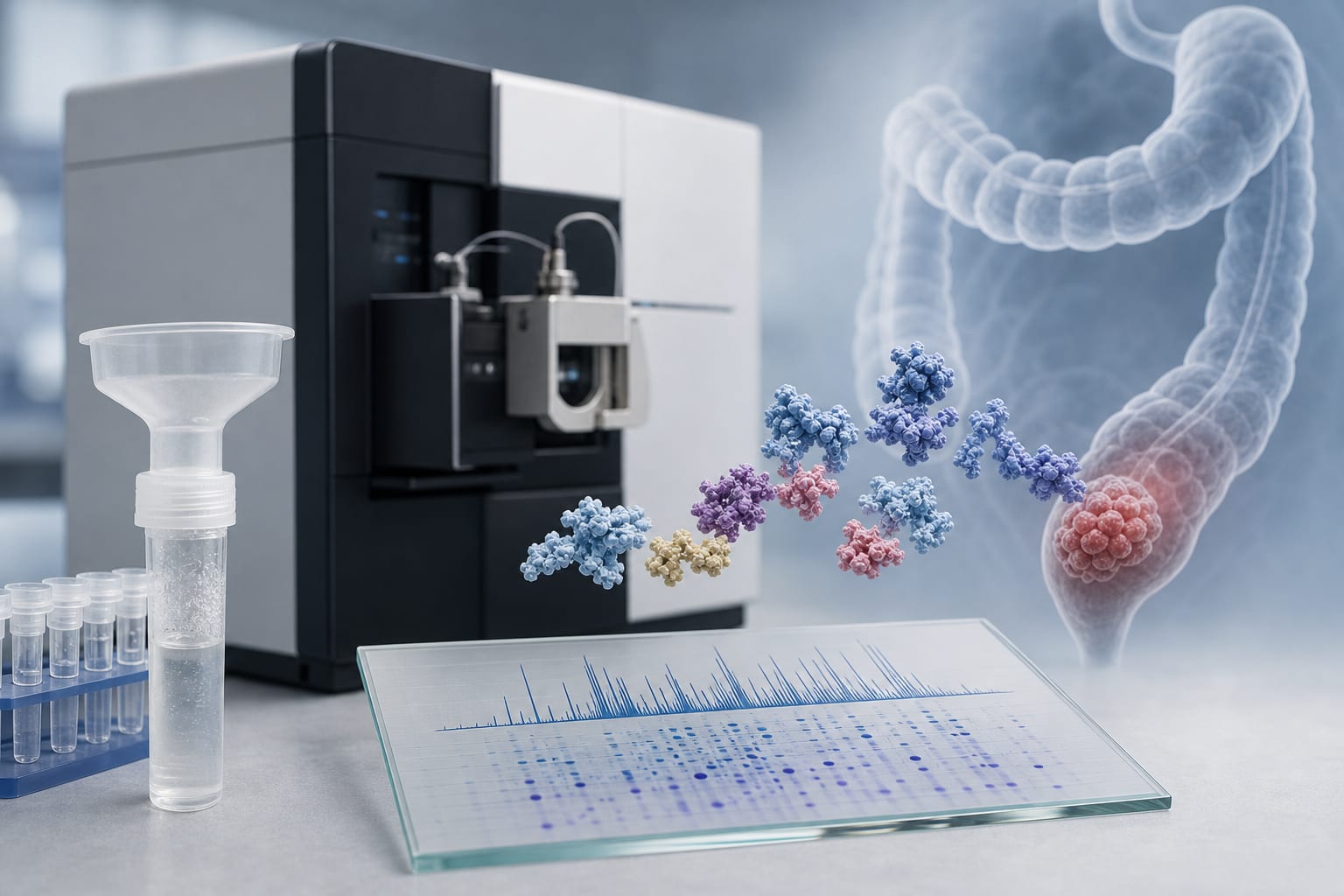
To identify salivary proteins with potential as non-invasive biomarkers associated with early-stage colorectal cancer (CRC).
Approach:
Study Design: A case-control study involving 104 saliva samples from CRC stage I patients and non-cancer controls (NCC) was conducted.
Proteomics Methodology: A quantitative label-free proteomics approach was utilized to analyze global proteome differences using LC–MS/MS.
Key Findings:
2,456 salivary proteins were identified, with 181 showing significant abundance differences between CRC patients and NCCs.
Members of the small proline-rich protein (SPRR) family were identified as core markers for distinguishing CRC from NCCs.
Demographic subgroup analyses revealed differences in protein abundance patterns, with some CRC-associated alterations detectable across subgroups.
Interpretation:
The study indicates the potential of salivary proteomics as a non-invasive method for early CRC detection, reflecting systemic tumor–immune interactions.
Limitations:
The study was limited to a specific Iranian population, which may affect generalizability.
The sample size may not be sufficient to fully capture the diversity of salivary protein alterations.
Conclusion:
Salivary proteomic profiling may serve as a promising approach for early detection of CRC.