Immunoglobulin G N-glycosylation predicts outcome in sepsis caused by pathogenic Gram-negative bacteria and Gram-positive bacteria: a nested case-control study - Summary - MDSpire
Advertisement
Immunoglobulin G N-glycosylation predicts outcome in sepsis caused by pathogenic Gram-negative bacteria and Gram-positive bacteria: a nested case-control study
To investigate the differences in IgG N-glycosylation between Gram-negative and Gram-positive sepsis and to develop predictive models for both pathogen type and mortality.
Approach:
Key Findings:
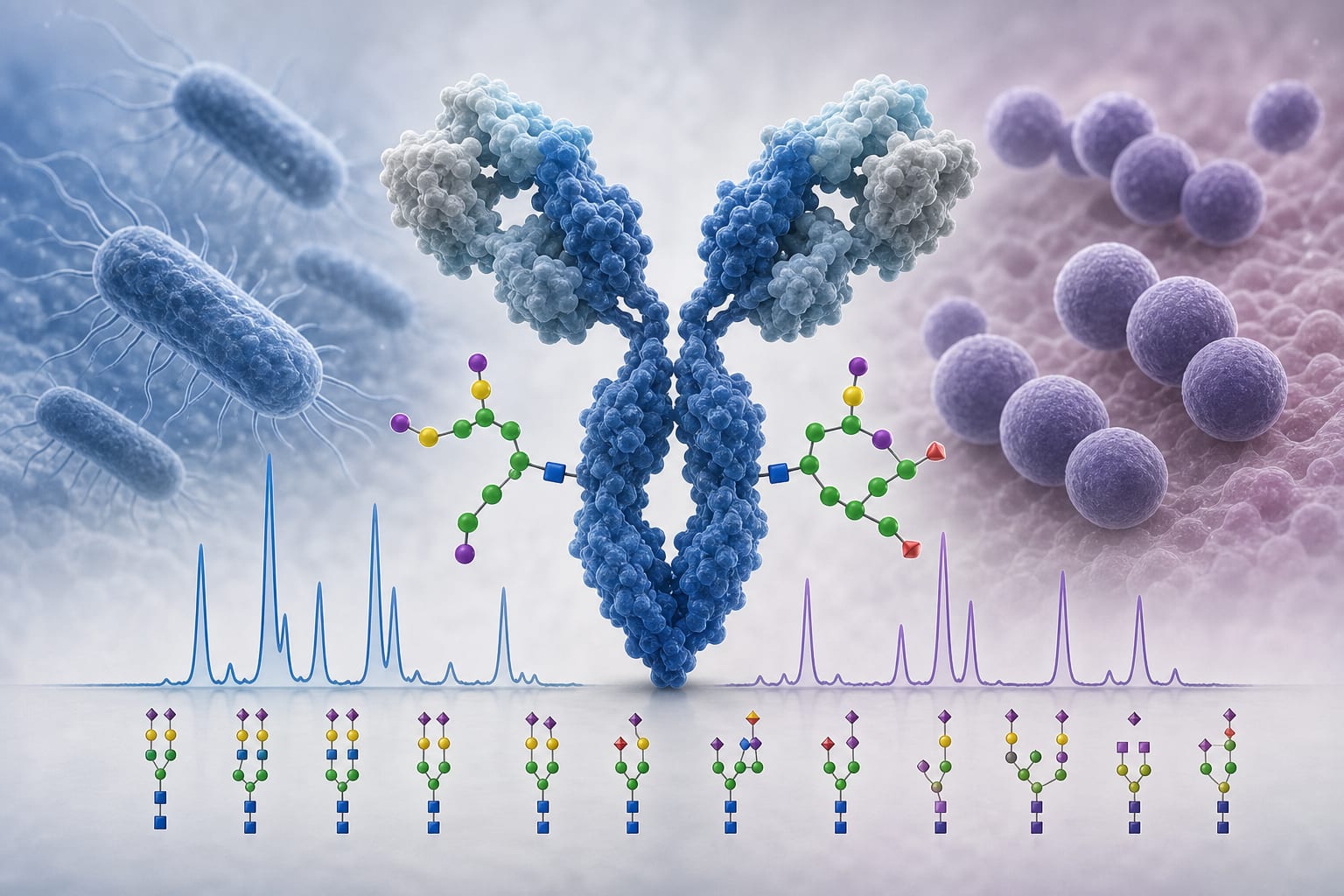
12 glycan peaks were significantly decreased in Gram-negative sepsis compared to Gram-positive sepsis.
Glycan FA2 was identified as a strong independent predictor for 90-day mortality (AUC = 0.792).
A combined model of FA2 and SOFA score improved predictive accuracy (AUC = 0.820), enhancing risk stratification.
Interpretation:
IgG N-glycosylation profiles can distinguish between Gram-negative and Gram-positive sepsis and predict mortality outcomes based on the findings.
Limitations:
The study was conducted at a single center, which may limit the generalizability of the findings.
Sample size may not be sufficient to capture all variations in glycosylation patterns, potentially affecting the robustness of the results.
Conclusion:
IgG N-glycosylation serves as a biomarker for pathogen differentiation and mortality prediction in sepsis.