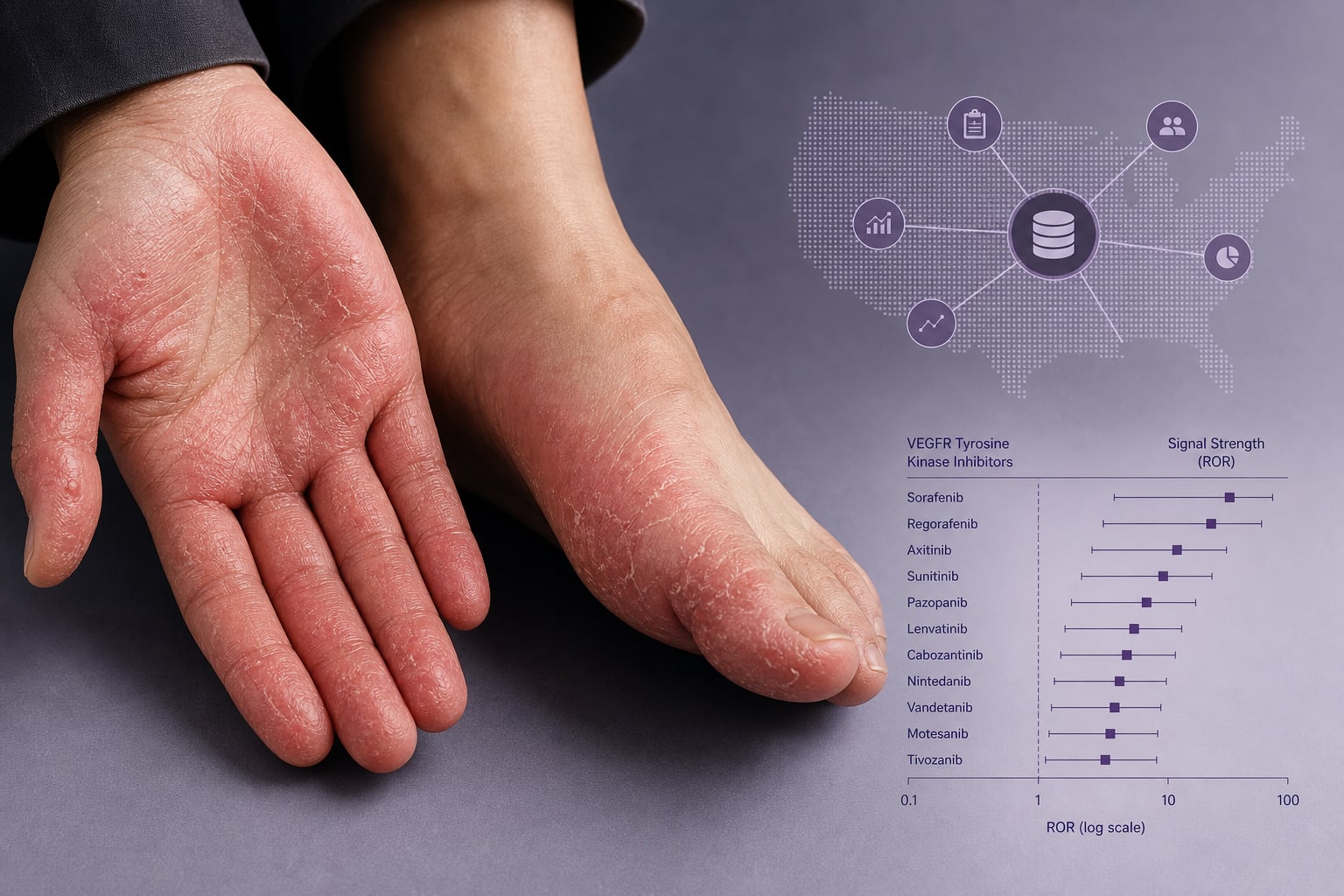
To analyze the association between vascular endothelial growth factor receptor tyrosine kinase inhibitors (VEGFR-TKIs) and hand-foot skin reactions (HFSR) using FAERS data.
Key Findings:
A total of 8,668 HFSR reports were analyzed.
Eight VEGFR-TKIs showed positive HFSR signals across all four algorithms.
Sorafenib and regorafenib exhibited greater disproportionality.
The median time to HFSR onset was 16 days, with female patients reporting earlier onset than male patients.
Hospitalization was the most frequently reported serious outcome.
Interpretation:
The analysis confirmed a significant association between VEGFR-TKIs and HFSR, highlighting differences in signal values among specific drugs.
Limitations:
The study relies on spontaneous reporting data, which may be subject to underreporting or reporting bias.
The analysis does not establish causality between VEGFR-TKIs and HFSR.
Conclusion:
Proactive, individualized monitoring during the initial weeks of therapy is crucial for managing HFSR.