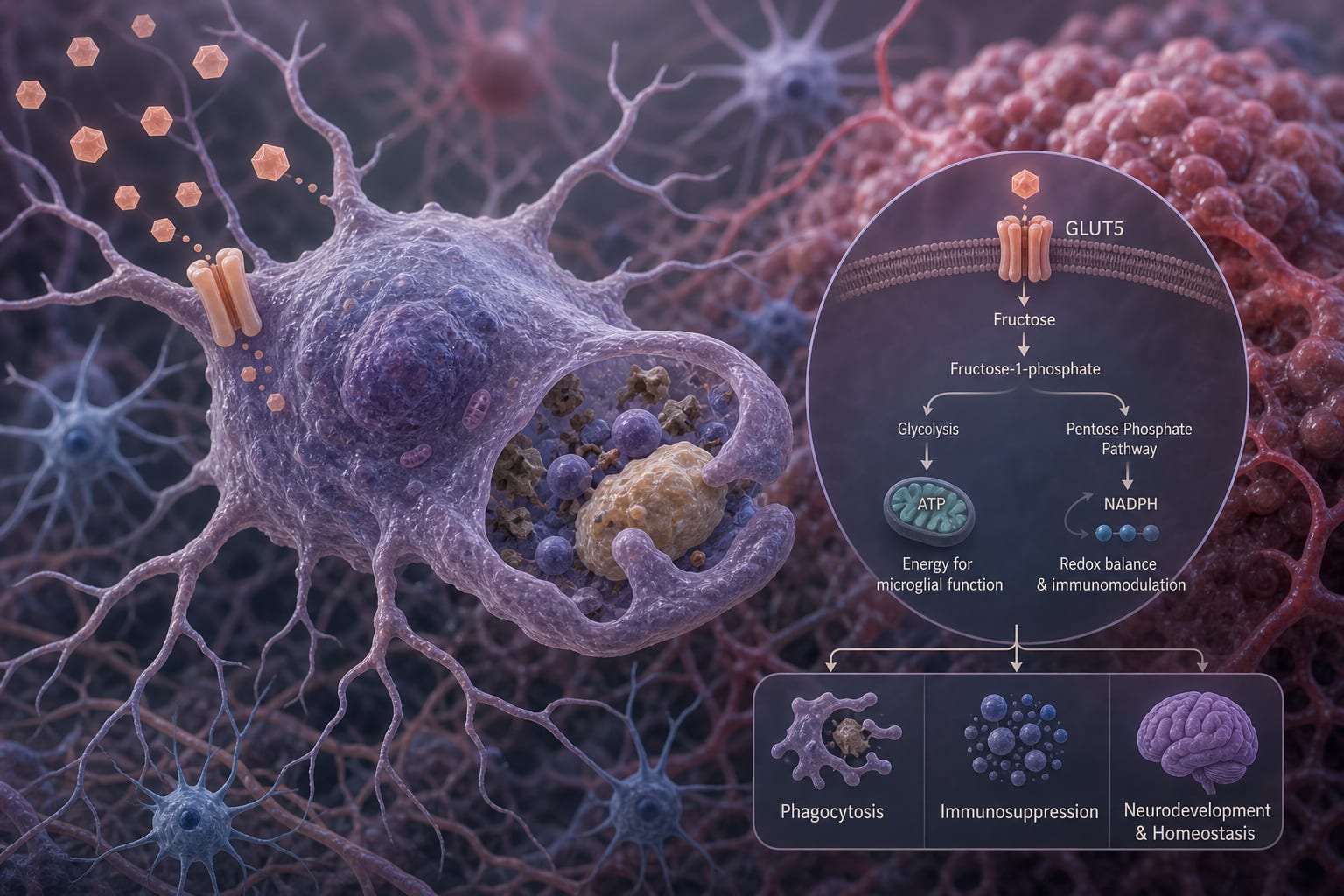
To examine the role of fructose metabolism in microglial function and its implications for central nervous system physiology.
Approach:
Overview of Microglial Identity: Discusses the unique characteristics of microglia, including their developmental origin and metabolic specialization.
Fructose Metabolism in Microglia: Explores the significance of fructose as a metabolic substrate for microglia and its potential impact on their behavior.
Functional Implications: Analyzes how fructose metabolism influences microglial functions such as phagocytosis and immune signaling.
Key Findings:
GLUT5 is a selective marker for microglia and is associated with their metabolic functions.
Fructose levels in the CNS are locally regulated and higher than in the periphery.
Microglial fructose metabolism can alter their behavior and contribute to an immunosuppressive state in glioblastoma.
Interpretation:
Microglial fructose metabolism is a significant aspect of CNS physiology, influencing development, injury response, and disease.
Limitations:
The mechanistic basis of fructose metabolism in microglia remains an active area of investigation.
Key questions about the functional necessity of GLUT5 and the relationship between CNS fructose and microglial behavior are unresolved.
Conclusion:
Microglial fructose metabolism is not merely incidental but a biologically meaningful feature of CNS function.